🪶Disclaimer: 🪶 This is a fictional narrative. All characters, events, and settings are entirely imagined—though loosely inspired by a heavily modded save in The Sims 4, extensively customized to behave and appear as realistically as feasible, with enhanced visuals, nuanced social dynamics, and detailed world-building that mirror real human complexity.

If you’re a Simmer, you might recognize the location names and emotional beats. If you’re not, you’ll still find your way—no prior knowledge required. Everything you need to know lives inside this blog.

This story is for anyone who’s ever rebuilt their life from the ashes and dared to write new chapters. For those who crave storylines that think outside the usual boxes—and for anyone who knows that sometimes, the most powerful myths are the ones we make ourselves.
Main Character Biographies

Victoria Sinclair- Archivist. Painter. Survivor. Fifty, born in Windenburg, now residing in Unit 3B of the Montfort Court Rowhouses in Henfordshire. Formerly Anna V. Thompson—shed her married name and original first name in court, reclaiming her maiden name and middle name as a sovereign rebirth. Curates legacy through oil and ink. Known for emotionally intelligent portraiture and mythic storytelling. Light eyes that shift between blue, gray, and green. Always watching.
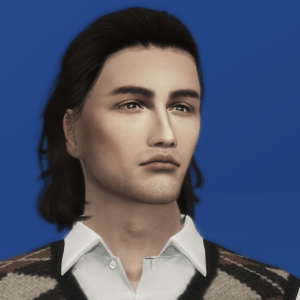
Alder Davenport - Poet. Roommate. Compass. Early forties, Henfordshire-born, sharing Unit 3B with Victoria Sinclair. Gentle, emotionally fluent, and quietly observant. Writes in fragments and silence. The only person Victoria trusts to read her raw entries. Chocolate brown eyes, steady and warm.
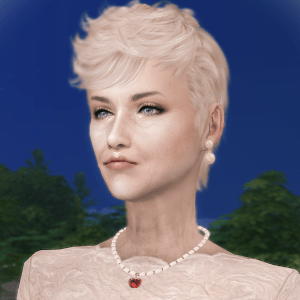
Baroness Clara Montfort-Yates (née von Hohenstein) - Matriarch. Patron. Strategist. Mid-sixties, born in Windenburg, now residing at Branleigh Manor in Henfordshire. Widowed, then remarried to Admiral Lord John. Mother of Queen Helena von Ahrensberg, Princess Emma Gyllenborg, and diplomat Theo von Hohenstein. Landlady of the Montfort Court Rowhouses, including Unit 3B. Known for velvet diplomacy and steel resolve.
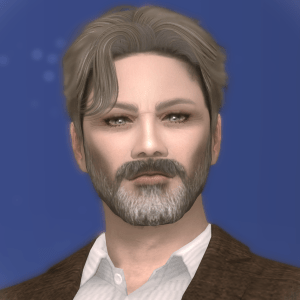
Lord Gavin Cameron - Composer. Heir. Ghost in velvet. Late fifties, born in Del Sol Valley, now residing at his son’s manor in Henfordshire. Son of Blaine Cameron—the legendary vampire and rock icon. Reserved, private, emotionally guarded. Seeking divorce from Bianca, who refuses. Her feud with Queen Aria-Grace Cromwell makes Henfordshire the only place she won’t follow.
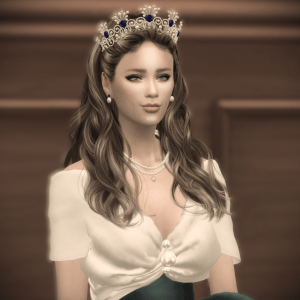
Queen Helena von Ahrensberg – Monarch. Mother. Mirror. Early forties, born in Windenburg, reigning from Schloss Falkenstein. Daughter of Baroness Clara Montfort-Yates. Wife of King Alexander, mother of four. Known for her poise, restraint, and sapphire diplomacy. Chosen by love, not lineage—met Alexander by accident, not arrangement. Often feels like a ceremonial widow. Once knocked on Victoria’s door barefoot with dessert wine. Still echoes.
The Beginning I Didn’t Choose
by Ashes&Ink
Mood: Too early for clarity, too late for denial
Originally journaled. Now shared.
So apparently this is supposed to help.
“Journaling,” they said. “It’ll ground you. It’ll help you process. It’ll make you better.” Right. Because scribbling into a notebook is going to undo a nervous breakdown, a dead husband, a crushed life, and a mountain of bills that could flatten a small village and still have enough left over to total a midsize SUV.
I’ve never journaled in my life. Not even as a kid. I have no idea what I’m doing with this journal, which has now become a blog. I don’t blog. I don’t vlog. I don’t TikTok. I’m way too private for any of that. I don’t do the things people do when they’re trying to be relatable and emotionally available.
I do spreadsheets. I do logistics. I do color-coded planners and quarterly projections. Or at least I did. Now I do wine and avoidance.
The one person I trust to read this mess—Alder—told me I should turn it into a blog. Said it might help. Said it might even help others. Which is very Alder of him. He’s the kind of person who says things like “the soul is a garden” and actually means it. You’ll get to know him better later on. He’s relevant. Very much so.
So here I am. Henfordshire, Montfort Court Rowhouse Unit 3B. Writing under a name that isn’t mine.
Because this isn’t a memoir. It’s a reckoning. So I write as Ashes&Ink. Because that’s what’s left of me. And that’s what I use to tell the truth.
My truth.
The Passport Incident
by Ashes&Ink
Mood: Youthful fifty. Haunted forty-nine.
Originally journaled. Now shared.
And me? I’m told I’m attractive. A youthful fifty, apparently.
I’m not saying this to show off—beauty is subjective, and fleeting—but I mention it so the rest of my story makes a little more sense. You’ll see what I mean, eventually. I’m just not the grandma type. More the kind that makes people squint at my passport and ask twice.
Ask me how I know.
Well, you can’t ask, so here goes.
Case in point: immigration, on my way over here. The officer raised an eyebrow, then asked for additional ID. I had to dig out my entire paperwork archive and let them run my fingerprints before they believed me. Apparently, I don’t “look the part.” Whatever that means.
I’ll take it as a compliment. Now.
But in the moment—sweaty, jet-lagged, standing in a line that felt like purgatory—it didn’t feel like one. Everyone was staring. The eye-dagger type. Other passengers were held up way longer than necessary, all because of me. And they weren’t looking at me in awe—they looked like they wanted to butcher my old ass for delaying their connections. Not admire it. Not envy it. Just blame it.
During my worst mourning period, I looked more like a badly preserved mummy than anything remotely youthful. Not younger. Not radiant. Not attractive. Not. At. All.
Guess by now I’d sufficiently recovered. Oh well.
I saw the silver streaks in my dark blonde hair. I saw the way my skin wrinkled more when I smiled now. I’d never been a gym rat, but now more than ever I practiced yoga like a cult to make sure nothing on my body shifted. Least I could do, seeing how fate had condemned me to wander the earth alone. If I ever wanted to find someone to walk with me, I had to bring something to the table.
Clearly, it wasn’t going to be wealth. That had long left the building. Unless you count the remaining debt. Decent sum, if you ignored the minus in front of it.
So Why So Far From Home?
by Ashes&Ink
Mood: Displaced. Curious. Bracing.
Originally journaled. Now shared.
Why here of all places? So far from home? A question I hear a lot. Well, I don’t have a home anymore. I don’t have anything anymore. Only hope. And not even an abundance of that.
Let’s rewind.
David Copperfield style.
I was born. I had a happy childhood. The kind people write essays about. My parents loved me, were very attentive. Straight A student. Valedictorian. Summa cum laude. My parents’ pride and joy. I was the girl who color-coded her planner and actually used it. I became a Senior Project Manager at a large Tech Company before I was thirty. I was good, dedicated, meticulous. Like, scary good. I could turn chaos into clean timelines, herd executives like caffeinated cats, and make cross-functional deliverables feel like choreography.
I didn’t just manage projects—I conducted them. Deadlines bowed to me. Budgets behaved. Stakeholders stopped interrupting meetings just to hear me say, “Let’s pivot.”.
And then I met him. Shawn.
Oh yes, here it comes the inevitable boy meets girl sappy tale. All the way. Brace yourselves.
It started with a customer service chat. Some IT issue I barely remember—probably something about a corrupted spreadsheet or a login that refused to behave. He was the tech on the other end. Polite. Witty. Just enough sarcasm to make me smirk. We flirted. Then we talked. Then we didn’t stop talking.
The work chat turned into a private one. First at home afterhours. Then everywhere. We messaged late into the night, shared playlists, swapped book quotes, sent each other memes that made no sense to anyone else. Months passed before we even spoke on the phone. Months more before we met in person.
When we did, it wasn’t fireworks—it was recognition. Like I’d known him in another life. Like I’d been waiting for him without realizing it. Serendipity.
I quit my job, relocated to Oasis Springs to be with him. New town. New routines. New toothbrush next to his. We got married in a quiet ceremony—just us, a few friends, and a sunset that looked like it had been painted for the occasion.
We worked for the man for a while. Corporate grind. Long hours. Matching burnout. The kind of job where your inbox multiplies like rabbits and your soul shrinks by the quarter. But we had a plan.
We built a company together—slowly, secretly, while still clocking in for someone else. Nights, weekends, stolen lunch breaks. Whispered strategy meetings over takeout and spreadsheets that lived in hidden folders. When it was finally feasible, we handed in our resignations and went all in.
For years, we soared.
It was hard work, don’t get me wrong. No set hours. Reachable around the clock if things went sideways—which they often did. We lived by the calendar, slept with our phones, and treated crisis management like a competitive sport. But we managed. We adapted. We thrived.
And it paid off.
We soared. Not just financially, but emotionally. We were building something that was ours. Something that mattered. Something that felt like legacy in motion.
We were best friends and lovers. Workaholics with no kids and a taste for luxury hobbies. Wine tastings. Private concerts. Desert stargazing. Exotic cars and even more exotic vacations. We were us. We weren’t millionaires, but we were very comfortable.
The no-kids part wasn’t intentional. We were always too busy building something. By the time we realized it, we tried—for a while.
We weren’t obsessive. Just quietly hopeful. We did away with birth control and let nature take its course.
The little caveat: I was already forty-three. Shawn was fifty.
It didn’t take.
And then work came up—again and again. There was always a launch, a merger, a client in crisis. We never saw a doctor about it. Just let time pass. Told ourselves we were too busy, too tired, too focused on building something bigger than ourselves.
And maybe we were. Maybe legacy felt safer than lineage.
Shawn always said we had time. That we’d know when we were ready. That the world would wait.
It didn’t. Because then came the crash.
And All Falls Down
by Ashes&Ink
Mood: Grief sharpened into survival
Originally journaled. Now shared.
Not because of market volatility. Not because of bad luck. Because of betrayal.
Shawn brought in his best friend as a partner. I was against it from the start. I didn’t like mixing friendship with business—especially not in a tech firm where our entire value was built on secure data architecture and client confidentiality. I wanted NDAs. Contracts. Firewalls. The usual safeguards.
Shawn refused.
“He’s a friend, babe,” he said. “You don’t make friends sign NDAs.”
We fought about it. A lot. But eventually, I gave in. It wasn’t worth the strain. I told myself I was being paranoid. That maybe trust was part of the legacy we were building.
It wasn’t.
His friend sold our backend framework to a competitor. Quietly. Illegally. One day we were fine. The next, we were buried in lawsuits, breach notices, and a PR disaster that made national headlines. Our clients vanished. Our contracts dissolved. Our name became a cautionary tale whispered in boardrooms.
I didn’t take it well. But Shawn took it worse.
He had a massive heart attack. Surgeries. ICU stays. I remember the antiseptic sting in the air, the way his hand felt in mine—cold, but still trying to reassure me. He kept saying, “We’ll fix it, babe. We always fix it.”
But we didn’t.
Our wealth turned to debt faster than I could track. We dragged along, always a few paychecks from losing everything. I kept the lights on. He kept trying to recover. We both kept pretending it wasn’t falling apart.
But it was. And deep down, we knew it.
And then the final blow.
I still don’t know what it was. Maybe a letter. Maybe a call. Maybe just the weight of it all finally pressing too hard on the softest parts of him. One morning, I woke up and he wasn’t in bed. I brushed my teeth. Started the coffee. Walked into his home office, expecting to find him in his usual command center—two desktops, a laptop, and enough widescreen monitors to launch a satellite or hack into the moon.
Instead, I found him slumped in the armchair by the window. Gun in hand. Note on the desk.
I won’t share the note. Most of it’s personal. But it was beautiful. Loving. Apologetic. He said he couldn’t bear to watch me drown with him. Said he’d rather be the one to go down with the ship than watch me cling to the wreckage.
I ugly-cried for days. Weeks. I remember the way my throat burned from screaming into pillows. The way the sunlight felt cruel. The way the silence in the house changed—it stopped being peaceful and started sounding like abandonment.
Then came the bills. Then came his family.
At first, I was relieved. Help was here. I wasn’t suddenly all alone on a Titanic trying to save myself with nothing but a red Solo cup and a half-empty bottle of Merlot.
The Vultures Circle
by Ashes&Ink
Mood: Grief weaponized. Empathy optional.
Originally journaled. Now shared.
But it wasn’t help. It was a feeding frenzy.
They crawled out of the woodwork like cockroaches with entitlement issues and matching funeral outfits. Not to grieve. Not to comfort. Just to claim. They came with calculators, not casseroles. With lawyers, not lullabies. They didn’t ask how I was holding up—they asked where the money was.
Convinced there was a fortune buried somewhere. Convinced I was sitting on a vault of hidden assets and designer guilt. None of them believed me when I said we were in debt. That the company had collapsed. That I’d sold my jewelry to pay for his meds. That I’d been living on boxed wine and frozen dinners while they were off living their lives, blissfully unaware.
They called me a liar. A gold-digger. Said I’d driven him to it. Said I was hiding something. Said I was never really family.
They rifled through our home like it was a clearance sale. Took heirlooms. Took electronics. Took anything that wasn’t nailed down—and tried to pry loose the things that were. One of them even asked if they could “take a look at the car”—as if I’d just hand over the last thing that still felt like ours.
I wasn’t hiding anything. I was barely holding on. Grieving. Drowning. And now, apparently, defending myself in a courtroom of vultures.
And somewhere in the middle of it all, I caught myself thinking— Thank God Shawn was already gone. Because if he’d seen what they became, how they treated me, how they twisted the truth— it would’ve killed him anyway. It just about took my will to live.
I hired a consolidator. Sold everything. Purged every object that didn’t spark survival. I boxed up the life we built and labeled it “irrelevant.” And then I left Oasis Springs behind.
Henford, Here I Come
by Ashes&Ink
Mood: Displaced but determined
Originally journaled. Now shared.
Henfordshire was about as far as my language skills would allow me to flee. The only things further were Mount Komorebi and Tomarang, and I wasn’t ready to start over with subtitles.
I couldn’t find work in business. Small town. Closed doors. Apparently, Henfordshire doesn’t have much demand for former tech CEOs who can orchestrate cross-functional chaos in six time zones before breakfast. I scanned listings for weeks, hoping for something—anything—that didn’t involve sheep, jam, or heritage plaques. No luck.
I was staying in a short-term rental above a bakery in Lower Henford. The kind of place that smells like sourdough at 4 a.m. and has radiators that hiss like they’re judging you. It was fine. Functional. A roof over my head while I tried to find something permanent. But every time I walked past the rowhouses in Montfort Court, I felt something shift in my chest—like longing dressed up as curiosity.
The day I went to view Unit 3B, I looked like an example of what not to do to get an apartment. Or a room.
My hair—normally long, sleek, and at least pretending to be intentional—had gone rogue somewhere between the bus transfer and the drizzle that greeted me at the square. I was damp. Not “windswept and poetic” damp. Just damp. Sweaty, then freezing, then sweaty again. I’d left my car behind in Oasis Springs—shipping it to an island kingdom was laughably expensive, and buying a new one here wasn’t in the cards. So it was buses. And walking. And the occasional prayer to the transit gods.
My shoes were muddy from a failed viewing in the countryside, where the “quaint stone cottage” turned out to be a glorified shed with a sloped floor and a resident badger. My coat smelled like bus upholstery. My dignity had been left somewhere near the Britchester roundabout.
The rowhouses were stunning. Symmetrical. Elegant. I squinted at the façade, trying to place the style. Georgian, maybe? Or Regency? Something with columns and tall windows and the kind of architectural confidence that says, we’ve been here longer than your heartbreak. The moldings were pristine, the hanging greenery curated like it had a stylist, and the wood floors inside gleamed like they’d been waxed by hand and reverently blessed.
I was standing awkwardly in the foyer, trying not to drip on anything, when Baroness Clara Montfort-Yates finished a phone call in crisp, fluid Burgish. Her voice was low, elegant, and unmistakably Windenburg-born. I hadn’t heard Burgish spoken like that in years—outside of my own muttered curses and nostalgic lullabies.
She hung up, turned, and looked me over. Not unkindly. Just… thoroughly.
I blurted it out before I could stop myself. “You speak Burgish?”
She raised an eyebrow. “Born and raised in Windenburg.”
“So was I,” I said, breathless and suddenly aware of how much I looked like a drowned librarian.
And just like that, something shifted.
She smiled—not the polite kind, but the kind that says I see you. We spoke in our shared tongue, fluid and familiar, full of idioms that don’t translate and warmth that doesn’t need to. She asked about my background. I told her the truth, minus the parts that still bled. She nodded like she understood more than I said.
By the end of the conversation, I had a key. Unit 3B. A middle townhouse—smallish, but stacked like a secret. Three floors, American count.
The bottom level is all warmth and function: kitchen, dining, living, a small foyer, and a backyard just big enough for a grill, four chairs, and a herb garden that smells like someone still believes in healing.
One floor up is Alder’s domain—his bedroom, two bathrooms for us to share, and a home office that hums with quiet intensity.
And the top? That’s mine. A studio-style sanctuary with a balcony, a desk, and a corner where I paint things I don’t have words for.
A room with a view of the garden and the rolling landscape of rural Henfordshire out back, and the marketplace out front—bustling, nosy, and full of people who’d probably know my business before I did. And evidently, a roommate. The only reason I could even afford living in this place. Shared, it was doable. Solitary, it was fantasy.
All I knew at this point was his name: Alder.
Clara mentioned him briefly, in that offhand way she reserves for people she finds useful but mildly inconvenient. Said he kept odd hours, worked from home, preferred quiet to company.
“He’s not unfriendly,” she added, “just… particular. And maybe a tad peculiar.”
I nodded like I understood, though I didn’t. Not yet.
But I would.
She also mentioned her children—casually, like it was just another fact. Her eldest daughter is the queen consort Helena of Windenburg. Her second daughter Emma married Prince Magnus of Nordhaven. Her oldest child, son Theo is a diplomat, and her stepson from her husband’s first marriage just wed a Lady from Willow Creek with a title and a temper. She didn’t say any of it with grandeur. It wasn’t a flex. Just quiet inevitability. Like legacy was something you folded into linen and stored in the attic.
The Alder Paradox
by Ashes&Ink
Mood: Defrosting in silence
Originally journaled. Now shared.
I moved in the next day.
Still no sign of my new roommate. His door remained closed, shoes neatly lined like sentries at the threshold. A mug sat on the windowsill in the upstairs hallway near his room—half-full, forgotten, stained with time and tannins. I didn’t knock. Didn’t introduce myself. Just unpacked my grief and tried not to take up too much space.
Then, the second morning, I saw him.
I was fumbling with my keys after another failed attempt at finding work when he appeared in the hallway, barefoot, ushering a man out with quiet efficiency. The guest was tall, well-dressed, and smiling in that way people do when they’ve been seen—and maybe adored, if only for a night. Alder murmured something low, handed him a coat, and closed the door behind him like he was sealing off a chapter.
He didn’t see me. Or if he did, he didn’t react. Just disappeared back into his room, leaving me standing there with muddy boots and a thousand assumptions.
So when I finally met him the next morning—when I padded into the kitchen in socks and silence, hoping for coffee and maybe a moment of peace—I was bracing for cool detachment.
He was there.
Standing by the window, backlit by pale morning light, steeping something in a ceramic mug. Earl Grey, probably. He handled the teapot like it was a sacred relic—slow, deliberate, reverent.
I reached for the French press I’d brought from the bakery flat and started making my coffee. Strong. Black. And a noteworthy absence of milk. So, the ritual didn’t steady me the way it usually did. Something was missing. Milk, specifically. Something to soften the bitterness. And I’d had plenty of bitter lately.
He watched me pour, then tilted his head. “That’s… bold.”
“Oh, not at all,” I said. “I usually take a healthy splash of milk. Just enough to hit that perfect caramel shade.”
“And sugar?”
“No sugar.”
He nodded solemnly. “The only way I can bear the taste of coffee is with a heroic amount of sugar. Same goes for tea. Milk and sugar. Except this morning. I am gloriously unprepared for domesticity—and evidently, milkless roommates.”
I smiled, held out my hand. “I’m Victoria.”
“I know,” he said.
Finally, he reached out and we shook. My hands were often cold. His were even colder.
Guess we had things in common. Preference for milk in hot beverages and cold hands.
Hey, I’d take anything right now. I needed a friend.
So I didn’t miss a beat. I needed the ice broken, even if it cracked awkwardly.
“I like my coffee as I like my men,” I said.
He looked up, took the bait with a half-smile. “Strong and black?”
I grinned. “No. Ground up and in the freezer.”
He blinked. Then tilted his head, smirk curling slowly. “That’s… concerning.”
“Not really. I noticed we have one of those tiny freezer drawers. Not enough room. You’re safe.”
He laughed. Not a polite chuckle—a real laugh. The kind that cracked something open. The kind that made the kitchen feel less like a shared space and more like a beginning.
“Well,” he said, still smiling. “That’s certainly one way to keep things fresh.”
“Efficient, too.”
He raised his mug in mock salute. “To the great unfreezing. May the silence melt with dignity.”
I smiled, despite myself. “And to visibility. I thought you might well be a ghost. Took us three days to meet and we live under the same roof. Has to be a record. I almost took that very personal.”
“Please don’t, it wasn’t. I suppose I’m what they call an introvert. You strike me as an extrovert. I just needed time to be ready to meet you.”
He paused, then lifted his mug again, more gently this time.
“So—a good morning to you, and welcome, Victoria, to this humble abode. And for the sake of properness, I am very obviously Alder Davenport. To shared walls and mutual civility and a good co-habitance.”
That was it. No grand introduction. No awkward roommate banter. No mutual recital of origin stories. Just tea, coffee, silence—and the first thread of something I wouldn’t understand for weeks.
Let the Scars Speak
by Ashes&Ink
Mood: Invited, not exposed
Originally journaled. Now shared.
I didn’t know it then, but that room would become my sanctuary. And Clara—well, she’d become something more than a landlady. Something like a mirror. Something like a warning. Something like a marker in my life.
And Alder became… something else entirely. A quiet presence at first. A voice behind a closed door. A man who left half-finished poems in the laundry room and brewed tea like it was a sacred ritual. I didn’t know it then, but he would become the person who saw me when I couldn’t see myself. The one who listened without asking, who stayed without needing to be invited. The one who would just bring me coffee when I didn’t even realize I needed a cup. Always prepared to perfection, strong, and just the right amount of milk. He would become someone very special in my life.
But I wouldn’t know that for a while.
Alder, ever the quiet oracle, suggested I start a blog. As in, turn my private journaling into something public. I laughed. Then I cried. Then I stared at him like he’d just asked me to auction off my soul in the town square.
“It’s personal,” I said. “It’s not meant to be shared. Do you have any idea what it took for me to share it with you, and only—ONLY—because I trust you. I don’t trust everyone with access to the internet out there!”
Alder didn’t flinch. He just tilted his head slightly, like he was listening to the wind through a closed window.
“Then don’t share the parts that are still bleeding,” he said. “Let the scars speak. They’re quieter.”
Which is very Alder. He doesn’t push—he invites. He speaks in metaphors and half-finished thoughts that somehow land exactly where they’re meant to.
Then I started writing. Alder was right. It was either that or becoming a heritage tour guide—reciting ghost stories to tourists in sensible shoes while pretending to care which duke slept in which turret. I shadowed one once. The highlight was a woman asking if the manor’s stonework was “original or just Henfordian.” Dumbest thing I ever heard. BOTH, you ignoramus. Built in 1327. In Henfordshire. So yes—both. I left at lunch.
The other option was peddling trout as a market crier, which sounds quaint until you realize it involves shouting about fish at 6 a.m. in a drizzle while wearing a bonnet that smells like haddock. Alder said I’d look “charmingly provincial.” I said I’d rather eat my planner.
There was also a brief flirtation with selling artisanal candles at the village shop. I lasted one shift. A woman asked if “smoked vetiver” was edible. I told her only if she hated herself. Alder found that hilarious and said I had the soul of a poet and the patience of a caffeinated crow.
I can hear you saying it: Just move to another town. One with options. Well, I would have. But moving requires money, and I had precisely none of that. What I did have were bills. So yes—this old bat had to make Henfordshire work.
So I blogged. And somehow, it worked.
It took off.
I went from zero to 7,644 followers in three days. Still counting. Last I checked, I was nearly at 10,000. I’m not allowed to check anymore, per Alder—because my reaction to seeing it in the high 9000s summoned the neighbors and a passing policeman who happened to be within screeching distance.
Followers mean revenue. And at the current rate, I should be debt-free just before I die. But at least I’ll be able to tell them at the pearly gates that I didn’t leave indebted.
Then came the email. Someone who recruits ghostwriters for autobiographies of very famous people. I thought it was a scam. Alder came with me to the meeting. He wore a scarf and looked like he was auditioning for a role in a period drama. He urged me to accept.
I signed NDAs. So many NDAs. I had to give blood, fingerprints, and possibly my soul. But the paycheck? Scary-cool. I might, at some point, in the imaginable future, actually see a plus sign in my bank account. Hell yeah!
My first client? You’d know them. I’ll let you guess. After that, more engagements. I can’t talk about them. Just trust me—you’d recognize every name. Oh, and the debt began to shrink. Thank Goodness!
Then Alder found me painting. I’d been doing it to claw my way out of the depression pit. He watched me for a while, then said, “You know, you’re not terrible.” Which, coming from Alder, is basically a standing ovation.
Next thing I knew, someone Alder knew, who knew someone, who knew someone else offered me a commission for an oil portrait. And just like that, I had three lines of income: blogging, painting, and ghostwriting. Plus my own books, which I write in secret and never show anyone. Yet.
My first client for an oil portrait was Baroness Clara Montford-Yates’ husband Admiral Lord John. He was soon to retire, reluctantly, from military service and she wanted him painted in his uniform. After that word of mouth got me to pain Earl and Duchess Kensington and their adorable identical twin boys Edward and Everett. And that is where I met him.
The Mug and the Monarch
by Ashes&Ink
Mood: Seen, but still unraveling
Originally journaled. Now shared.
Gavin Cameron.
Lord Gavin Cameron.
He was staying in Henfordshire at the time. Quietly. Discreetly. His marriage to Bianca was unraveling in the background, and Henfordshire was the one place she wouldn’t follow. Not after the fallout with Queen Aria-Grace. Gavin, ever the diplomat, had chosen peace. And Henfordshire was peace.
He arrived at the studio with a polite smile and a quiet presence. He sat. I sketched. He stayed. The painting was never finished—not because I couldn’t paint him, but because he asked for something else.
“I want you to write me,” he said. “Not just paint me. I want someone to tell the truth about growing up in Blaine Cameron’s shadow.”
And what a shadow it was. Gavin’s siblings were legends—ViVa, the pop icon, aka Vivien Cameron, mother of the queen consort of Henfordshire; Blake, the heartthrob actor; Chase, the grungeband frontman; Caitlin, the violinist-model-designer. The list went on and on and sounded so fictional, if it wasn’t something anyone could just look up and find to be true. Even his niece married the king of Tartosa. Gavin had been the youngest, until Blaine and Scarlett had their surprise child. Now Gavin was the quiet one. The one who stayed in the background. The one who watched.
We spent hours together—interviews, sketches, tea breaks that turned into long conversations. He was gallant, thoughtful, and just a little sad. The kind of man who knew how to listen. The kind who didn’t interrupt silence.
One afternoon, Gavin told me something else.
He was setting down his coffee mug—one of mine, from my private collection. It was chipped near the handle and bore a faded caption that read “I’m not arguing, I’m just explaining why I’m right.” The mug looked absurd in his hands. Gavin always carried himself with the grace of a nobleman. Polished, deliberate, quietly magnetic. So when he said what he said next, it didn’t surprise me at all. It was like the monarch had simply recognized what was already true.
“They gave me back the title I held before Bianca—my almost ex-wife—decided we had to flee Henfordshire like fugitives,” Gavin said, smiling wryly. “And all because our daughter was dumped by a young man who’s now married to one of her former best friend’s daughters. Her best friend, the queen. Who also happens to be my niece.”
He paused, letting the absurdity settle like steam over his coffee.
“Lord Gavin Cameron of Bramblewood,” he continued. “A welcoming gesture from Aria-Grace and Maximilian. Max said it was ‘to give you even more incentive to stay here.’”
He sipped his coffee slowly, like it was a diplomatic maneuver he’d perfected.
“Of course, the original title was honorary—granted back when Bianca and I first moved here. Long before the feud. Long before she clashed with the queen over Maeve’s broken engagement. Long before the drama turned royal. Back when the kids were still little. Our son sounds like a local now. And Maeve… well, she made a life for herself and doesn’t even care about that breakup anymore, she has a fiancé and a young child.”
He glanced toward the garden, voice softening.
“I went to Brindleton Bay last week to visit my daughter and granddaughter. Bianca got wind of it and showed up with her usual theatrics. It was harrowing.”
He said it so casually—Aria-Grace and Maximilian. Like they were just people. Just family. Not the monarchs everyone else in Henfordshire spoke of with such reverence you’d think they were carved from marble and floated above the laws of gravity. Around here, even the mention of the queen came with a subtle bow of the head, like her name alone required genuflection.
But Gavin? Gavin said Max like they’d shared a beer and a bad joke. Said Aria-Grace like she was still the girl who borrowed his records and stole his hoodies. It wasn’t disrespectful—it was familial. Intimate. The kind of ease that only comes from knowing someone before the crown ever touched their head.
And it wasn’t just any crown. Maximilian wasn’t a ceremonial monarch or some modern placeholder. He was born into it—once Crown Prince of Windenburg, heir to the Cromwell line that had ruled since the earliest histories were etched into stone and ink. Now, after more than twenty-five years on the throne, he was king in every sense: by blood, by duty, by mythic inevitability.
His lineage was legacy incarnate. And Gavin spoke of him like he was just Max. Just a man. Just family. Just someone you know. A king. Why not?
I just stood there, watching Gavin talk about royalty like they were neighbors. Like they were his. And maybe they were.
“I’m not going back,” he said quietly. “Not to DSV. Not to Brindleton Bay. Not to anywhere Bianca would go. Not to the noise. I’m staying. Especially now that I’m some Lord of whatever. Bramblewood, I think Max said. Sounds like weeds, so I am now Lord of some fictional overgrown backyard, I presume. Lovely. Title came with property, I haven’t even looked at it yet. Presumably overgrown with brambles.”
I smiled before I could stop myself. Goo-goo eyed, probably.
“Even weeds grow beautiful flowers,” I mused still half-way to lala land, mesmerized by his light jade green eyes, almost translucent. “Some of the finest scents come from things no one meant to plant.”
He looked at me then. Really looked. And something in the air changed.
It wasn’t sudden. It wasn’t scandalous. It was slow. Gentle. The kind of affection that grows in the quiet between questions. I was crushing hard, worse than a teen girl on the latest boy band heartthrob. And I knew how it would look—me, sleeping with a client. A man going through a divorce. A man tied to monarchy and DSV royalty. It could cost me future commissions, future credibility. It could make me look like the kind of woman who trades intimacy for access.
But it wasn’t about access. It was about being seen. About the way he looked at me when I wasn’t trying to be anything but tired and true.
The Wine and the Blur
by Ashes&Ink
Mood: Tender chaos
Originally journaled. Now shared.
I didn’t tell Alder. But he noticed. One night, he brought wine. Said nothing. Just poured and waited. About two glasses in, I cracked. Gavin and I had turned into a full-fledged affair. The full program—cinematic, foolish, and far too real. The kind of thing you don’t plan, but fall into like a fever dream. The kind that makes you forget how old you are, how tired you’ve been, how many times you’ve sworn you’d never do this again.
Alder didn’t interrupt. He just listened. Like he always does. Like he’s cataloging my ruin with quiet reverence.
He comforted me. Held me. And then… well, good question.
Total blackout. Just a few out-of-context scenes flashing through my head that could mean a lot of things.
All I know is, I stumbled down the stairs the next morning, socks betraying me on the last step like they’d been conspiring with gravity. My head was pounding. My mouth tasted like wine and something I couldn’t name. And my memory? Patchy. Blurred. Like someone had smudged the edges of the night with a thumb dipped in red.
I remembered Alder pouring the wine. I remembered laughing—too loud, too long. I remembered leaning against him, warm and dizzy and grateful for the silence between us. I remembered his hand on my back. His voice, low and steady. I remembered saying something about not wanting to be alone.
And then… nothing. Or maybe everything.
He was already in the kitchen when I arrived. Not his usual self. Disheveled. Clumsy. His shirt was wrinkled, his hair tousled, and he was barefoot—which felt strangely intimate. He didn’t speak. Just handed me a mug of strong coffee and a bottle of headache pills like it was a ritual we’d rehearsed.
I took them. Wordlessly.
I wanted to ask. Needed to. But the words wouldn’t come out right.
“So… last night…” I started, then stopped. He looked up. “I mean, I remember the wine. And the poem. And the—” I trailed off. He waited. “I just… I don’t know if we…” My face was burning.
He set down his mug and looked at me—softly, like he was trying to find the answer in my eyes.
“What exactly are you asking?” he said. “Because if it’s what I think it is, then you already know the answer—or you wouldn’t be asking.”
I blinked. “I just… I didn’t think you were THAT drunk … I mean, you’re gay, right?”
He blinked. “Gay?”
I nodded, mortified. “I mean, I thought…”
He tilted his head. “Why would you think that?”
“I don’t know. You never talk about women. You quote Sappho. You wear scarves. You have a purse. Oh, and that overnight visitor you snuck out on my day two here? Don’t even try to tell me he was just a platonic friend.”
He laughed—gently, not mockingly. “That’s a satchel. For my manuscripts. And yes, many men here wear scarves. I’m a poet—I quote a lot of things. I don’t talk about women because I’m not dating, and I don’t comment on women on the telly because my mum raised me with manners and respect. I am not denying the overnight guest, nor why he was here. I’m bi, Victoria. I thought you knew.”
“Bisexual? You? You look like someone who never even heard of the concept. How would I know THAT about you?”
He gave me a look—half amused, half exasperated. “You’ve stared at my flag sticker a million times. The one on the bookshelf. Pink, purple, blue? It’s not just aesthetic.”
I blinked. “I thought it was a gradient. Or a poetry thing. Or a gay thing. I don’t know. I thought we outgrew stickers about 25 years ago.”
He sighed. “It’s a bisexual pride flag.”
“Oh. That’s a thing? Oops. Live and learn. I shall salute your flag in future. So nobody is safe from you. Got it.”
It wasn’t until much later that I realized he’d assumed I knew all along. That I’d seen it, registered it, and still chosen Gavin. That maybe I’d friendzoned him not because I didn’t feel anything, but because I’d made assumptions. And now, his alcohol-soaked brain was trying to sort out whether that was why I’d never looked at him the way he looked at me. Which I never noticed until way later either.
I mean, I love Alder. He’s the best thing that ever happened to me. But he’s horrible with social cues. I thought he liked only men as anything beyond friendship. I thought he liked me as a friend. You know, cos he liked men. Well, turns out he does, but also women. Exhibit A: our clearly rather intense mattress mambo, and by the looks of things, it had started out over there on the living room furniture.
We sat in silence, sipping coffee and swallowing uncertainty.
Did last night count as a date?
I hadn’t dated in decades. How did that even work anymore? Was there a protocol? A checklist? A post-coital survey?
This—ladies and gentlemen—is why they say getting old sucks. Not because of a wrinkle or a gray hair. No. It’s because one day you realize you missed the bus several stations ago and now you’re stuck on a merry-go-round with no clue what’s going on. Square peg, round hole. Or maybe the other way around, since everything keeps trying to get rounder on bodies that have passed the big five-oh.
The Fight and the Fallout
by Ashes&Ink
Mood: Defiant, exhausted, still desirable
Originally journaled. Now shared.
He wanted to tell me something. I could feel it.
But before he could, we argued. Yup—our very first actual fight.
Ironically, I don’t recall how it started. My brain was barely functioning. All I remember is he said the affair with Gavin was “messy at best.” I told him, “No shit, Sherlock.” He said I should end it immediately, that it was a mistake. I said I was fifty, and this might be my last chance at something like this—with a man like Gavin. Handsome. Elegant. Eloquent. Not some worn-out, unkempt old man nobody else wanted to touch with a ten-foot pole.
And here’s the kicker: even the worn-out ones still think they’re a catch. Society calls them “rugged.” “Distinguished.” “Silver foxes.” Meanwhile, women over forty are expected to age like elves—gracefully, invisibly, and preferably with no opinions, no wrinkles, and no visible signs of having survived life.
Men get to sag and stumble and still be considered viable. Women? We get expiration dates. And if we dare to defy them, we’re labeled desperate, delusional, or—my personal favorite—“trying too hard.”
So what are my options?
I could leave my future sexual escapades in the hands of little blue pills and men in various stages of orthopedic collapse—men who are society-approved as lovers for women past a certain age. Oh, how I hate the sound of that. The bar is so low it’s subterranean. And yet somehow, we’re still expected to limbo under it in heels.
Or I could take a younger lover. Which would invite gossip. Judgment. Raised eyebrows. Whispered assumptions. “She must be paying him.” “She’s going through a phase.” “She’s just lonely.”
Yes. I am lonely. And horny. And fifty. And still very much alive.
So forgive me if I choose the man who makes me feel seen over the one who thinks I should be grateful he still has teeth.
Yeah, pass.
I might as well stick with what I have now. Messy, yes. But Gavin—while older than me—is easy on the eyes. With clothing. Without clothing. And most importantly, with presence.
I told Alder I didn’t want pity dates from men who were just looking for anything with holes to screw.
He looked at me, slow and deliberate. “You think that’s all that’s left for you? Pity and sexual plumbing jobs with men who have the appeal of the proverbial plumber’s butt?”
I shrugged. “I’m fifty. The market’s not exactly booming.”
He blinked, then leaned against the counter, arms folded like he was bracing for impact. “You speak as if desire has a shelf life. As if you’ve been marked down for clearance and the only buyers left are men who grunt and sweat and call it foreplay.”
I snorted. “That’s not inaccurate.”
He shook his head. “You’re not expired, Victoria. People don’t age at the same speed. There are young 70-year-olds and very old and feeble 20-somethings. You kept young. Despite or maybe because of all the trauma and drama. You’re just exhausted. And you’ve mistaken exhaustion for inevitability.”
I stirred my coffee, watching the swirl of milk like it might offer answers. “I’m realistic.”
“No,” he said. “You’re resigned. There’s a difference.”
I looked up. “Easy for you to say. You’re still poetic. Mysterious. You wear scarves and quote Shakespeare like a love language. You get to be ‘interesting.’ I get to be ‘brave for trying.’”
He didn’t smile. “You think I’m immune to judgment? I’m no longer a spring chicken myself. And being bisexual at my age isn’t some charming quirk—it’s a conversation I have to survive. Every time someone I’m into asks me what I’m ‘into,’ it turns into a full disclosure session. Not just what, but who. Because I refuse to hide.” He paused, eyes steady but tired. “It’s not curiosity—it’s scrutiny. It’s the subtle recoil when they realize I don’t fit neatly into their drawers, gay or straight. I am both, or neither. It’s the quiet recalibration in their gaze, like I’ve suddenly become a puzzle with missing pieces.” He looked down at his tea, then back at me. “I’ve spent years learning to name myself without apology. And still, every time I say it aloud, I brace for the moment they decide it’s too complicated.”
I sighed. “I didn’t mean—”
“I know what you meant,” he said. “But you’re wrong. You’re not out of options. You’re just afraid the ones you want won’t want you back. Which is something we all face each time we approach new options.”
That landed. Hard.
I stared at him. “And what if they don’t?”
He tilted his head. “Then you write about it. Paint it. Rage against it. But you don’t settle for plumber’s butt or messy Gavin just because the world told you your expiration date was fifty.”
He set down his tea. “You have options, Victoria. You just refuse to see them.”
“Oh, please. You’re a dreamer.”
“And you,” he said, “are delusional.”
I blinked. “Excuse me?”
“You heard me,” he said, voice low but unwavering. “You want romance, but only if it comes gift-wrapped in elegance, eloquence, upper-class masculinity and mystery. You want to be seen—but only by someone who doesn’t know you well enough to see the cracks.”
He paused, letting the silence settle like dust.
“You crave the gaze, but not the knowing. You want to be adored from a distance, not understood up close. Because up close, things get messy. And you hate messy—unless it’s poetic. Unless it’s Gavin.”
He looked at me then, not with anger, but with something quieter. Sadder.
“You don’t want love, Victoria. You want a performance. And you want to be the leading lady, not the co-writer. But in Gavin’s life you will not be more than the co-star. He is not ready for real commitment yet. You’re his sidepiece and I think that is foolish.”
I stared at him. “You’re an idiot.”
He didn’t flinch. “And you’re an indecisive, geriatric child.”
That did it.
I snapped. Rolled out the big guns. The ones meant to wound.
“Oh, that’s rich,” I said. “The most ironic case of pot calling kettle black I’ve ever seen.”
He blinked, confused. “What does that mean?”
“You’re a freak, Alder,” I snapped. “You can’t even decide if you like men or women. So you sleep with everyone and commit to no one. It’s chaos. It’s selfish. It’s also messy and it makes no sense.”
His face didn’t move, but something in his eyes went still. Like a door quietly locking from the inside.
“You think that’s what I am?” he said, voice low. “A confused hedonist without a clue?”
I didn’t answer. I couldn’t. I’d already said the thing I couldn’t unsay.
He rose up and stepped back, slowly, like he was trying not to break anything on the way out.
“I’ve spent years trying to name myself with grace,” he said. “And you—of all people—just reduced me to a punchline. A freak, as you called me.”
He looked at me then—not with anger, but with something colder. Disappointment. The kind that doesn’t shout, but echoes.
“I thought you understood ambiguity. I thought you found power in it. But maybe you only tolerate it when it’s yours.”
He didn’t say anything else. Just turned ran up the stair and slammed the door.
I ran up to my room and slammed mine back.
We didn’t speak for a day. Then a week. Then longer.
It was awkward. Sharp around the edges. Too quiet in the wrong places. The kind of silence that doesn’t soothe—it curdles.
And we kept it up. Childish avoidance. Long, brittle, soul-souring.
Up And Away
by Ashes&Ink
Mood: Guilt ridden and upset
Originally journaled. Now shared.
Then came the commission.
Baroness Clara Montfort-Yates summoned me to her study—velvet drapes, crystal decanter, the scent of rosewood and quiet power. The kind of room where decisions are made with a glance and sealed with a sip.
She didn’t mince words.
“Helena needs a portrait,” she said. “Formal. Oil. For the Schloss Falkenburg throne room.”
I blinked. “Your daughter? The queen of Windenburg?!”
My eyes nearly fell from their sockets.
Clara gave a soft, amused ha! and waved her hand like she was brushing away dust.
“Queen consort, technically. But yes. Her Majesty has requested you, after adoring the work you did for John and me. She said it’s time. She’s just had her fourth child and feels recovered enough to sit. Her husband is traveling, of course—always is.”
She reached for her glass, swirling the amber liquid with practiced elegance.
“Four children,” she said, almost fondly. “One elusive husband—poor Alexander, always off somewhere diplomatic, bless him. Ha! Makes one grateful not to be king of anything.”
She paused, then glanced toward the window, her voice dipping into something quieter.
“I hate it when John’s away overnight. Naval affairs, endless briefings. I swear, if he doesn’t retire soon, I’ll commission a portrait of his empty chair and hang it in the dining room. What’s the point of marrying someone if you never see them?”
I was still dissolving. Me. Painting royalty. Me. In the throne room of Schloss Falkenburg. I could barely breathe.
Clara noticed, of course. She always does.
“Oh, don’t look so stricken, my dear. You’ve earned this. You don’t just paint faces—you capture souls. It’s as if you see through the skin and into the story beneath. That’s rare. Helena sees it. So do I.”
She leaned in, voice like silk drawn over steel.
“They’ll keep you busy. If Leni sits for you, I’d wager Alex will want a new portrait—and likely one of the whole brood, if he ever stays put long enough. And when Emma visits, I’d be shocked if she and her Mags don’t follow suit. My family might pay your rent for years, my dear.”
She smiled then—not warm, but knowing. The kind of smile that feels like a contract.
I left within days.
Eight Weeks Abroad
by Ashes&Ink
Mood: Gilded awe, private ache
Originally journaled. Now shared.
Falkenstein Palace. Two whole months of gilded silence and ceremonial choreography. My guest suite had too many mirrors, too few windows, and a bed that felt like it had never been slept in. Every morning began with a knock, a schedule, and a staff member who addressed me like I was both honored and inconvenient.
I was briefed on etiquette—how to greet, when to speak, where to stand. I was told not to initiate conversation with the queen unless spoken to. I was reminded, gently but firmly, that this was not a playground and that cell phones cameras were forbidden at all times.
Helena arrived for the first sitting in full regalia—radiant, composed, and distant. She called me “Miss Sinclair” with the clipped precision of someone who’d been trained to command a room without raising her voice. Staff hovered like shadows. I painted. I smiled. I swallowed the ache.
The palace was a stage, and Helena played her part flawlessly.
But then—three nights in—everything changed.
I was curled up in my suite, finally out of formalwear and into a hoodie and yoga pants, nursing a mug of lukewarm coffee and wondering if I’d ever feel like myself again. The knock was soft. I assumed it was staff. I didn’t answer.
Not again. Go away. Leave me alone already.
I had no idea how monarchs endured all that constant buzzing—every which way you turned, there was someone. A valet. A steward. A whisper. It would drive me clinically insane.
The door creaked open anyway.
Helena stood there, barefoot, in a silk robe, holding a bottle of something expensive and pale gold.
“Trinkste mit mir? *drink with me? I asked the staff and was told you prefer sweet dessert wines,” she said, raising the bottle like a peace offering.
I blinked. “Your Majesty? I meant Eure Königliche Hoheit,” I jumped up wondering whether to speak English or Burgish.
She rolled her eyes. “Not tonight. Just call me Leni please and get comfortable, I am about to. Even I need a break sometimes—and you seem to be the right kind of woman for it. Mama speaks very highly of you and she has gotten to that age where she is crabby a lot. Come to think of it, she’s always been that way. Might I call you Victoria?”
“Yeah, sure…” was all I could get out, lowering myself back onto the edge of the bed.
She stepped inside, closed the door, and flopped onto the chaise like a woman who hadn’t sat down in weeks.
We drank. We talked. We giggled and we laughed. Like normal women. About life. About marriage. About how Alexander was traveling so much sometimes, and how she felt like a ceremonial widow then.
“I love him, I do,” she said, swirling her glass. “But sometimes I wonder what the point is—being married to someone you never see. Of course, there are stretches when he’s home constantly and manages to drive me insane. That’s usually when I end up pregnant. Usually following a bad fight. So, you do not need to ask me how many bad fights Alex and I had. Just count our children. Truth be told, I didn’t know children are such a joy. I just couldn’t stop anymore, and have you looked at my husband? Who can blame me. His Majesty is like fine wine. I might have ten children.” She giggled.
I nodded, giggling. I didn’t say anything. I didn’t have to. Truth wrapped in a joke. I was a master of that approach.
That night, the palace felt less like a stage and more like a secret.
Her words made me remember the fight Alder and I had—with guilt. Because of our childish pouting, I didn’t tell Alder I was leaving. Just left a note on the counter for him to find as I was walking out. The silence stretched across borders. I missed him. I hated that I missed him.
And somewhere between brushstrokes and royal banquets, I missed home—meaning Henfordshire. I missed Alder. And Gavin. Ha, it just occurred to me I hadn’t told him I was leaving either. Since he moved in the same circles as the Baroness, I was hoping it would just come up.
Realizing my new hometown—and the two men—weren’t just a stopover in my life, but a destination.
Things Can ALWAYS Get Worse
by Ashes&Ink
Mood: Stunned, spiraling, strangely sovereign
Originally journaled. Now shared.
I’d been home for two days.
No sign of Alder, save for the occasional typing sounds behind his office door—always shut. No tea. No shared silence. Just the soft clack of keys and the echo of everything I shouldn’t have said.
I wanted to knock. I wanted to say I was sorry. But I was too afraid he might not be ready to forgive. And maybe he shouldn’t be.
It’s hard to come back from hypocrisy that loud. From throwing his bisexuality in his face like it was a flaw. Like it was something I could weaponize in the heat of a fight. I hadn’t meant it. But I said it. And once it’s said, it lives in the room like smoke.
I kept telling myself he knew I didn’t mean it. That he’d seen me spiral before. That he’d understand. But the truth is, I didn’t understand myself in that moment. I was hurt, and I wanted to hurt back. And I chose the one thing he trusted me to honor.
So I waited. And listened. And hoped the sound of typing meant he was still writing me into his world—even if only in footnotes.
Then my mind was occupied otherwise.
It started with the headaches. Then the body aches. Bloating. Stiffness. Then the nausea on top of all. Not constant—just enough to make me feel like I was glitching. I figured it was a virus. Something I picked up on the plane. Or in the palace. Or from one of Helena’s children, who all seemed to sneeze in royal harmony.
It lingered. It looped. It didn’t care what I ate or how much I slept. I tried my way through the entire pharmacy and healing herbal tea selection Henfordshire had to offer. And if anyone ever says the word ginger or peppermint to me again, I will scream.
Then came the fatigue. The kind that made gravity feel personal. Mood swings that made me cry over burnt toast. Breasts that ached like they’d been personally insulted. A sudden aversion to my favorite perfume. Bloating. Headaches. Sleep that never felt like rest.
I chalked it up to stress. Burnout. Hormones. Until it hit me like being doused in lava: Menopause!?
I was at that age. Even though the women on my mother’s side tended to go through “the change” suspiciously late—like their bodies were holding out for a better offer.
Still, it made sense. The timing. The symptoms. The chaos. I figured my body was just catching up to the rest of my unraveling life. It made me feel so damn old. Powerless. Like I was being quietly erased.
So I booked a doctor’s appointment. Just to rule things out. Just to get something for the nausea. Just to feel like I still had control.
The waiting room was beige and unruly.
A toddler shrieked in the corner while his mother scrolled through her phone, unfazed. A man coughed into his elbow like he was auditioning for a plague reenactment. An old woman made sounds that could’ve been farting, pooping, or some kind of dark coughing—impossible to tell, and I wasn’t about to investigate.
The receptionist called names like she was reading from a script she’d long stopped believing in.
A woman in a floral raincoat kept asking if the clinic offered “holistic blood pressure,” whatever that meant. A man in orthopedic sandals was loudly explaining to no one that he’d been misdiagnosed by three separate doctors and was here to “test the system.” Another patient was knitting what looked like a scarf for a giraffe—six feet long and still going.
I sat there, clutching my messenger bag like it might hold answers. Or at least a portal. Or a sedative.
I was convinced it was viral. Or hormonal. Or maybe just the price of being fifty and emotionally frayed. Maybe menopause with a flu. Sounds like something that would happen to me.
This wasn’t even a proper women’s clinic for my old lady problems. Just a tiny general practice for Henfordians of all ages, tucked between a bakery and a post office—Henfordshire’s answer to rural medicine.
The nearest gynecologist was in East Brambleton, which might as well have been Narnia, especially since I still had no car. I joked to myself that if things got dire, they probably treated farm animals here too. Worst comes to worst, I’d be sharing a waiting room with a sheep named Mabel and a dairy cow named Elsie—both regulars, probably. Mabel for her seasonal hoof fungus, Elsie for her recurring udder rash.
At least they wouldn’t ask me if smoked vetiver was edible.
They called me in.
I followed a nurse down a hallway that smelled like antiseptic and resignation. She weighed me. Took my blood pressure. Asked about symptoms. I listed them like I was reading off a grocery receipt: fatigue, mood swings, body aches, bloating, headaches, nausea, insomnia. She nodded. Scribbled. Took blood—what felt like in buckets by the gallon. Then she parked me in a patient room and left.
I waited. For what felt like years.
The walls were pale green, the kind that pretends to be calming but mostly feels like hospital wallpaper from the 1980s. There was a poster about seasonal allergies peeling at the corner. I stared at it like it might blink.
Then came the knock. Brief. Polite.
The doctor walked in, looking young enough to be my grandson. Great. I really do sound like an old lady now. But he seriously looked barely 20. Hmm.
He smiled. Made light small talk. Something about the weather. The local sports team, I smiled and nodded even though I didn’t even know which sport they played. Meanwhile, the nurse handed him my chart and stayed in the room, arms folded, expression unreadable—like she’d seen this scene play out too many times and knew better than to react.
He flipped through the papers. Nodded. Cleared his throat.
“Well,” he said, “we ran a full panel—viral, bacterial, fungal. All clear. Your bloodwork shows mild anemia and a touch of iron deficiency, which isn’t unusual. But we’ll talk about supplements I’d like you to start taking immediately.”
“Supplements? For menopause? I thought you get hormone replacement therapy and all that then. Anything against that constant body ache and that damn nausea?” Okay, I was not going to hate on the small-town charm here, but trying to hex away some serious illness with vitamins and minerals now? Come on!
He raised an eyebrow.
“Hormone replacement? Oh, Miss Sinclair, if there’s one thing you have plenty of—it’s hormones. I thought you knew. You’re not menopausal. Not even perimenopausal yet.”
“Huh?” I was genuinely too confused to speak.
Then he paused. Tilted his head. Like he was about to deliver a punchline.
“You’re eight or nine weeks pregnant. Congratulations.”
He smiled.
The room tilted. Then went black.
—
When I woke up, someone was patting my cheek. A nurse, maybe. Or the doctor. I heard the hiss of a blood pressure cuff, the click of a pen, the rustle of paperwork.
“Ah, there she is again. Goodness, Miss Sinclair—you gave us a scare.”
I blinked. The ceiling was too white. The light too sharp.
Then came the banter. Supplements. Folic acid. Prenatal vitamins. Something about neural tube defects and maternal age and how “we’ll want to monitor things closely.”
I heard none of it. Registered even less.
I left mechanically. A ghost in stylish boots. The receptionist handed me a folder. I nodded. I don’t remember walking out.
Henfordshire was alive around me. Children shrieked in the park. A dog barked at a squirrel. A cyclist cursed at a pothole. The world moved on, unaware that mine had just split in two.
I walked home like a zombie. No music. No thoughts. Just the sound of my own breath and the folder crinkling in my hand.
Because I’ve lived my whole life exemplary. I’ve been the planner. The fixer. Reliable. Proper. I’ve been loyal. Careful. Intentional.
And now I’m the kind of woman who gets herself knocked up at fifty and doesn’t know who her baby’s father is. Oh, dear baby Jesus, me!
I would almost rather be menopausal after all. Anything but this.
It’s not shame. It’s dissonance. It’s the ache of becoming someone I never imagined I’d be.
The Shoulder I Needed
by Ashes&Ink
Mood: Broken open, held together by a thread
Originally journaled. Now shared.
I walked in like a ghost.
No keys dropped. No greeting. Just the door creaking open and the sound of my boots on hardwood—slow, uneven, like I wasn’t entirely sure gravity still applied.
Alder was in the kitchen. I saw him turn, saw the way his eyes shifted the moment he looked at me. He knew, and I knew, the silence between us had run its course. Whatever childish pride we’d been clinging to had just been eclipsed by something bigger. Something heavier.
I didn’t speak. Just walked past him, tossed the folder onto the counter. My coat followed, then my messenger bag—all of it sliding off the edge like it couldn’t bear to stay upright.
Alder moved instantly. Quiet. Steady. He caught the bag before it hit the floor, scooped up the folder with a kind of reverence, like he already knew it held something that could break me. He placed them gently on the chair, eyes never leaving me.
I moved toward the coffee machine, hands fumbling, mind blank.
I pressed buttons that weren’t buttons. Reached for mugs that weren’t there. I couldn’t remember how anything worked.
He stepped in again. No rush. No alarm. Just presence.
“Victoria,” he said, gently.
I didn’t respond. Just kept trying to make coffee like it was the only thing tethering me to reality.
“Victoria!” He took my hands into his. I resisted. He grabbed my shoulders, guided me to the couch.
“Sit,” he said.
I tried to get up immediately.
“No, I need coffee!” My voice cracked—desperation, panic, something primal.
“You need to sit.”
“No!”
He pulled me into a hug. Tight. Anchoring.
I collapsed into him. Sobs, hard and sudden, like my body had been holding them hostage for hours.
He held me. No words. Just breath and presence.
Eventually, when the storm quieted, he eased me down onto the couch.
“I’ll be back,” he said. “Stay.”
I nodded. Barely.
He returned with tea.
I blinked at it. “Chamomile tea!? I need coffee.”
He lifted the folder I’d dropped. Shook his head.
I snatched it from him. “You had no right!”
“You worried me.”
“You didn’t worry when you ignored me for over two months!”
“You just left!”
“I left you a message!”
“I tried speaking with it. It didn’t answer!”
The air snapped. We were on the edge of another fight. One we didn’t need. One we couldn’t afford.
Then he stepped forward. Pulled me up. Held me again. Not to silence me. To steady me.
“You don’t have to carry this alone,” he said softly. “I’m here. I’ve always been here.”
I didn’t speak. Just breathed. Shallow. Then deeper.
“You’re not broken,” he whispered. “You’re not reckless. You’re not shameful. You’re human. And you’re allowed to be overwhelmed.”
I nodded. Barely.
He didn’t let go. Not yet.
“You’re still you,” he said. “Even now. Especially now.”
“Alder, I don’t know whose baby this is. Oh my God, hearing that out loud is even worse. What am I gonna do? I didn’t want to start over my new life in a new town by making a spectacle of myself. I’ll be known as the foreign granny with the baby bump. And the baby daddy mystery. Oh Jeezes H. Christ!”
He didn’t flinch. Didn’t blink.
“Well, I know whose baby it is. Yours. That’s all that matters. Everything else can be found out in due time—and honestly, it doesn’t matter right now.”
“We did sleep with each other, didn’t we? That one night we both can’t remember. I think we did. I know last time I brought this up you were wishy washy. I need it straight now, Alder. Do you remember?”
He nodded. “I remember everything. And yes, we did. And I have no regrets. None. I hope you don’t either.”
I didn’t answer. I didn’t need to.
“I know there’s Gavin. And I know how you feel about him. And you know how I feel about that. But ultimately, none of this matters now. You do. Alright?”
And for the first time in weeks, I let myself believe it.
I sat there, tea cooling in my hands, heart thudding like it was trying to outrun the truth.
“I was awful to you,” I said. “That night. I said things I didn’t mean. I wanted to hurt you, and I did. I’m so sorry.”
Alder didn’t flinch. Just nodded, once.
“You were ghastly. You called me a freak,” he said. Not bitter. Just factual.
“I know,” I whispered. “And I hate that I did.”
He looked at me then—soft, steady.
“I’ve been called a freak many times. It never feels good. But it took the wind out of me coming from you.”
He paused.
“I fall in love with souls, Victoria. Not body parts. Sex can be enjoyed many ways, but a cold heart will never be lovable.”
“I know,” I said. “It’s very you to transcend drawer thinking and cliché joys of the flesh.”
He reached for my hand. Held it like it was something fragile but worth saving.
“I’m sorry too,” he said. “For what I said. I had no right. You know how I feel about you and Gavin—and no more needs to be said about it. We make quite the pair, don’t we? Fighting like an old couple.”
“Feels like an old couple. I do feel like I’ve known you for years, not just a few months.”
“Same. Maybe it’s because we’re both young at heart but old souls.”
We didn’t say anything else. We didn’t need to.
The silence between us had changed. Not vanished. Just softened.
🪶Disclaimer: 🪶 This is a fictional narrative. All characters, events, and settings are entirely imagined—though loosely inspired by a heavily modded save in The Sims 4, extensively customized to behave and appear as realistically as feasible, with enhanced visuals, nuanced social dynamics, and detailed world-building that mirror real human complexity.

If you’re a Simmer, you might recognize the location names and emotional beats. If you’re not, you’ll still find your way—no prior knowledge required. Everything you need to know lives inside this blog.

This story is for anyone who’s ever rebuilt their life from the ashes and dared to write new chapters. For those who crave storylines that think outside the usual boxes—and for anyone who knows that sometimes, the most powerful myths are the ones we make ourselves.
 EchoesOfLegacy
You must be logged in to post a comment.