
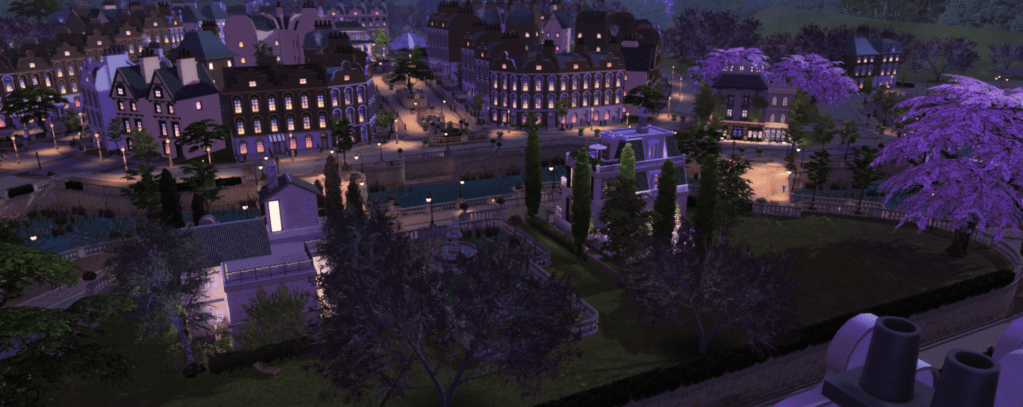
University of Britchester Campus
I was deep in my French studies—not even the glamorous, flirt‑with‑the-professor kind, but the humiliating beginner stuff. The kind with cartoonish dialogues about ordering croissants and asking where the library is. At nineteen, I was apparently “still young enough to learn a new language quickly,” according to every smug polyglot on the internet, but my brain disagreed. Every time I thought I finally understood a rule, the Grammar Gods hurled another exception at my head.
My room smelled faintly of matcha tea and highlighter ink. Outside, the late‑afternoon drizzle tapped against the window like an annoyed finger tap at me not being fluent yet. I was hunched over my notebook, trying to figure out why the same verb could apparently wear seventeen different outfits depending on its mood.
A knock.
I ignored it.
Another knock.
Ignored.
A third, more insistent knock.
Yeah, that one wasn’t going away. I groaned into my textbook.
Firstly, I did not want an interruption. And it was already dark out.
Secondly, there was a girl in my French class who had the world’s most obvious crush on Luc. And because I couldn’t exactly tell her he was my man, she kept stopping by to “ask if I’d heard from him,” and “whether my adorable neighbor was coming back soon,” and “could she have his number.”
I made up all sorts of excuses, but what I wanted to say — or rather scream at her smug face — was: NO. My adorable neighbor graduated and is very much taken, so fuck off, bitch. But since I didn’t give her his number, she acted like I’d committed the worst case of gaslighting and gatekeeping in the history of ever.
If this was her again, I was going to commit a crime and plead the Fifth. Not even sorry.
I yanked the door open—
—and squeaked.
“Luc!”
He pressed a finger to his lips, that soft Bellacorde‑French shhh that made my knees wobble, and slipped inside. He glanced over his shoulder before closing the door, and I caught a glimpse of the oh‑so‑subtle security team pretending to be normal people across the street.
The moment the door clicked shut, we kissed. I clung to him like he was oxygen.
When we finally parted, I caught sight of myself in the hallway mirror—messy bun, oversized sweater, highlighter smudge on my cheek—and cursed my life choices.
“What are you doing here?” I whispered. “Why didn’t you call or text?”
“Picking you up,” he said, his accent curling around the words, softening the p and rounding the vowels. “I diverted the jet again.”
“Oh? Where are we going?”
“Bellacorde. Unfortunately for a somber reason.” His voice dropped. “A close dignitary of my father’s has died. I would like you to come with me to the funeral tomorrow morning.”
My stomach dipped. “And how are we going to explain me?”
“I do not care.” He exhaled, shoulders tight. “Father is… not in good spirits. They were close. He cannot hold the eulogy or manage the formalities, so I must step up. They were like my grandparents, since mine passed long ago. It will not be easy, and I need you there.”
His eyes softened, and something in my chest melted.
“Conte d’Aubigny was well loved,” he continued and I made a mental note of his pronounciation of the last name. Do‑bin‑yee. Remember that, Briony. “Everyone will be too busy mourning to interrogate the crown. And this serves another purpose. You must begin learning names—the who is who. There will not be enough time once you are made official, my ascension is only weeks away now, you will be there for that. Then couple of months, maybe and you will become public. By then we need you to have a good base knowledge.”
My heart did a weird, traitorous flutter. Damn shit was getting real.
“Leontine and Genevieve will help you,” he added. “I will be occupied for a bit, but will not leave your side once things become crowded. Now—do you have any black clothing? Dress or skirt past the knee?”
“Umm… no. Black jeans, black leather jacket, black hot pants, LBD, that kinda stuff.”
“That is fine. I will alert the palace seamstress. She has your measurements.”
Yah, right. Of course she did.
Need clothes? Shopping is for peasants. Why browse racks when you can have garments tailored to your exact body by someone who probably sews for queens? And here I’d thought I was balling big‑time — couture fittings, private jets, summers on yachts — but compared to this, I’ve been slumming it. My poor dad with his “simple life” thing… if Luc ever saw that, he’d probably have a seismic‑level shockwave stroke.
“So… do I pack now?” Serious question at this point. Tailored socks and panties, anyone?
“Would you mind? I know it is last minute but—” He smiled. That smile. The devastating, crooked one that should honestly be illegal.
“—and you forgot how to use a phone?”
“No. I enjoy surprising you.”
I narrowed my eyes. “Do you? Or are you checking whether I have some other guy up in here?”
That earned me a smirk — slow, wicked, entirely Luc. Before I could blink, his hand slid around my waist, pulling me in against him with that quiet, unshakeable confidence he always had. His other hand braced lightly at my hip as he dipped his head, lips brushing my cheek in a kiss that was far too soft for how smug he looked.
He murmured near my ear, voice low enough to short‑circuit my brain, “Maybe. Or maybe I do not have to check in personally…”
I stiffened. He burst out laughing.
“A joke,” he said quickly. “I had to.”
“It better be a joke. I already have one obsessive – borderline aggressive – stalker to deal with. I don’t need another.”
His smile vanished. “Pardon?”
“Oh — not for me. For you.” I rolled my eyes. “That girl from my French class. Remember her? She’s obsessed with you. Always asking about you. Stopping by. Whoever is staying in your townhouse right now is probably drowning in love notes.”
Luc blinked once — then his expression shifted into something slow and amused.
“Obsédée de moi,” he repeated, savoring it. “Alas, I do not remember her. Is she attractive?” His smirk sharpened. “Male monarchs have a long history of keeping mistresses…”
I grabbed my notebook and whacked him repeatedly.
He caught my wrists, kissed me in a way that made it very clear he did not need any extra chicks, and then plucked the notebook straight out of my hands.
“Luc—give it—” But he was already turning away, lifting it effortlessly above my reach. He didn’t even have to stretch. He just angled his body, one arm raised, the other braced lightly against my shoulder to keep me from climbing him like a tree.
I made a grab for it anyway. He stepped back. I tried again. He pivoted, smooth as a dancer.
I gave up. He’d seen it now. The damage was done.
He flipped through the pages with that amused, slow‑forming smile he always got when he caught me doing something ridiculous. His French accent softened the vowels as he read my beginner phrases out loud — je voudrais, où est, je ne comprends pas — each one sounding like it had been sent to finishing school compared to the way I butchered them.
He chuckled under his breath, the sound low and warm, and kept reading, his thumb brushing the edge of the page like he was handling something precious.
He stopped flipping pages.
And I knew exactly what he’d found.
My doodles. My mortifying, prefrontal‑cortex‑not‑yet‑developed doodles.
Briony Rose Beaumont… Luc Sebastien + Briony Rose Beaumont… Hearts for i‑dots, hearts in the margins, hearts floating around like I’d contracted a terminal case of middle‑school brain rot.
I slapped both hands over my face so fast I nearly concussed myself.
Oh God. Oh no. Death, take me. Smite me where I stand. Let the earth open up and swallow me whole.
I was nineteen years old and apparently still drawing like a girl who’d just discovered boys and gel pens.
He didn’t tease. He didn’t smirk. He just reached for a pen with that quiet, deliberate confidence that always made it feel like the room had shrunk to just the two of us.
First, he added the proper accent to his own name — Luc Sébastien — in elegant, old‑world handwriting.
Then he slid the pen down to my name.
Briony Rose Beaumont.
And he underlined Beaumont — his last name under my name — with a slow, confident stroke, like he was signing a decree.
But he wasn’t done.
He lowered the pen again, right beneath the underline, and in neat, formal French script wrote:
“Épouse de Son Altesse Sérénissime, le Prince Souverain Luc Sébastien Beaumont de Bellacorde et du Royaume Triune d’Ondarion.”
Wife of His Serene Highness, Sovereign Prince Luc Sébastien Beaumont of Bellacorde and the Triune Realm of Ondarion, he translated.
My breath caught. My pulse tripped. My entire soul short‑circuited. My ears burned, my cheeks burned, my heart was doing the Kentucky Derby.
He tapped my name with his last name with the pen, eyes lifting to mine, voice low and warm.
“I like that part the best.”
I was pretty sure I ascended.
He tapped the title — Épouse de Son Altesse Sérénissime… — and I swear my heart forgot how to function.
I opened my mouth to speak, but he beat me to it, his voice softening into that low, accented cadence that always made everything sound older, deeper, like it came from a place with marble floors and centuries of history.
“You should understand what that means,” he said, turning slightly so we were shoulder to shoulder, the notebook still in his hand. “The Triune Realm of Ondarion is not simply a country. It is… a union. A promise. A balance.”
I blinked. “Okay, but like… in English, please. Beginner French student here.”
He smiled — slow, fond, a little teasing. “Très bien. I will keep it simple.”
He angled the notebook toward me, tracing the words with his fingertip.
“Ondarion is one sovereign state,” he began, “but it is made of three realms — Bellacorde, Verdemar, and Dambele. Each has its own culture, its own traditions, its own nobility. They were once independent principalities.”
He paused, letting that sink in.
“Three crowns,” he said softly, “but after the great revolution of 1475, they all fell under one sovereign. A Beaumont was chosen to lead. And it has been a Beaumont ever since. And it still is today.”
I swallowed. “You.”
He nodded once. “Not yet, but soon enough. And one day, with you by my side—if you choose it.”
My breath caught.
He continued, voice gentler now. “The term Triune Realm means that the three lands are bound together under one ruler, one constitution, one destiny. But they are not absorbed. They remain distinct. Equal. It is a delicate structure. A… how do you say…” He searched for the word, brow furrowing adorably. “A balancing act.”
“A political Jenga tower?”
He huffed a laugh. “Oui. Exactly that.”
He turned the notebook fully toward me now.
“When you see this title,” he said, tapping the elegant French script, “it is not only about me. It is about the sovereign structure you would stand beside. Bellacorde is the heart. Verdemar is the voice. Dambele is the strength. Together, they form the Triune Realm of Ondarion. We are an island, leaving us vulnerable to attacks on all sides. Each of the states is small by itself, but together we are strong.”
He looked at me then—really looked—and something in his expression softened into something almost vulnerable.
“And I would not lead it alone.”
My chest tightened. “Luc…”
He shook his head lightly, brushing a thumb over the underline beneath Beaumont. “You must know what you are stepping into. Not just a title you receive by marrying the man. You will become part of a realm. One you will help me lead. Real people and their wellbeing. A history older than my family name.”
His voice softened, but the weight of it didn’t. “This is a far cry from what those TV shows have you believe aristocrats spend their time doing. Yes, there is a fair share of laissez‑faire, luxury, galas, ballroom dancing—” he gave me a pointed look, “which you will have to learn properly, even though we already explored that you clearly have the talent for it. If you could just keep from fainting…”
I grimaced at him. “That one time.”
He didn’t even blink. “Three.”
My jaw dropped. “It was not three—”
“It was,” he said, maddeningly calm. “Twice outright, and once in the garden. I caught you, but you were already on your way down, mon amour.”
Heat shot up my neck. “Okay, fine, but the first one was because you dropped the ‘I‑am‑a‑prince’ bomb on me, and seriously, who in their right mind wouldn’t faint? I own that one. The garden one – no Sir! Of course, my knees went weak when you randomly told me you loved me same day we finally kissed! I mean, duh?! And I didn’t faint, I just had pudding legs for a moment, so that doesn’t even count. And the second time was because your ex had her hands all over you and I drowned myself in your delicious champagne. I told you it’s my vice. And how would you like it if I left you standing at some party to go play handsy‑footsy with my ex in some garden?”
His mouth curved — slow, wicked, unbearably confident. “I would demonstrate that I am an excellent swordsman.”
I grimaced, well aware he probably wasn’t even joking. Poor Beckett. “I didn’t know that was an option, but I will keep that in mind for the next time Dominique forgets you are no longer hers—”
“No need. I made that perfectly clear to her. And I am sure her husband will help remind her too. But,” he added, leaning in just enough to make my pulse trip, “it was thrice. Garden counts.”
I made a strangled noise and stuck my tongue out at him, because maturity is for people who aren’t being roasted alive by Prince Perfect.
He laughed softly — that low, warm sound that made even the word responsibility feel like a caress — and his thumb lingered on my name, on the future he’d written beneath it.
I stared at the words he’d written, the ink still fresh, the meaning impossibly heavy and impossibly intimate.
“So,” I whispered, “when you wrote that title… you weren’t joking.”
He leaned in, his breath warm against my cheek, close enough that the world narrowed to the space between us. “Briony, mon cœur…” His voice dropped, low and certain. “I have never joked about you. I joke with you, yes. But never when speaking about you.”
I didn’t even remember running upstairs. One second Luc was underlining Beaumont beneath my name like it was a royal decree, and the next I was in my closet, yanking open drawers and trying to remember how to breathe.
My room smelled faintly of bergamot and cedar, the rain tapping against the window like a metronome for my panic. I threw clothes into a suitcase with the grace of a raccoon in a dumpster.
Luc appeared in the doorway, leaning against the frame like he had all the time in the world. His presence always softened the air somehow — warm, steady, grounding.
“Tu… comment dit‑on… how do you say? Pack like a hurricane,” he murmured, accent curling around the words.
“Well, I’d like to see your pack‑jobs when someone stops by out of the blue to pick you up for a noble funeral abroad,” I snapped — then winced. “Sorry. That was tasteless. I’m just—”
“Nervous,” he finished gently. “Je comprends. It is normal.”
He crossed the room, took the half‑folded sweater from my hands, and placed it neatly into the suitcase. His fingers brushed mine — warm, sure, maddeningly calm.
“The palace seamstress will bring what you need,” he said. “You only pack what makes you comfortable. Cozy clothing. Maybe some…” His eyes flicked to me, amused. “…how do you say… jolis dessous.”
My knees went weak. Damn dude. Pretty lingerie, huh?
He gave me that look — the one that made my pulse forget its job — and suddenly I wanted to shove him backward onto the pile of clothes on my bed and have my way with him. Which was wildly inappropriate, considering he was grieving someone he clearly cared about.
Comfortable. Right. As if that existed anymore.
I zipped the suitcase, grabbed my coat, and followed him downstairs. Outside, the air smelled like wet pavement and pine. A sleek black car waited at the curb, windows tinted, engine humming softly. The security detail pretended not to watch us.
Luc opened the door for me. “Prête?”
“Not even a little.”
He smiled. “Good. Then you will not overthink.”
Flight to Bellacorde
The jet was quiet, luxurious, and smelled faintly of polished wood and citrus. I sank into a leather seat while Luc spoke softly with one of the attendants in Bellacorde French — smooth, elegant, older than Parisian French, like a language that remembered its own history.
When he sat beside me, he took my hand without asking. His thumb brushed over my knuckles, slow and grounding.
“Conte Henri d’Aubigny,” he said quietly, “was my father’s closest friend. His confidant. His… anchor. He guided him through the early years of the reign. Losing him is like losing a limb. He was like a grandfather to Leontine and me. Ours died when we were very young.”
The grief in his voice was soft but unmistakable.
I squeezed his hand. “And you grew up with his family?”
He nodded. “Henri had one son, Adrien, who died in a plane crash with his wife. Henri and Mathilde raised their grandchildren — Clementine and François. They are our age. We grew up together. Summers. Lessons. Festivals. State ceremonies.” His jaw tightened. “They were like siblings to me. This loss… it cuts deeply.”
He paused, then continued.
“Duke Philippe de Villeneuve will be there as well. He has been my closest friend since childhood. His parents traveled often, so if he was not with me, he was with the d’Aubignys. When he lost his parents shortly after his son was born, Henri and Mathilde helped guide him. His son, Louis Étienne, is three now, just a little older than Cordelia.”
Something warm flickered in my chest. Luc was finally letting me see the people who shaped him — the ones he’d kept hidden to protect me, to protect us.
“And,” he added carefully, “before Philippe inevitably brings it up as he has a penchant to try and get me in trouble… Clementine and I were once more than close. It was not arranged, but it was expected. Our families approved. We were teenagers, and for a time, everyone believed we would marry.”
My breath caught — not from jealousy, well, maybe from that too, but mostly from the weight of what he was trusting me with. I couldn’t have seriously expected a man like him to have lived chaste and celibate.
“It ended,” he said simply. “Long before I met you. But the history is there. And people will remember it. I would prefer not another repeat of you finding out about Dominique, which is why I am telling you all this now.”
He looked at me then — steady, earnest, vulnerable in a way he rarely allowed.
“I want you to know everything before we arrive. I do not want you blindsided.”
I nodded, heart thudding. This wasn’t just a trip. This was Luc pulling me into the inner circle — the part of his life that had always been off-limits.
And he was doing it because grief had stripped away the distance he usually kept. Because he missed me. Because he needed me near.
I barely slept at Domaine Beauvigne. Even after all the times I’d stayed here, the suite still felt unreal — the balcony overlooking the vineyards and the sea, the soft morning light spilling across the cream curtains, the quiet that only ancient stone and old money could produce. A palace by any other name, but to Luc it was simply home.
At dawn, a soft knock sounded, and before I could even sit up, the familiar trio of maids swept in — the same women who had transformed me for the masquerade ball. They moved like a coordinated breeze, murmuring in French, laying out fabrics I’d never seen before.
The dress they chose was simple and elegant: black, falling just past my knees, tailored so cleanly it looked like it had been made for me overnight. I balked at the tiny hat — a structured little thing with a black flower — but the maids exchanged looks that said oh, sweet summer child and set to work.
They pulled my hair into an elegant chignon, fingers quick and sure, pinning and smoothing until the hat sat at the perfect angle. When they stepped back, I caught my reflection in the mirror and froze.
I hardly recognized myself.
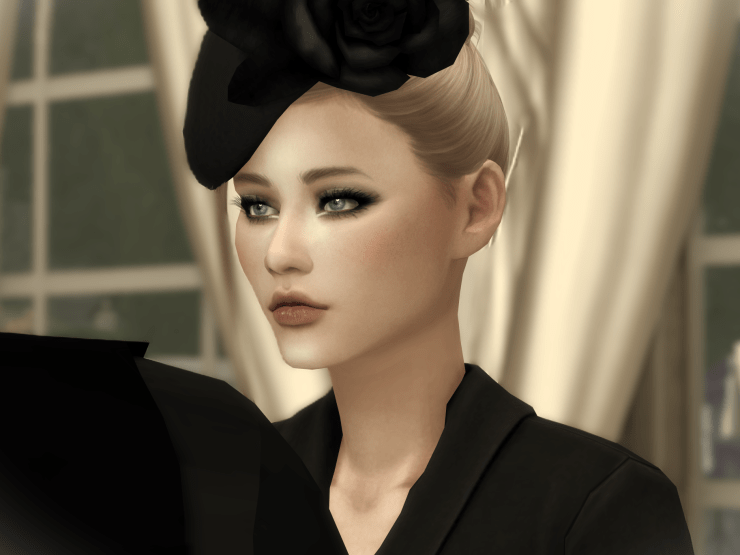
Elegant. Composed. Bellacordian. A version of me that looked like she belonged in a palace — which, technically, I was standing in.
I wasn’t sure if that was good or bad.
I was still staring at the mirror when Luc appeared in the doorway, leaning against the frame like he had all the time in the world. His presence softened the air — warm, steady, grounding.
“Good morning, mon cœur,” he said quietly.
The words hit differently knowing he had slipped out of my bed barely an hour and a half ago — soft footsteps, a whispered kiss to my shoulder, the faint click of the door as he left to make it look like we’d slept in separate rooms. Appearances. Protocol. Pretending. Even though at this point, anyone with functioning eyes had to know I wasn’t just a former classmate.
Still, we played our parts.
Luc stepped fully into the room, and the maids immediately dipped into small curtsies. He gave them a polite nod — then a gentle, dismissive gesture. “Merci. That will be all.”
They vanished as efficiently as they’d arrived, the door closing behind them with a soft click.
Only then did he let the warmth show.
Luc’s gaze moved over me — the dress, the hat, the chignon — and something in his expression softened even further, a warmth he couldn’t quite hide.
“You look…” He paused, searching for the right word, then gave a small, reverent nod. “Prête. Ready.”
He stepped closer, lowering his voice to something only I could hear. “Mon cœur… this suits you. More than you know.”
His gaze held mine — steady, warm, quietly proud.
“You look every inch the woman who walks beside me.”
Maison d’Aubigny
Bellacorde’s air was different — crisp, mineral‑rich, carrying the scent of the sea. The Maison d’Aubigny rose from the hillside like a white stone sentinel: tall windows, elegant symmetry, banners lowered to half‑mast. An impressive residence. Elegant, old, a statement as much as a home.
From the street in front of it I could see the distant silhouette of Domaine de Beauvigne, Luc’s home — pale stone against the horizon, maybe a twenty‑minute walk if you knew the paths.
The proximity made something in my chest tighten. Their families weren’t just close. They were interwoven.
Mourners in black moved like a slow tide toward the chapel.
Luc’s hand found the small of my back. “Stay close to me.”
Inside, the chapel was dim, lit by candles flickering against vaulted ceilings. The scent of beeswax and incense hung heavy in the air. A choir sang softly in Old Bellacorde, the harmonies low and mournful.
At the front lay the casket — carved wood, draped in the D’Aubigny crest.
Luc’s father stood beside it, pale, rigid, grief carved into his features. He looked older than I’d ever seen him.
When he saw Luc, something in him broke. He reached for his son, gripping his shoulders.
“Mon fils,” he whispered.
Luc bowed his head, forehead touching his father’s. A private moment, raw and unguarded.
I looked away.
Mathilde d’Aubigny — elegant, silver‑haired, dignified even in grief — approached me first.
“You must be Briony,” she said softly, taking my hands. “Luc has spoken of you.”
My heart nearly stopped.
Then came François — tall, blonde, solemn, polite — offering a respectful nod.
And then—
Clementine.
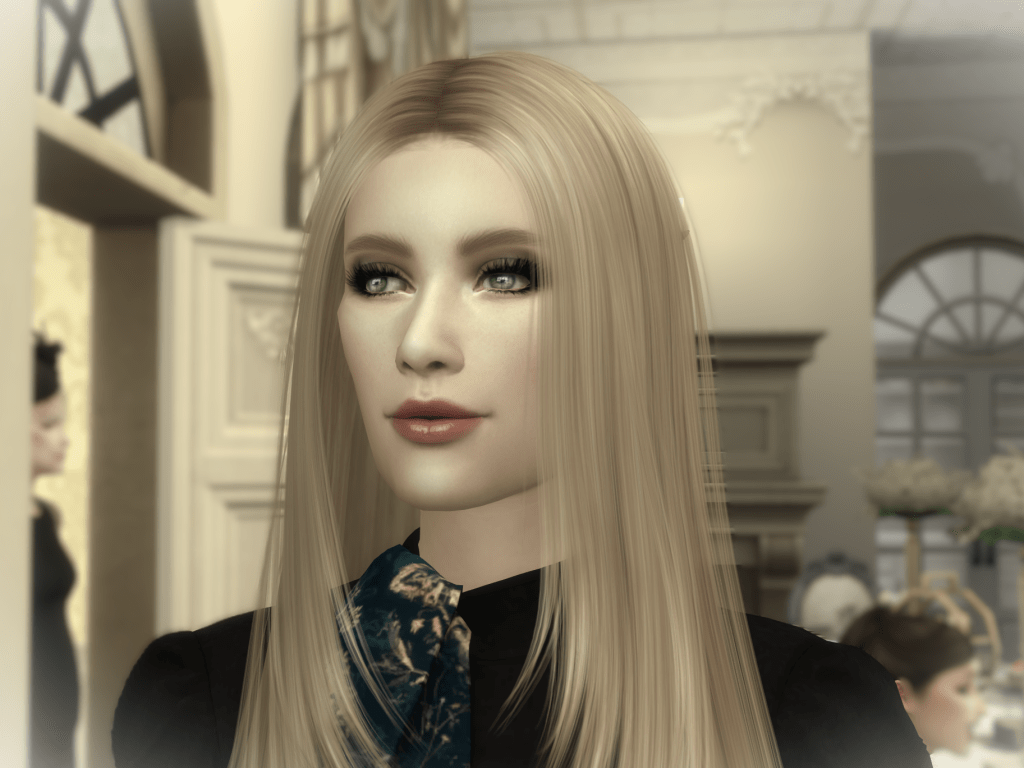
Beautiful. Blonde. Poised. Wearing black silk and a look that could cut glass. Her eyes flicked from me to Luc and back again, calculation sharp as a blade.
“Luc,” she breathed, stepping closer, touching his arm with the ease of someone who had once been allowed to. “You came.”
“Of course,” he said gently, but not warmly.
Her gaze slid to me, lingering on my hand in his.
“And you brought… company.”
I opened my mouth to respond, but Luc beat me to it.
“I have,” he said simply.
Clementine’s smile didn’t reach her eyes. “How lovely.”
And in that moment — I understood everything Luc hadn’t said aloud.
This wasn’t a girl with a crush. This was a woman who had once been considered a future princess. A woman whose family estate stood within sight of his own. A woman who had history, expectation, and lineage on her side.
And she did not like me.
Not even a little.
Not even a little.
A soft chime rang through the chapel — a single, resonant note. The prêtre‑chanoine, robed in deep black with a silver stole, stepped forward to the lectern. His voice carried gently:
“Mesdames et messieurs… veuillez prendre vos places.”
Luc turned to me, his hand brushing mine — a touch meant only for me, hidden by the movement of the crowd.
“Sit with my family,” he murmured. “Front row, on the right. Opposite the d’Aubignys.”
The placement said everything: equal honor, equal grief, standing in this society.
I nodded, throat tight, and slipped into the seat beside Geneviève and Leontine. Across the aisle, Mathilde and her grandchildren gathered close, their grief a quiet, dignified weight.
The prêtre‑chanoine gave Luc a subtle incline of his head — the kind of signal only someone raised in this world would recognize.
Luc exhaled once, steadying himself, then stepped us to the podium.
His voice filled the chapel — steady, resonant, carrying centuries of expectation.
He spoke of loyalty. Of friendship. Of the man who had shaped his father’s reign and, by extension, his own future.
And when his voice wavered — just once — the entire room held its breath.
I watched him, heart aching, realizing that this was the man the world saw:
Not just Luc. Not just the boy who teased me about my French notes. Not just the man who underlined Beaumont beneath my name.
But the future sovereign of the Triune Realm of Ondarion.
And he had brought me here — into his grief, into his history, into his world.
A gesture louder than any declaration.
The funeral ended with the soft tolling of the chapel bell, the sound rolling over the hills like a sigh. But instead of dispersing, the inner circle — the Bellacorde nobility, the families who mattered, the ones whose names carried centuries — were quietly ushered toward the waiting cars.
Luc leaned close. “Father is hosting a reception at Domaine de Beauvigne. It is tradition. When a pillar of the realm falls, the sovereign gathers those who remain.”
I swallowed. “And I’m… invited?”
His fingers brushed mine. “You are with me.”
Three words. Simple. But they hit like a vow.
The estate rose before us like something out of a painting — pale stone, ivy‑clad walls, tall arched windows glowing with warm light. The air smelled of rain on old stone, lavender from the gardens, and the faintest trace of oak barrels from the cellars.
Inside, the reception was understated but elegant: soft music, low conversation, silver trays of food, and glasses of Beauvigne wine that caught the candlelight like garnets.
Charles stood near the hearth, greeting guests with the quiet dignity of a man holding himself together by sheer will. Every so often, his gaze drifted toward Luc — pride and grief warring in his expression.
Luc stayed close to me, his hand brushing my back, guiding me through the room with subtle touches that felt both protective and possessive.
The Best Friend
He spotted us before we even reached the hearth.
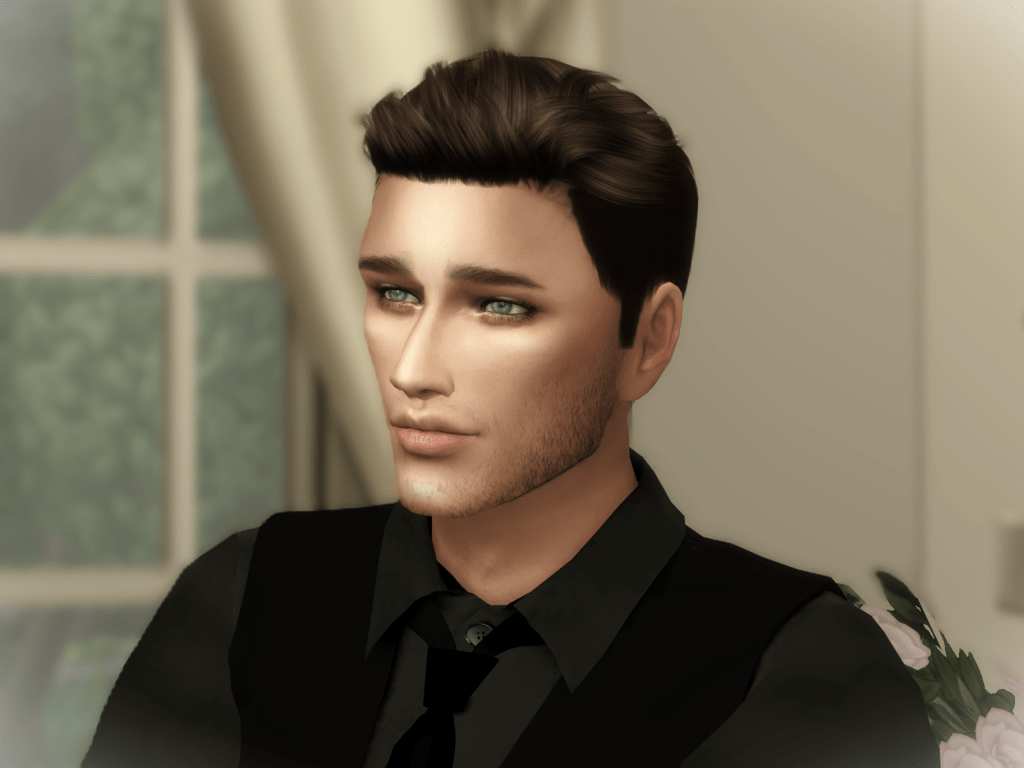
A tall man in impeccably tailored black stood with one shoulder propped casually against the stone, a glass of Beauvigne red dangling from his fingers. His dark hair was pushed back in that effortless aristocratic way — the kind that said I woke up like this and somehow wasn’t a lie. And those eyes… green‑blue, bright even in the dim light, gleaming with mischief the moment they landed on me.
He raised his glass ever so slightly in greeting, the corner of his mouth lifting like he already knew exactly what effect he had on people.
And God help me — he was handsome. Not just handsome in the general, polite sense. Handsome in the oh great, another one of Luc’s stupidly attractive noble friends, why is this my life sense. The kind of handsome that made my spine straighten and my brain shut down for a second before I remembered how to walk.
Seeing him beside Luc only made it worse. Same posture, same elegance, same quiet confidence, but where Luc was all controlled warmth and gravity, this one radiated charm like it was a sport he trained for.
Of course Luc would have a friend like this. Of course.
His smile spread slow and wicked—the smile of a man who enjoyed trouble and had just discovered a fresh source of it.
He stepped forward, bowing over my hand with theatrical flourish—the kind that made several nearby noblewomen glance over in irritation.
He gave me a dazzling smile and bowed slightly. “Oh, mon Dieu… enchanté, mademoiselle.”
Right. French class. I could do this.
I straightened a little and tried to return the greeting the way my mom taught me — listen first, then mimic the shape of the sound, not the letters.
“Enchan…té, monsieur,” I said carefully, the last syllable soft, almost musical. I hoped.
I flicked my eyes to Luc, silently asking Was that okay? Did I just butcher that into something horrifying?
Luc’s mouth curved — proud, amused, a little too pleased — before he turned to his friend, expression shifting into something far more formal.
“Philippe,” he said, voice low but firm, “en anglais, s’il te plaît.”
Ah. So the correction was for him, not me. Good. Didn’t fuck up the intro. Phew.
Philippe released my hand slowly, straightening with a grin that widened like a cat who’d found cream.
“Of course. Well, Your Highness, aren’t you going to introduce us properly?”
Luc exhaled through his nose—not quite a sigh, not quite a warning—and gave the introduction the way only a prince could: formal, clipped, and edged with affection.
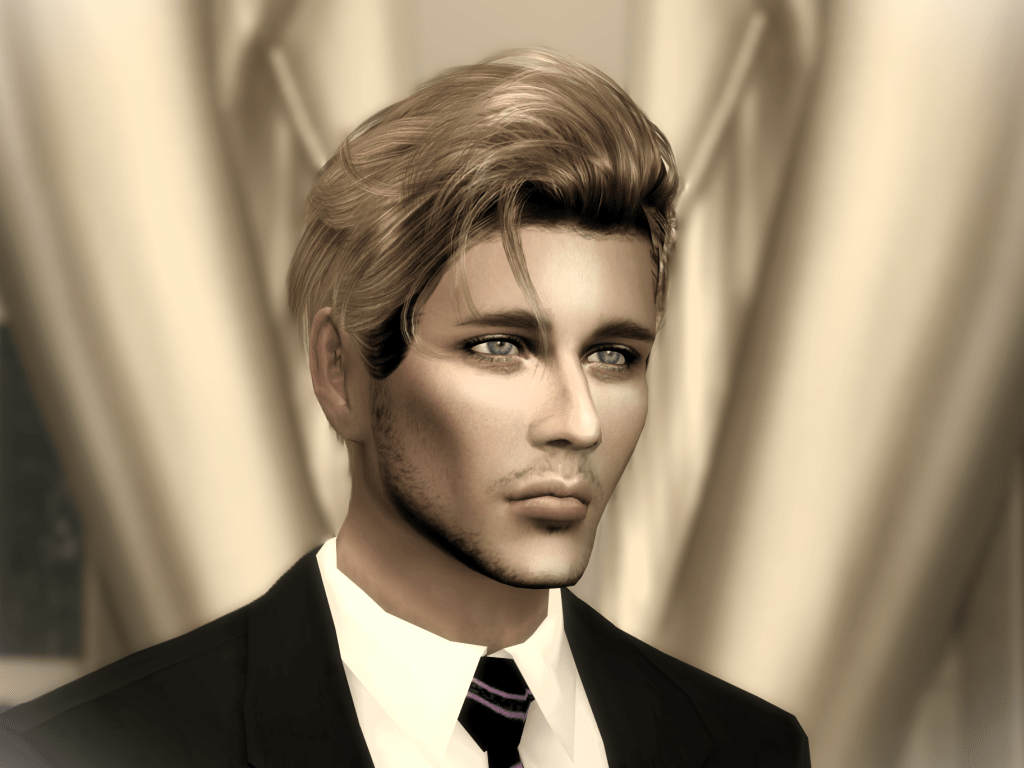
“Briony, this menace is Duc Philippe de Villeneuve, heir of House de Villeneuve, my oldest friend, and the reason I have premature gray hairs.”
Philippe pressed a hand to his chest. “Well, your barber does an excellent job hiding them. Mon frère, you wound me.”
“Oui, truth hurts, my barber and I are working overtime because of your antics. Philippe, this is Mademoiselle Briony Rose Cameron of San Sequoia. A dear fellow student from my recent days at the University of Britchester.”
Philippe’s attention returned to me—fully, boldly, shamelessly. Luc’s words didn’t even really hurt as I could see Philippe very much knew who I really was to Luc, and his response confirmed it.
“Ah yes, the fellow student story. So predictable. Well, now that I have been properly introduced…” His grin sharpened. “I have heard much about you… but clearly not enough. Why have you selfishly been hiding this beautiful gem from us?”
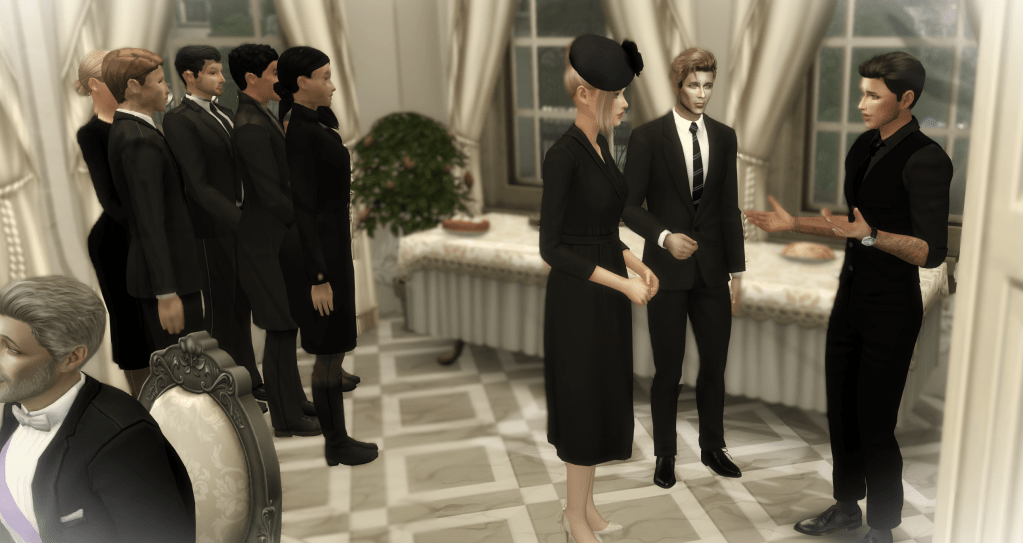
Luc shot him a look. “You know why.”
“Right, right, those old pesky rules,” Philippe said breezily, waving his wine glass as if brushing away the entire concept of secrecy. “Well, if you need a place for her to stay, my door is always open. We have plenty of room at Maison de Villeneuve. Ocean views, too—not just the boring vineyards. We have those too, our wines rival Luc’s, but the ocean is much more captivating.”
Luc didn’t miss a beat. “You would like that, I bet. Voyons. We’ll come visit you at some point, but I will absolutely not let Briony out of my sight around you. I wouldn’t trust you with a houseplant, let alone deliver ma douce to you like a sparrow to a cat.”
He angled a warning look at Philippe, voice dropping into that smooth, aristocratic cadence that always meant he was only half‑joking, then smiled at me.
“Be careful with this one, mon cœur. He tends to forget he’s married sometimes.”
Philippe clutched his chest dramatically. “Ouch. Mon prince, must you always be so dramatic? But I will add—if Luc ever fails to live up to your expectations, dear Briony, I would be more than happy to restore your confidence in Bellacordian men.”
Luc’s hand slid to my waist — subtle, but unmistakably territorial, especially considering the very clear no touch in public order from his father. My breath caught.
“Where is your wife?” Luc asked, voice deceptively mild. “And how is your son?”
Philippe’s expression flickered — irritation, resignation, something tired beneath the charm. He glanced around the room without enthusiasm.
“My son Louis is three years old, and that is all I will say to that. We just hired the third nanny this year. He has managed to run the other two off with his unruly behavior and demanding attitude.”
I couldn’t stop myself. “Takes after his father then, huh?” It came out of my mouth before I could do something about it. Oops.
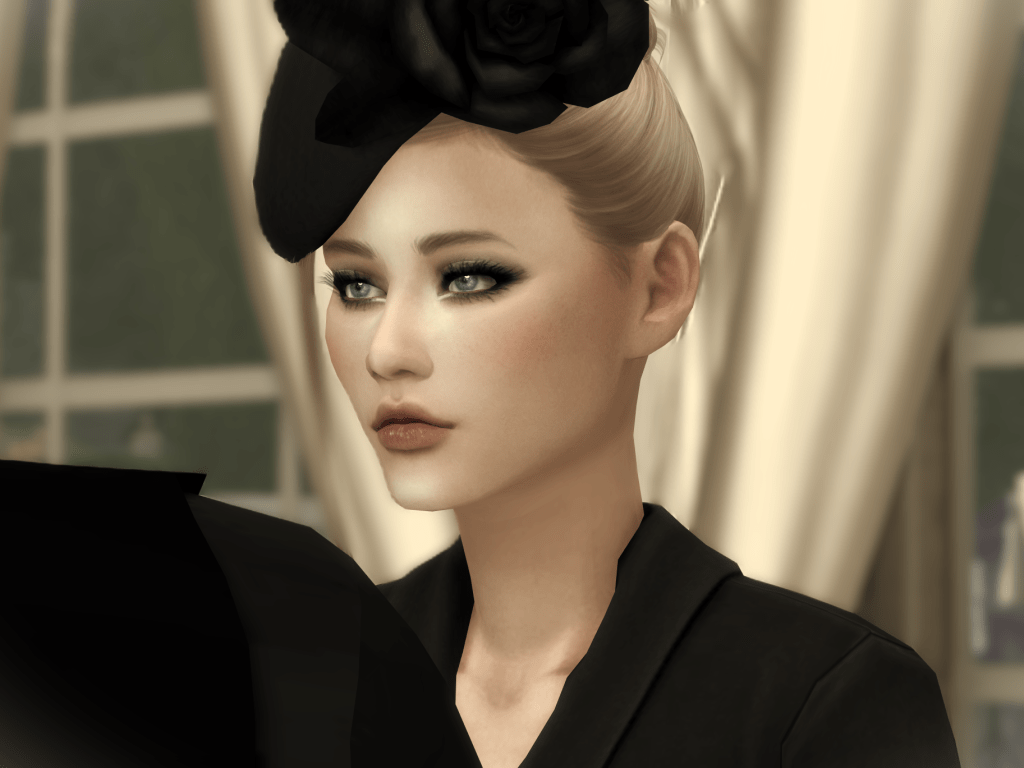
Philippe froze for half a second — then a slow, wicked grin spread across his face. He let out a low whistle, eyes sparkling with delighted surprise as he looked at me.
“Oh, elle mord,” he said, amused. “She bites.”
Luc’s smirk deepened, pure satisfaction. “I warned you,” he said, giving my waist the faintest squeeze. “She is not afraid of you. Nor easily impressed.”
Philippe laughed, genuinely entertained. “Good. Luc needs someone who keeps him on his toes.”
Luc shot him a look. “And you need someone who keeps you out of trouble.”
Philippe lifted his glass in a mock toast. “Touché. Well, as for my son, either Briony is right,” Philippe said, swirling his wine, “or it’s because his mother spoils him rotten. In the worst way.”
He sighed, rolling his eyes heavenward.
“To add insult to injury, Eloise has been on me about another child,” he added, lowering his voice conspiratorially. “But considering the little monster we already have—or the… ah… personal challenges—I cannot say I am fully behind the idea. One child feels like plenty at the moment, especially taking into account how much it took for us to get that one. I am not looking to repeat all of that anytime soon, if at all.”
Luc snorted. “How very against code of you. Two heirs minimum, dear Philippe. Have you forgotten?”
Philippe waved a hand dismissively. “How could I forget, when it is all anyone ever reminds me of? Where is that wife of mine? Agh, she has to be around here somewhere,” he said, scanning the room. “My darling Eloise is the type who fades into the woodwork. She does it so well most assume she’s part of the décor—and there have been private times where I wondered the same in our bedchambers. Purely decorative even between the sheets. How in the world am I to even attempt to father more children with that level of… serenity and utter lack of passion? One needs at least a spark to light a fire.”
He turned back to me, eyes bright with mischief.
“You, Mademoiselle Cameron, are not like that. I can tell. This one finally has the spunk you were looking for, does she not, Luc? You see, Mademoiselle Cameron, Luc and I share that penchant, alas… unlike me, he seems to have succeeded in finding it. Lucky man. I gave up trying too soon, as it turns out. Ladies of the proper ranking are usually about as exciting as a pinned butterfly — beautiful to observe but utterly dead on the inside. And that includes all aspects of life, even the very private moments. I have the inkling that you are a great deal more… piquante behind closed doors than you already appear.”
He lifted his glass toward Luc, grin sharpening.
“Fais attention, mon frère. Try not to get yourself burned by her fire.”
Luc’s smirk was pure warning. Philippe’s grin was pure provocation. And I suddenly understood why they were brothers in everything but blood.
“Don’t worry about me, Philippe. And while we are being so frank here, you didn’t give up anything, mon frère,” Luc said dryly. “You are married now because of your wild ways, and the vows have not changed you at all.”
Before Philippe could elaborate on his wild ways, the “decorative” wife or his lack of enthusiasm for a second child, a soft voice drifted toward us like a breeze through lace curtains.
“Philippe… you wandered off again.”
We all turned.
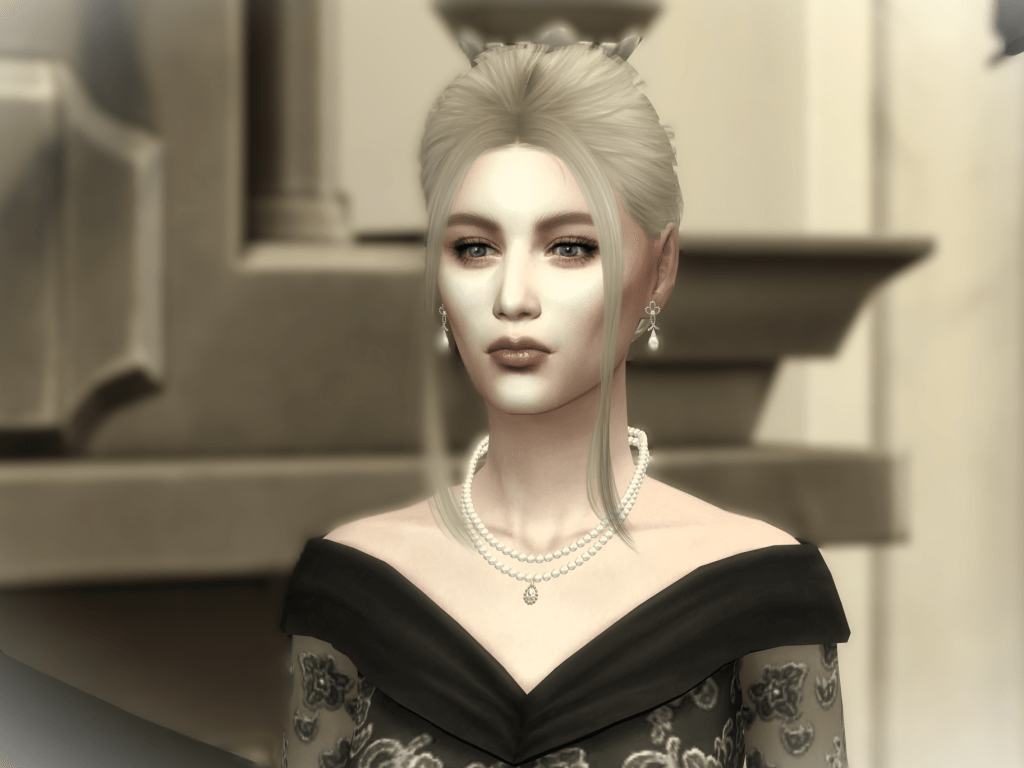
A lady no one needed to introduce — who could only be Eloise de Villeneuve, niece to Princess Geneviève of Bellacorde, Luc’s impeccably composed stepmother, and so strikingly her image that the resemblance was almost unsettling — stood a few steps away, hands folded lightly in front of her, posture perfect, expression serene. She looked as though she had materialized out of the candlelight itself, her pale blond hair swept into an elegant chignon that revealed the delicate, patrician lines of her neck, porcelain skin untouched by the sun, deep blue eyes carrying that same cool, distant sadness her aunt was known for. Her black dress was simple and elegant, whispering rather than speaking.
But before Philippe could respond, another voice cut in—bright, amused, and unmistakably familiar.
“There you are, big brother. I should have known you’d be causing trouble.”
The young woman I already knew all too well since the last ball here — and her garden walks with my Luc — Dominique, slipped in beside Eloise, her resemblance to Philippe so striking it was almost comical—the same green‑blue eyes, the same sharp cheekbones, the same effortless aristocratic posture. Nobody had to tell you they were siblings. But where Philippe radiated mischief, Dominique radiated intent. She took in the scene with one sweeping glance, and her smile widened.
“Oh, this is delightful,” she said, eyes flicking between me and Luc. “Philippe – I leave you alone for five minutes and you’re already flirting with someone you shouldn’t.”
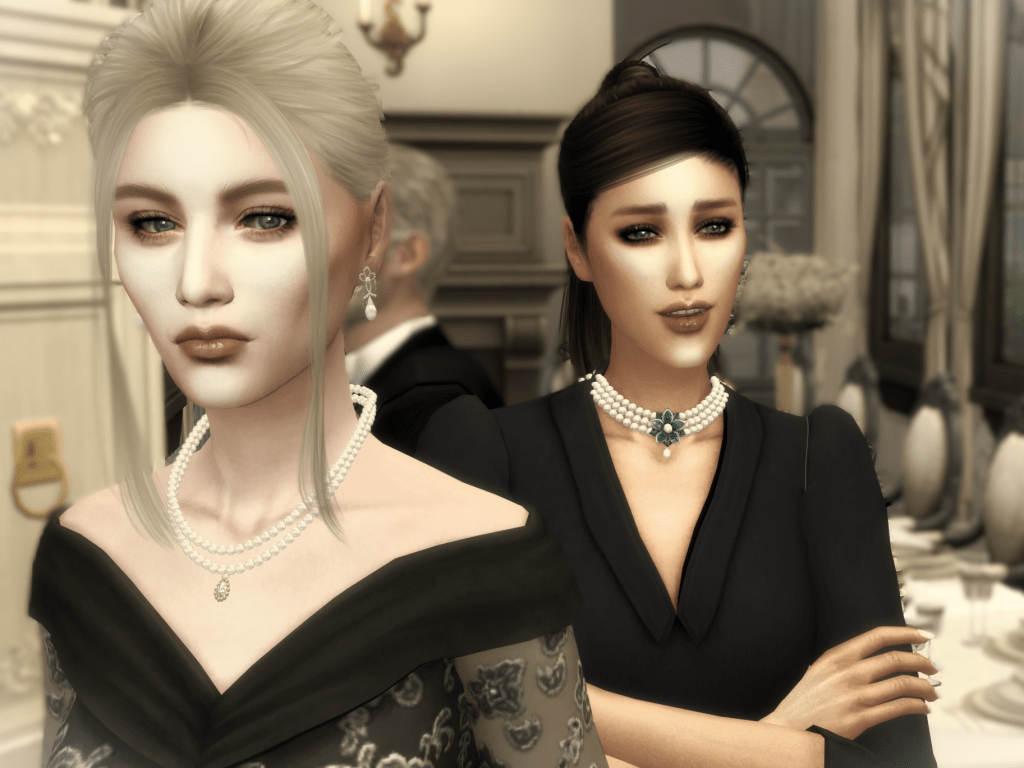
Philippe groaned. “Dominique, please—”
“Don’t ‘please’ me,” she said, nudging him with her shoulder. “You’re lucky Eloise found you first. I would have dragged you by the ear.”
Eloise’s lips curved in a soft, apologetic smile. “Forgive him,” she said to me gently. “He forgets himself sometimes.”
“Most times,” Dominique corrected.
Luc snorted. “All times.”
Philippe threw up his hands. “Mon Dieu, surrounded by traitors.”
Dominique ignored him entirely and turned to me with a warm, assessing look.
“You must be the mystery lady,” she said with barely any accent, her English was as perfect as she looked. “I’ve heard… well, not enough, apparently. Luc is stingy with details.”
I flushed. “It’s nice to meet you. I am Briony.”
“Oh, I know who you are, Miss Cameron, and the pleasure is mine,” she said, and I could tell she didn’t mean it. “I’m Viscountess Dominique Fleur Gauthier, formerly de Villeneuve, Philippe’s sister—the younger, smarter, and better‑behaved sibling. Though that last part isn’t difficult.”
Philippe scoffed. “Lies.”
Dominique leaned in slightly, lowering her voice just enough for only our little circle to hear.
“Don’t worry,” she said. “I’m the one in this family who actually likes people.”
Philippe chuckled. “She does, but only so she can make them feel safe until she can stick the knife in their backs.”
Which, frankly, I believed to be painfully accurate.
Eloise touched Philippe’s arm—a light, practiced gesture.
“Darling, my aunt was looking for you,” she said softly. “She wants to speak with you before the toast.”
Philippe groaned again. “Of course she does. Sends the goodie two‑shoes to fetch me for a lecture by Lady Prim & Proper. I bet it will be riveting.”
Dominique rolled her eyes. “Go. Before she sends someone less pleasant to fetch you.”
“How could she? You are already here.” he smirked at his sister.
Philippe kissed Eloise’s cheek—careful, measured—then gave me one last wicked grin.
“Until later, Mademoiselle Cameron.”
As he walked away, Dominique watched him go with a mixture of fondness and exasperation only a younger sibling could manage.
Then she turned back to me, her smile softening.
“Welcome to Bellacorde,” she said. “You’re going to need a drink to survive all this.” Turning to Luc, she added with a little more sting, “She is old enough to drink, n’est‑ce pas?”
Luc’s hand tightened at my waist, warm and grounding.
“She is, thank you for your concern,” he said. And even with my beginner‑level fluency, I could tell that was royal‑court language for: Kindly go fuck yourself. Delivered in pure aristocratic frost.
“Briony is more than well‑prepared to handle all this and more.”
Dominique arched a brow, glaring at his hand on my waist. “Oh, I’m sure she is. I’m just not so sure you will be, mon trésor.”
And with that, she slipped away after Eloise—leaving me with the distinct impression that the de Villeneuve siblings were a force of nature all their own.
We hadn’t moved far when another group approached — quieter, darker, wrapped in the solemnity of the evening. At their center was the Dowager d’Aubigny — Do‑bin‑yee, as Luc had said it earlier, all soft consonants and old‑world polish — the widow of the man whose life we were here to honor. I had seen her at the funeral, accepting condolences with the brittle dignity of someone holding herself together by force of will.
Her grandchildren flanked her — the new Count, François d’Aubigny, and his sister.
Clementine.
I’d only seen her from a distance before — at the funeral, at the house earlier — but up close she was even more striking. Tall, impossibly elegant, blonde hair styled to perfection, her gown a masterclass in aristocratic restraint. She looked like she had stepped out of a portrait in the halls of House d’Aubigny.
Her eyes landed on Luc.
And softened.
Then they landed on me.
And did not soften at all.
“Luc,” she breathed, stepping forward, her French accent thick and deliberate. “Enfin. You came.”
Luc inclined his head politely. “Of course. I would not miss paying my respects.”
I had to hold back an eyeroll — she’d already said all of that at their home. Yes, Luc was here, but not for you, sweetheart. Keep your panties on.
François stepped forward with warmth, offering his hand to Luc, then to me. “Mademoiselle Cameron. We met briefly earlier — thank you for your kindness to my grandmother and the respects to my late grandfather.”
He said his own name the French way — Fron‑swah — smooth and effortless, like he’d been born speaking in italics.
I nodded. “Of course. I’m very sorry for your loss.”
Before he could say more, Dominique appeared at his elbow, linking her arm through his with the ease of long friendship.
“François, come. Eloise and I need you.”
He blinked. “For what?”
“Our husbands need your help, ma chere,” Dominique said, already steering him away.
Eloise gave me a small, sympathetic smile as she followed them.
And just like that, Luc and I were alone with Clementine.
Her gaze slid to me again, cool and assessing.
“So,” she said in French, her tone light but her words sharp as needles, “c’est elle, alors? La petite Américaine?”
I caught maybe two words. Luc caught all of it.
“English, Clementine,” he said quietly — pronouncing her name the French way, Klay‑mon‑teen, all soft vowels and elegance I could never pull off.
She tilted her head, lashes lowering. She switched to English — barely. Her accent was thick, unmistakably French, the kind that made every syllable sound elegant and expensive. It only made her more beautiful, more magnetic — and I hated that it made me feel small.
“Pourquoi? We are in our county, are we not? Why speak her language in our home. Why should she not return the favor?”
Luc’s jaw tightened. “Because I asked. Briony is learning our language on her own accord, which to me shows all the respect I need. Give her time.”
“Well,” she said, her smile thin, “I suppose it is charming that she is learning. Though French is… how do you say… not a language for beginners.”
Heat rose in my cheeks.
Clementine saw it.
And pressed.
“Oh, but perhaps you can show me what you learned,” she continued, slipping back into French, her words flowing fast and elegant, “ce que tu as appris jusqu’à maintenant? Une phrase? Un mot? Quelque chose?”
I froze.
Luc stepped in immediately. “Clementine.”
She ignored him, eyes locked on mine, waiting for me to drown. “Just one little sentence, maybe?”
Luc’s voice sharpened. “Enough.”
Her smile faltered — just a hairline crack — before she smoothed it over.
“Très bien,” she said softly. “If you insist.”
“I do insist.”
She turned back to Luc, her voice gentling in a way that made my stomach twist.
“You look tired, ma chère,” she murmured. “You always did carry too much all by yourself. Poor darling.”
Luc’s hand found my waist again — grounding, protective, unmistakable.
“I’m fine,” he said. “And Briony is with me.”
Clementine’s eyes flicked to his hand.
Then to me.
Then back to him.
“I see,” she said, her voice soft but her meaning sharp. “How… lovely for you to have such a caring… classmate.”
When Luc had called me that earlier with Philippe, it hadn’t bothered me. It was teasing, affectionate, ours.
But when she said it?
Oh, it hit like a needle dipped in poison.
Classmate. As if I were some temporary study buddy he’d outgrow. As if I didn’t belong here. As if she hadn’t just watched Luc put his hand on my waist — my waist — like it was the most natural thing in the world.
My smile tightened, brittle and bright.
Classmate. Sure. Keep telling yourself that, princess.
Because I was the one he was touching. I was the one he brought here. I was the one he chose.
And she knew it. That was the best part — she knew. And I knew it too, and wouldn’t let her forget it either. But she wasn’t the type to give up quickly as I learned.
Clementine stepped closer, her perfume drifting between us — something floral and unmistakably French. Her accent thickened deliberately, turning every word into a caress.
“You know,” she said, eyes fixed on Luc with a softness that felt anything but soft, “we spent so many summers together here at Beauvigne. Do you remember, mon cher? When you taught me how to hold your…”
She paused — a deliberate, lingering silence — before letting her gaze drop, then rise slowly back to his.
“…sword.”
She let the word linger — velvet‑smooth, heavy with meaning. She flicked a glance at Luc, then let her eyes slide to me, a slow, satisfied smirk curving her mouth.
And suddenly I wasn’t entirely convinced she meant an actual sword. No. The pause, the look, the smirk — she meant the one attached to him.
Down his pants.
WTF?!
“I stumbled and twisted my ankle, and you carried me all the way back to the house.” A soft, breathy laugh. “You were always so protective.”
Yeah, I bet he carried you home — and straight into his bedroom for some more… swordfighting. The undressed kind. Was this woman serious right now? Going there? With me standing right here? And on the day we buried her grandfather who raised her?
Dayum.
Starting to think all the upper‑class socialite catfighting I’d survived so far was child’s play compared to the heavy artillery these people rolled out when jealous. Yikes.
Luc’s jaw tightened. “Clementine—”
“And the winter you stayed with us,” she continued, ignoring him entirely, “when we hid in the library and read poetry by the fire. You recited Verlaine to me. It was… très romantique.”
My stomach twisted. Romantique? I wanted to romantically bury my heel up her ass for this nonsense.
She finally looked at me — really looked — and her smile sharpened like she’d just found a bruise she wanted to press.
“Everyone thought we would marry one day,” she said lightly. “Even my grandfather. He adored Luc. Truly.”
It felt like the floor dropped out from under me. Ouch didn’t even cover it — it was like being shoved off a cliff with a polite smile.
Luc’s hand tightened at my waist.
“Clementine,” he said again, firmer.
Good. Because if he didn’t shut this down soon, I was about to. I didn’t care how noble she was, how blonde, how French, how portrait‑perfect she looked in her little House d’Aubigny tableau — I was two seconds away from reminding her that grief didn’t give her a free pass to act like a deranged ex‑fiancée in a period drama.
Reading poetry by the fire? Verlaine? Très romantique?
Girl, please.
We were standing in the middle of a wake, not auditioning for a remake of Dangerous Liaisons. And she was out here tossing around memories like grenades, trying to blow holes in my confidence with every syllable.
Heavy artillery, indeed. And I was about done being polite.
But she wasn’t finished.
“Alas,” she sighed, “Luc can be… how do you say…” She tapped her chin, pretending to search for the word. “Ah. Changeable. Yes. He changes his mind quickly. One moment here, one moment gone.” Her eyes flicked to me, bright with false sympathy. “You must be careful with that, Mademoiselle Cameron. It can happen to anyone.”
Heat crawled up my neck. Oh, she did not just—
Luc’s voice dropped, low and warning. “Ça suffit.”
Then, after a beat — colder, clipped: “That’s enough.”
Clementine blinked at him, all innocence.
“Quoi? I am only being honest. You were quite the… ladies’ man. Possibly still are. How do they say about the leopard and its spots?”
A muscle ticked in Luc’s jaw — the only sign he was seconds from losing the last of his patience.
Clementine’s eyes drifted away, serene and satisfied.
She had said exactly what she wanted to say. And she had said it beautifully. And it worked — if her goal was to make me hate her with the fire of a thousand suns. What a royal … !
Luc inhaled once — sharply — and something in his posture changed. The warmth dropped from his expression, replaced by a cold, princely precision I had never seen before.
“Briony,” he said quietly, his voice clipped, formal. “Wait here. I will be right back.”
My heart stuttered. “Luc—”
But he was already stepping away from me.
He reached for Clementine’s elbow — not roughly, but with a firmness that left no room for argument. A gesture still technically polite, still technically appropriate, but carrying the unmistakable weight of command.
“Viens avec moi,” he said. Come with me. Not phrased like a polite request. A royal instruction. Or an order.
Clementine blinked, startled for half a second — then her lips curved into a slow, triumphant smile.
“Oh,” she breathed, her accent thick and velvety, “bien sûr.”
She let him guide her away, her posture graceful, her chin lifted. As they moved toward the sitting room down the hall — a quieter, more private space — she turned her head over her shoulder.
And she looked at me.
Not with cruelty.
Not with anger.
But with glee.
The gleeful, glittering satisfaction of a woman who believed she had just won.
Her smile widened — soft, pitying, victorious — before she disappeared with Luc into the sitting room, the door closing behind them with a quiet, final click.
And I was left standing alone in the middle of the Beauvigne reception, surrounded by strangers, my pulse pounding in my ears.
Yeah, I knew it wouldn’t be easy. But I thought the hard parts would be learning the rules, the language, the history, all those titles and rankings and names.
Turns out the real trials weren’t the traditions. They were the people.
And apparently, Bellacorde didn’t do warning shots. They went straight for kill‑shots.

 EchoesOfLegacy