
Domaine de Beauvigne
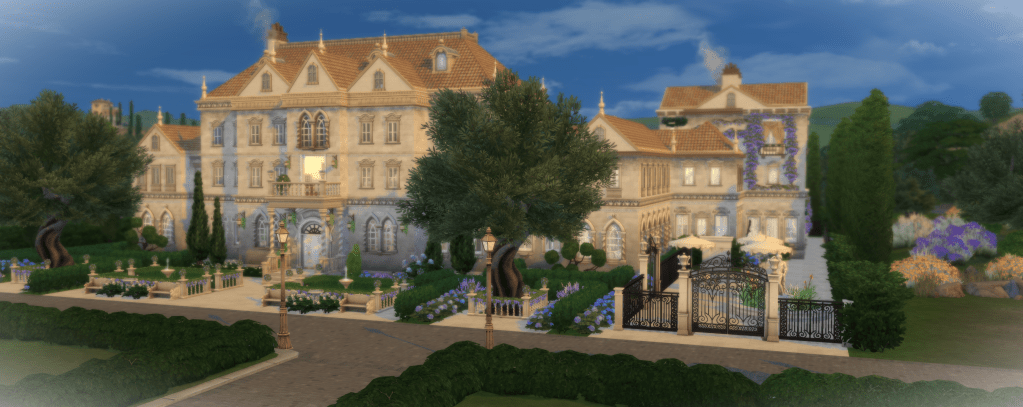
I kept telling myself it wasn’t a big deal, even though everyone in the palace had been talking about the Tribute to Charles’s Reign for days. It wasn’t the abdication nor coronation—all that was still ahead—but this was the last major celebration for Charles as the leader before he stepped down. Nobles were flying in from every direction, the old families gathering like migrating birds, all of them ready to bow one last time to the man who’d ruled longer than I’d been alive. It felt enormous, historic, intimidating… and apparently, I was expected to be there.
Not officially as Luc’s date. Not officially anything. Just… present. Visible.
“A chance to meet people,” Clementine had said, smiling like she was doing me a favor. She wasn’t the reason I was here, Luc was. Bending the rules yet again, and again with his father’s probably somewhat begrudging approval.
Dominique had chimed in, warm and sugary. “We should help you get ready. We’re practically family already. My brother is Luc’s best friend, after all.”
I wanted to believe them. God, I wanted to believe them. After everything—after the funeral, after the brittle politeness, after the sideways glances—I wanted to think maybe we were turning a corner. Maybe they were trying. I mean, clearly, I wasn’t going away. I was going to be the woman at the side of the most powerful man in this kingdom, even though nothing was official yet, but it was obvious. So maybe this was them kissing up. I knew Luc didn’t like drama and for him I was willing to let bygones be bygones. They had spoken their peace, and now we moved on. The adult thing to do. Even though I was by far the youngest here. We were all one age group, but at nineteen, I was several years behind all of them. So, if I could choose maturity, so could they.
So when they waved off my usual maids—“We’ve got her, merci”—I didn’t question it. I let myself feel relieved. I let myself feel… included.
They did my hair, my makeup, fussed over me like sisters in a movie montage. They zipped me into a dress that shimmered like poured silver, short enough to show leg, cut low enough that I had to fight the urge to tug it up. “You look incredible,” Clementine breathed. “Modern. Confident. Luc will die.”
Dominique clasped a necklace around my throat. “This is exactly right. Show the modern side of our society. Represent the next generation.”
And I did. I trusted them.
We walked together down the corridor toward the Hall of Sovereigns, my nerves fluttering like trapped birds. I kept telling myself this was good. This was progress. This was what it looked like when people started to accept you.
Then, right at the entrance, they peeled away with quick excuses—“We’ll catch up inside”—and left me standing alone in front of the gilded doors.
I took a breath, squared my shoulders, and stepped inside.
I should have known the moment I stepped into the marble corridor outside the Hall of Sovereigns. The air felt… wrong. Too still. Too watchful. The attendants—usually a blur of polite efficiency—were gathered in little clusters, their conversations dropping into sudden silence as I approached. A few stared outright. Others leaned toward each other, whispering behind gloved hands.
My stomach tightened. I kept walking.
The heels Clementine insisted on clicked sharply against the floor, echoing far louder than they should have. Every step drew more eyes. I passed a pair of older noblewomen in sweeping black gowns; both froze mid‑sentence, their gazes sweeping over me from hem to neckline with identical expressions of horror.
Something was wrong. Very wrong. But I didn’t know what.
I told myself to breathe, to keep moving, to find Luc. He was somewhere inside, busy with the endless duties that came with being the heir apparent. I hadn’t waited for him—he was pulled in a thousand directions tonight, and I didn’t want to add to it. I’d find him once I was in the hall. He’d smile, take my hand, and everything would make sense.
But then a familiar figure appeared at the far end of the corridor, moving fast.
Eloise.
Her face—usually soft, serene, almost ghostlike in its gentleness—was sharp with alarm. She didn’t slow. She didn’t greet me. She simply reached me, slipped her arm through mine, and said in a low, urgent voice, “Come with me.”
Swapped
Before I could ask anything, she pulled me through a side door and shut it behind us. Then locked it.
“Eloise?” My voice cracked. “What’s going on?”
She turned to me, eyes sweeping over my dress, and her expression collapsed into something like grief. “Briony… you can’t go in there like this.” Her voice was barely above a whisper. “Did nobody help you?”
The question hit me like a slap. I remembered Clementine’s bright smile, Dominique’s soft laugh, the way they’d insisted they wanted to help. The way they’d sent my usual maids away. The way they’d zipped me into this dress—this shimmering, short, low‑cut thing that suddenly felt obscene under the harsh light of the small room.
My throat tightened. “Clementine and Dominique did. They said—” I swallowed. “They said this was right.”
Eloise closed her eyes for a moment, as if steadying herself. “Of course they did. Briony, this is a very formal event. You cannot be seen like this. Absolutely not. It would be detrimental not just for you, but for Luc and his family.”
The realization hit me so hard my knees nearly buckled.
“They set me up,” I whispered. “They wanted me to walk in there like—like this. In front of everyone. In front of Luc. In front of his family.”
Eloise didn’t deny it. She didn’t have to.
The tears came hot and fast, blurring the room. I pressed a hand to my mouth, trying to hold myself together. Eloise stepped closer, her movements gentle, practiced, and handed me a small embroidered handkerchief—ivory linen, soft, with tiny blue flowers stitched into the corner and her initials.
“Here,” she murmured. “Don’t cry, Briony. Not now. Cry later. I had to many times. Bite it back, be strong. Later, when all is over and you are alone, you can scream and cry and punch a pillow. But not now. Now you must appear perfect and composed. Don’t give them this win. Dry your eyes. And unzip me.”
I blinked. “What?”
“Unzip me,” she repeated, already turning around, presenting the delicate row of buttons and hidden zipper down her back. “Quickly.”
My hands shook as I obeyed. She stepped out of her gown with a grace that made the moment feel unreal, like a dream or a scene from a story that didn’t belong to me. Then she turned to me and reached for my zipper.
“I… I can’t take that,” I stammered. “What about you?”
“Trust me,” she said, her voice soft but steady. “I can go home and change and nobody would be the wiser. Nobody ever sees me, nobody ever misses me.”
The words were said so plainly, so matter‑of‑factly, that they cut deeper than anything Clementine or Dominique had ever thrown at me. She believed it. She truly believed she was invisible. Optional. Meaningless.
My chest ached for her.
Eloise’s eyes swept over my face—and her expression fell again.
“Oh, Briony…” she whispered. “They did this on purpose.”
“Did what?”
She didn’t answer. She was already reaching for my face, tilting it toward the light.
“This makeup,” she murmured, horrified. “It is far too heavy. Only women seeking the wrong kind of attention wear this much. At court it reads as—” She hesitated. “—vulgar.”
My stomach dropped. “Clementine and Dominique helped me get ready. I didn’t think they…”
Eloise’s expression hardened. “Of course they did. And yes — they absolutely would. Both of them, at different times, imagined themselves going where you are now headed. In our circles, that is the highest aspiration.” She exhaled softly, almost sadly. “They will never be your friends, Briony. Remember that. They are not even mine — and I am no threat to anyone.”
She snapped open her tiny lavender clutch and began pulling out items with quick, practiced movements: a tiny pouch of wet wipes, a small compact, a soft brush, a tinted balm.
“Hold still. You are so young and pretty, you do not need so much make up.”
She wiped away the thick foundation, the harsh contour, the overdone eyes—each stroke revealing more of me. She reapplied only what was needed: a soft flush, a clean highlight, a natural lip. Elegant. Understated. Royal.
Then she stepped back, eyes narrowing at my hair.
“And this…” She touched a frizzy, teased section. “This is not court fashion. This is mockery.”
Before I could react, she was already working—fingers deft, movements sure. She smoothed the wild texture, tamed the volume, twisted and pinned until my hair was swept into a sleek, elegant chignon that made me look like I belonged in a portrait.
A knock sounded at the door—sharp, impatient. A servant called something in French. Eloise answered back, her tone clipped, buying us seconds.
She turned back to me, breath quick, cheeks flushed with urgency.
Then she reached up to her own throat.
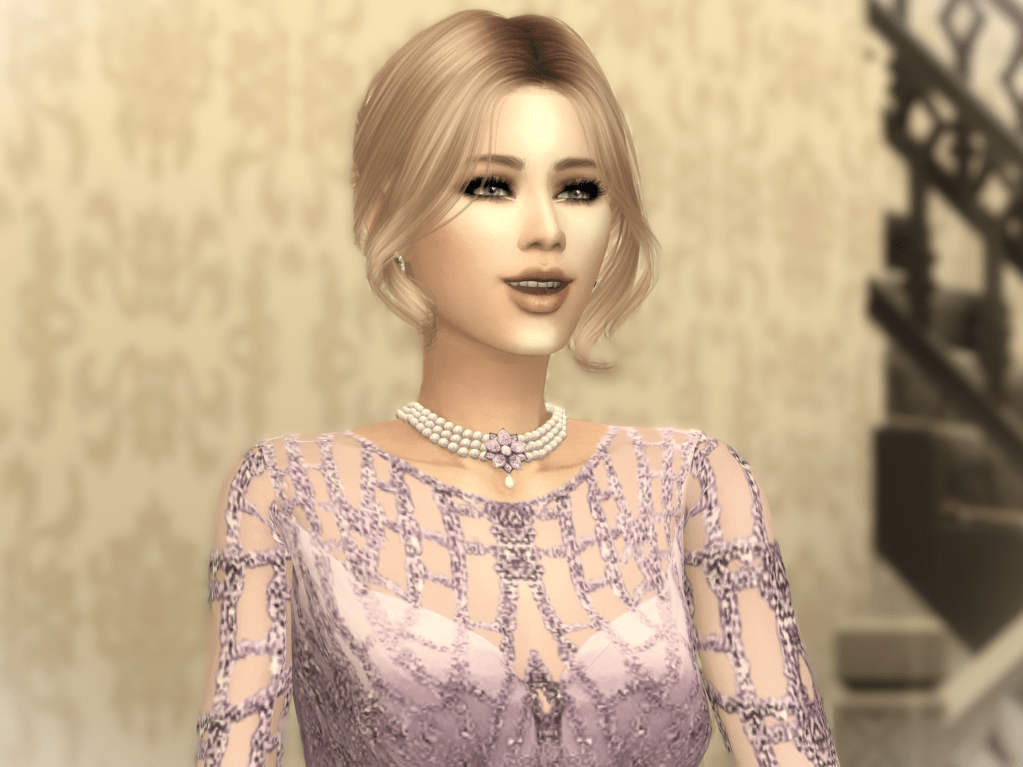
Her pearl choker—delicate, with tiny lavender‑gem flowers woven through the design—glimmered softly against her skin. She unclasped it, hesitated for only a heartbeat, then fastened it around my neck.
“It anchors the gown,” she said quietly. “And it marks you as Beaumont. They will see it.”
Another knock. Louder.
Eloise’s eyes met mine. “They’re waiting for you. Hurry.”
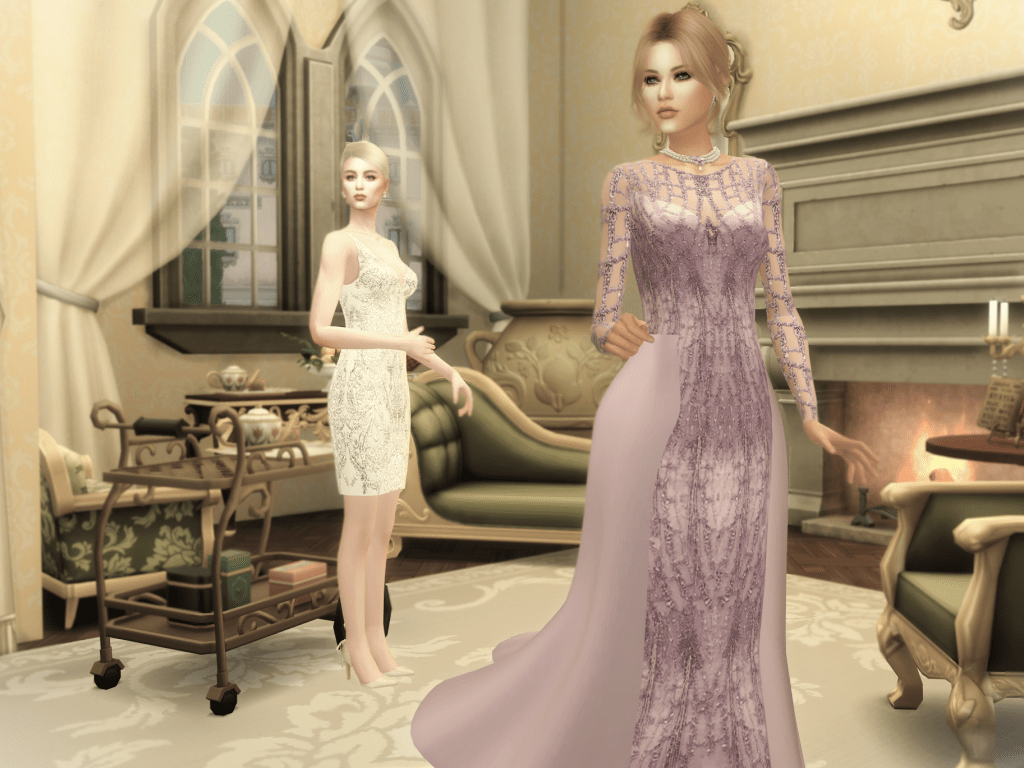
I slipped out of the humiliating minidress and handed it to her. It looked absurd on her—too short, too bright, too loud—while I stepped into her gown: cool silk, heavy embroidery, the unmistakable weight of something meant for a royal event. She fastened it with quick, deft fingers, smoothed the shoulders, adjusted the fall of the skirt, and stepped back with a small, approving nod.
“You’ll be fine,” she said. “You look amazing. This gown suits you so much better than me anyway. And it is lavender toned, the Beaumont color. Luc will adore you in it. Go, go, go!”
I reached the door, then turned back. “Eloise… thank you.”
She gave me a faint, sad smile. “Bon chance. That means good luck, Briony.”
Showtime
The moment I stepped back into the corridor, the whispers stopped.
Not because people suddenly approved of me—but because they didn’t recognize me. Eloise’s gown was lavender‑toned silk, soft as breath, embroidered with silver thread that caught the light like frost. It was unmistakably Beaumont. Classy. Regal. A color that belonged to Luc’s family.
For the first time that night, I didn’t feel exposed. I felt… anchored.
I lifted my chin and walked into the Hall of Sovereigns.
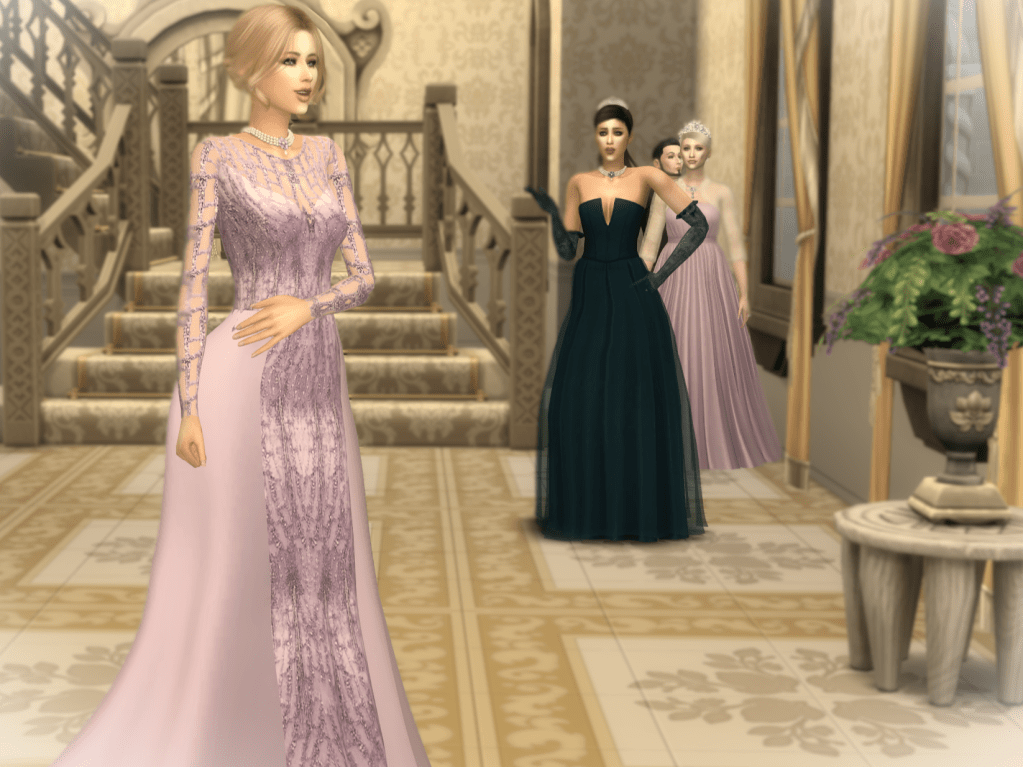
The room was a cathedral of gold and candlelight, filled with nobles in sweeping gowns and tailored coats, the air humming with music and conversation. And then—like a magnet snapping into place—I found him.
Luc.
He stood near the dais, speaking with a cluster of dignitaries, posture straight, expression composed in that way he had when he was trying to be both himself and the heir at once. But when he saw me, everything in him shifted.
His eyes widened. His breath caught. And then he smiled—slow, stunned, warm enough to melt the marble under my feet.
He excused himself from the group and crossed the room in long, purposeful strides. “Briony,” he said, voice low, almost reverent. “You look…” He shook his head, searching for the word. “Magnificent.”
Heat rushed to my cheeks. “Thank you.”
He reached for a passing tray, took two flutes of champagne, and handed one to me. His fingers brushed mine—just barely—but it was enough to steady me.
“Come,” he said, placing a hand at the small of my back. “There are people I want you to meet.”
He guided me through the room, introducing me to ministers, ambassadors, old family friends. They all looked at me with polite curiosity, some with genuine warmth. And every time I felt my nerves spike, Luc’s hand would press lightly against my back, grounding me.
But then my gaze drifted across the room—and landed on them.
Clementine and Dominique.
They stood near a column, dressed in immaculate white‑tie gowns, their expressions frozen in identical masks of shock. Clementine’s eyes narrowed. Dominique’s mouth parted slightly, as if she couldn’t understand how I’d escaped the trap.
Their disappointment was almost comical. Well, to me at least. I knew I had won another battle, but not the war. A war I didn’t ask for, which they wagered against me. Alright bitches, Cameron mode activated. Bring it on.
And in that moment, something inside me clicked into place. A quiet, sharp clarity.
I knew exactly who my friends were. And who wasn’t.
The night unfolded around me—dancing, drinking, laughter, Luc’s hand in mine as he spun me across the floor. For a few hours, I let myself enjoy it. Let myself feel like I belonged.
But I didn’t forget.
And when I finally spotted Eloise again—standing near a window, wearing another beautiful gown which always vanished along with the woman, just like the one I was wearing wasn’t seen before I put it on. She stood half‑hidden, as if she were trying not to take up space—I excused myself from Luc and crossed the room.
“Come with me,” I said softly.
Garden Talks
She blinked, slightly startled, but followed as I led her through a side door into the palace gardens. The night air was cool, scented with lavender and old stone. We walked until we found a quiet corner beneath an arch of climbing roses.
Then I turned and hugged her.
She stiffened in surprise, then slowly, hesitantly, hugged me back.
“Why did you do that?” I whispered.
She pulled away just enough to look at me. Her eyes were luminous in the moonlight. “Because I know how it feels,” she said. “To never belong. To be laughed at, ridiculed, to your face and behind your back.”
My heart ached all over again. “You saved me.”
“You would have done the same,” she murmured.
“Yeah, I would have,” I said, the promise forming before I even realized it. “I won’t forget this, Eloise. Ever. What you did for me tonight is huge!”
“It looks much better on you anyway. It’s his color, you should wear this, not me.”
The garden was quiet, washed in moonlight and the soft rustle of leaves. I led Eloise beneath an arch of climbing roses, far enough from the ballroom that the music was only a distant hum. She stood there, hands folded in front of her, looking like she might dissolve into the shadows if I blinked too hard.
I didn’t let her.
She looked down at her hands, twisting her wedding ring. “I wasn’t always… this.” She gestured vaguely at herself—her quietness, her invisibility, her careful posture. “I was born a royal princess. In Henfordshire. The only child of the late Prince Leopold Cromwell, brother to the current king.”
A brief pause.
“My father,” she continued, voice barely above a whisper, “was the black sheep. Womanizing, drinking, gambling… every vice you can imagine. He didn’t want to marry my mother. He didn’t want a child. Especially not a girl. He didn’t want responsibility.” Her throat bobbed. “And then he did something unforgivable.”
I held my breath.
“He assaulted the king’s wife. It broke up their marriage. It was so bad. Poor AG, poor Uncle Max.”
My stomach dropped. “Eloise…”
“It destroyed everything,” she said. “My parents’ marriage. My father’s standing. My mother’s reputation. She was from another very old noble line—House Ashford. They had their own scandals. It ruined her. And it ruined me.” She gave a small, brittle laugh. “When my father died—falling down the stairs drunk, breaking his neck—he left us nothing but shame. And when my mother remarried, I thought things might get better.”
She stopped. I waited. When she didn’t continue, I nudged gently.
“They didn’t?”
She shook her head. “I never belonged. They were Harrowbys now. I was still a Cromwell, a name change for me was only possible through marriage, even though I wanted to be Eloise Harrowby. Instead, I was a fallen princess nobody wanted. My brothers were born—they belonged. I never did. I wanted a husband. A family. A future. A life of my own. Something to start over and forget everything. But no young man wanted me—not with my father’s sins hanging over me like a curse. And I couldn’t exactly meet a regular man. That’s not how this life works. Once you’re in, you’re in. I was educated to be a royal consort, not a housewife with a career.” Her voice softened. “I fell in love with a stableboy once. Liam. He was kind. Gentle. But he only had eyes for my cousin Victoria.”
I remembered the name—Princess Royale Victoria Cromwell, the one who’d been kidnapped years ago.
Eloise’s voice cracked. “I did what all young girls do when experiencing their first heartbreak—I cried to my mother. It broke her heart; she hated not being able to help me. So my mother… she became desperate. She is normally gentle, but she wanted me to be happy so badly. And my aunt Charlene—well, that’s a long story—she practically hated the king for choosing his wife over her. They dated briefly, and she already saw herself as queen consort with Aria‑Grace out of the picture. But he remarried his wife instead.”
She swallowed.
“So my aunt and my mother convinced each other that taking Victoria with some demands would fix everything. I don’t understand the logic. Please don’t ask. They kidnapped the Princess Royale of Henfordshire. I had no idea. I found out when the whole world did—when my mother was taken away by police. Can you imagine?”
She closed her eyes.
“My mother actually helped Victoria escape, which is why my cousin survived, but also why my mother and aunt were caught. My aunt died—self‑inflicted. My mother received a lesser sentence because she helped. But we were exiled. Stripped of our titles, our funds. It ruined us. My stepfather stood by us, and we lived off his money. Eventually Victoria pardoned my mother and we could return, but it didn’t matter where I lived. I was damaged goods. And not even a princess anymore. I was… nothing.”
I reached for her hand. She let me take it.
“My princess title was gone. The only bargaining chip I had left to find a decent husband. With it, I was in the succession line to the Henfordian throne. Unlikely I’d ever get the chance, nor would I have wanted to, but that place in the line meant everything in our circles. And our wealth was gone. Every debutante ball after that was just another reminder that no one wanted me.” She swallowed. “Until Philippe.”
Her hand trembled.
“He didn’t want to marry either,” she said. “Least of all me. His father thought it would settle him, and he knew I was quiet, obedient, and desperate—meaning I would stay with him long‑term, since I had hardly any other options. They arranged it. Philippe was told he’d lose his inheritance if he didn’t marry me. So he did. He sees other women, still. But his parents thought a ring on his finger would make him look more respectable. And frankly, many nobles step out on their marriages. Especially men.”
She exhaled shakily.
“I had to be grateful to have a husband at all. A new name. A title. The wife of a duke is the closest I’ll ever get to royalty again. And I am… grateful. This isn’t a bad life. It’s the best I’ve had in a long time. And I love my son. He’s my everything. I’m determined to raise him into a happy child with a real future. But truth be told, the real reason I wanted to be pregnant so fast was because that makes it nearly impossible for Philippe to divorce me in our circles. My poor baby is practically my insurance policy.”
She tried to smile. It faltered.
“I really like Philippe. He is handsome and charming. But he doesn’t see me. He is polite—like you would be to the mailman. In society he plays his part, but when we are alone, I hardly see him. We have separate bedrooms. I thought the child would help. That maybe he’d see me then as more than some deal our parents struck. But it only pushed him further away.”
My heart ached. “Eloise…”
“I let things happen to me,” she whispered. “I let people overlook me. I let myself fade. Because I thought… maybe that’s all I deserved.”
Something in me snapped.
I stepped closer, squeezing her hand hard. “Don’t say that. Seriously—don’t. You deserve so much more than that. Why the hell would you be held accountable for your parents’ bullshit?! Girl, it’s 2026, not 1726! I get it, aristocracy dances to the beat of its own drum, but still—we have equal rights now and your situation is just cringe. That’s not healthy.”
Eloise blinked, startled by the force of me. No one in her world talked like that. No one challenged the quiet, suffocating rules she’d been raised under. But I wasn’t from her world. And I wasn’t going to let her drown in it.
“You didn’t choose any of that,” I said, my voice shaking with anger on her behalf. “You didn’t choose your father’s sins. You didn’t choose your mother’s desperation or your aunt’s deranged ‘Fatal Attraction’ bullshit. You didn’t choose to be punished for things you had zero control over. And you definitely do not deserve to be treated like an unloved knick‑knack by your husband. Just saying that almost makes me break out in hives. If my mother and grandmother were here, they’d be all up in Philippe’s business right now, riding his ass into next year.”
Her lips parted, a tiny breath escaping. “Briony…”
“And you sure as hell don’t deserve to be treated like you’re disposable,” I added. “Not by society. Not by Philippe. Not by anyone. I mean, you are beautiful, you have eyes.”
For a moment, she just stared at me—like no one had ever spoken to her that way. Like no one had ever defended her out loud. Not even to herself.
She looked up at me then—really looked—and something in her expression cracked open. “Tonight, when I saw you walk in… I saw myself. The girl I used to be. The girl who still wanted to belong somewhere. Set up for failure by others, thinking they are friends, when they are just laughing at me behind my back. Using me, then discarding me when I am no longer useful.”
“You do belong,” I said fiercely. “With me. With Luc’s family. With people who see you.”
Her breath hitched. “Briony…”
“You saved me tonight,” I said. “And I will never forget that. Ever. I am a Cameron and a Kershaw, and I was raised in a different way. What you did for me is huge. That goes a very long way with me. We never forget who our friends are.”
For the first time, Eloise smiled—small, fragile, but real. “We’re friends?”
“Fuck yeah, we’re friends!” I responded.
We were friends.
The kind you don’t get many of in a lifetime.
When I finally returned to the ballroom, Luc found me instantly—as if he’d been searching the whole time. His eyes softened when he saw me, and he reached for my hand like it was the most natural thing in the world.
“There you are,” he murmured, brushing his thumb over my knuckles. “I was starting to think you’d run away.”
“Just needed some air,” I said, my heart still full from the garden.
He leaned in, his breath warm against my ear. “Stay with me for the rest of the night.”
And I did.
We danced until my feet ached, laughed until my cheeks hurt, and every time he looked at me, it felt like the world narrowed to just the two of us.
By the time he walked me back to my room, the palace was quiet, the halls dim and empty. He paused at my door, brushing a strand of hair behind my ear.
“Tonight,” he said softly, “you were unforgettable.”
“So were you,” I whispered.
He hesitated—just a heartbeat—then pressed a gentle kiss to my forehead. “Goodnight, Briony. I wish I could join you, but I have an early day tomorrow and can’t upset my father again with breaking so many of his rules. But soon we won’t have to hide so much.”
“Goodnight, Luc.”
I watched him walk away, my heart thudding in my chest, Eloise’s handkerchief still tucked safely in my palm.
And for the first time since arriving in Bellacorde, I felt like I wasn’t alone.
Motherly Advice
I called my mom.
She answered on the second ring, her voice warm and familiar. “Sweetheart! Finally! How was the event?”
I told her everything. The dress. The whispers. Eloise. Clementine and Dominique. Luc’s reaction. The garden. She didn’t interrupt except to launch curses here and there and laugh when I got to the disappointed faces of the two girls who had failed to set me up.
There was a long pause on the other end of the line.
“Briony,” my mom said finally, her voice soft but edged with that steel she only used when she was protecting one of us, “when people show you their true colors, believe them. You know now who Clementine and Dominique are—and who they are not. Be very careful with them. If they tried to trip you up once, in my experience they will try again, especially if they weren’t successful the first time. Keep an eye on them and don’t turn your proverbial back to them. And you know who Eloise is.”
I swallowed hard, the truth of it settling deep in my chest. “Yeah. I do.”
“A friend like her is what you need over there,” she continued gently. “Make sure you find a way to be her friend like that. Sounds like she is just as desperate for a real connection as you are. Be that girl for her.”
I lay back on my bed, staring at the carved ceiling, Eloise’s embroidered handkerchief still clutched in my hand like a talisman. The lavender scent of her gown still lingered faintly on my skin.
“I will,” I whispered. “I promise.”
“And if those bitches give you too much grief,” my mom said, instantly shifting from wise sage to full Cameron mama bear, “you call me. I will fly over there and kick some noble ass myself. I don’t care whose crest is on the gate.” She paused. “Might bring your dad. And I mean Jackson, not Brad.” She snorted. “Actually… no. God. Can you imagine Jackson in a palace? He’d get arrested before setting two steps inside.”
A laugh burst out of me, sudden and bright. “Thanks, Mom. And yes — please keep Dad at home. He’d last ten seconds before trying to fight a duke for looking at him funny and nobody here would understand him talking – then again, he wouldn’t understand their accents either. Oh God, that would be such a disaster. Plus, I’m barely keeping myself from throwing hands as it is.”
A soft knock sounded at my door—gentle, familiar. My heart stuttered.
“Mom, I gotta let you go. Someone’s at the door.”
“Ooooh, I bet I can guess,” she sing‑songed. “Have fun, baby. Don’t do anything I wouldn’t do, but if you do, name it after me. Oh, but do remember you are a Cameron and light up his world so he never has any doubt why he chose you. That’s what I still do with Brad, so he gladly puts up with all of my bullshit.”
“Mom!” I laughed, shaking my head. “Love you.”
“Love you more.”
I hung up, the screen still glowing in my hand as I crossed the room and opened the door.
Luc.
He filled the doorway like he always did—broad shoulders, hair slightly mussed from the night, the faintest flush on his cheeks from champagne and dancing. He held a bottle of wine in one hand, two glasses in the other, and an expression that made my pulse trip over itself.
“My mom says hi,” I said, breathless, as he stepped inside without waiting for an invitation. “And I thought you said you couldn’t stay tonight, early meeting or something?”
He set the glasses down on the small table near the window, then turned back to me with that look—the one that made everything inside me go warm and unsteady.
“Tell her I say hi back,” he murmured, closing the door behind him with a soft click. “And that she raised a woman who nearly stopped my heart tonight. I know what I said, but I can’t stay away.”
Heat rushed to my face. Oh mom, if you could hear this, you’d be so proud. “Luc…”
He crossed the space between us slowly, deliberately, like he was giving me time to stop him if I wanted to. I didn’t. I couldn’t. My whole body leaned toward him like it had its own gravity.
“You were breathtaking,” he said, voice low. “When you walked into that hall… Briony, I forgot what I was saying. I forgot who I was speaking to. I forgot my own name.”
A shaky laugh escaped me. “It was Eloise. She saved me.”
“I know,” he murmured. “She told me — quietly, carefully. She didn’t want to cause trouble, but she wanted me to understand what Clementine and Dominique attempted, because it would not have reflected badly only on you, but on House Beaumont as well. What they attempted isn’t a little thing here. It borders treason.” His jaw tightened. “And I am grateful to her. More than she realizes.”
He brushed a knuckle along my cheek, his eyes darkening.
“And as for Clementine and Dominique…” His voice cooled, sharpened. “I cannot address it publicly — not yet — but I will not forget it. They both showed me exactly who they are. And disappointing a Beaumont,” he added, almost gently, “is a mistake people only make once. They will be dealt with, that, I assure you. All in due time.”
He reached up, brushing a strand of hair behind my ear, his fingers lingering just long enough to make my breath catch.
“But you,” he whispered, “you walked in there like you belonged. Like you were born for it. You showed true grace under pressure. That is a very important quality for the woman by my side. You really impressed me.”
“I didn’t feel very impressive. Without Eloise it would have been a disaster,” I admitted.
“You rallied,” he said. “From deep adversity to shining like the focal point of the event, quietly. And you did it without theatrics, without outrage, without making a scene. Most people in your position—especially wealthy socialites—would have caused a scandal loud enough to shake the chandeliers. But you didn’t. You handled it with dignity. That matters greatly in my world. A very rare, yet very important quality.”
His hand slid down to my waist, warm and steady. I felt myself melt into him, the tension of the night finally loosening.
He leaned in, his forehead resting gently against mine. “I’m proud of you.”
My eyes fluttered shut. “Luc…”
“Let me pour the wine,” he murmured, brushing a soft kiss against my temple, “and then you can tell me everything.”
He pulled back just enough to look at me, his eyes warm and full of something I wasn’t ready to name but desperately wanted to.
“Tonight,” he said, “you were extraordinary. I had some concerns that someone with your feisty spirit and limelight upbringing might choose to be dramatic when faced with adversity, but you didn’t. You remained composed and graceful through all of it. After tonight, I have not the faintest shadow of a doubt that you can do this. You will shine.”
And for the first time since arriving in Bellacorde, I believed it too. Yeah, I could do this. Luc believed in me. And knowing those two tried so hard to make sure I never got the chance to prove it, made me want to prove it even more. If I was motivated before, because of Luc, I was a million times more now, just to see them eat their hearts out. Just you watch, bitches. It’s on now.
My Friend Eloise
If someone had told me a week earlier that Eloise de Villeneuve — quiet, porcelain‑delicate, practically allergic to taking up space — would become my closest friend in Bellacorde, I would’ve laughed. Not because she wasn’t kind. She was. But because she seemed like someone who lived behind glass, untouchable, unreachable, a ghost drifting through rooms full of people who never really saw her. I was the exact opposite. Back home, when my crew and I went out to party, you KNEW it. The whole neighborhood would. Plus, mom had made very sure to raise me into a strong woman who would never apologize for who and what she is. Hearing the shrinking violet spiel from Eloise physically hurt me.
But after that night in the garden, something shifted.
We found each other.
Not in the dramatic, cinematic way — no violins, no spotlight — but in the small, steady ways that matter more.
She started seeking me out. I started saving her a seat. We began orbiting each other naturally, like we’d been doing it for years.
And somehow, without either of us trying, we became… us.
It started with tiny things.
I’d nudge her forward when someone spoke to her. I’d whisper, “You can answer that, you know,” when she shrank back. I’d loop my arm through hers when she hesitated at the entrance of a room, trying to disappear into a corner again. I didn’t let her. I walked her in like she belonged — because she did — and she stayed beside me.
And she’d let me. She’d blush, duck her head, but she’d try. And every time she tried, she grew a little.
One afternoon, after a luncheon where she’d actually spoken — out loud, at a podium, to other nobles — about her favorite charity, which she knew so much about I was genuinely impressed, she turned to me with this shy, astonished smile.
“I just did that. And I didn’t fade,” she said.
“No,” I told her, bumping her shoulder. “You shone. Girl, you showed them who you really are.”
And then came the moment everything shifted.
We were standing near the terrace when Lady Estelle — one of those nobles who thinks kindness is optional — swept in and began talking over Eloise. Not just interrupting. Steamrolling. Dismissing her mid‑sentence like she wasn’t even there.
Eloise shrank instantly, shoulders curling, voice dying in her throat.
But I stepped forward before she could disappear.
“Lady Estelle,” I said, smiling sweetly, “Eloise wasn’t finished. You interrupted her. I’m sure you didn’t mean to — it happens — but let’s let her complete her thought.”
The woman blinked, stunned. No one ever corrected her. Ever. Especially not some nineteen-year-old kid from the mainland who dared to be not even remotely noble. I could read all that in her face and zero fucks were given on my end.
Eloise’s eyes widened, breath catching.
Across the room, Luc and Philippe both looked over — sharply. Luc’s brows lifted in quiet approval; Philippe’s mouth twitched like he wasn’t sure whether to be impressed or terrified.
Lady Estelle opened her mouth to argue, saw the prince and the duke watching, and immediately closed it again.
“Of course,” she said tightly. “My apologies, Eloise. My mistake, terribly sorry. Please finish your captivating thought.”
Tail. Tucked.
Eloise looked at me like I’d just handed her the moon.
She finished her story— voice trembling, but steady — and when Lady Estelle nodded and backed away, Eloise exhaled like she’d been holding her breath for years.
Later, when we were alone, she whispered, “No one has ever… stood up for me like that. Thank you.”
I squeezed her hand. “Welcome. Get used to it. That’s how we roll where I come from. Well actually, where I come from it would have been a lot ruder, but I adjusted.”
In return, Eloise became my guide through the labyrinth of Bellacorde’s aristocracy. Trust me, it was a maze of written and unwritten rules.
She taught me how to curtsy without wobbling. How to greet a duchess versus a marchioness. How to read the subtle shifts in tone that meant someone was insulting me in the most polite way possible. Told me which of the aristocrats to watch out for, surprisingly, there were a lot more Clementines and Dominiques around by any other name than you would expect. And they were good at being bad. If noble life doesn’t work out for them, they sure had a career in film! But there were nice people too. And now I knew who those were. For real, not pretense. Sadly, it would seem that normally Clementine was one of the good ones, but clearly, not as far as I was concerned. She hated my guts with great passion, and the feeling was now very much mutual.
She’d lean in during dinners and whisper, “Don’t laugh at that — he’s not joking,” or “That’s a trap question, answer vaguely,” or “Smile, but not too much, they believe too much smiling is a sign of lower class and even lower IQ.”
We’d stifle giggles behind our napkins like schoolgirls.
And then came the French.
She started teaching me little phrases — things I’d never learn in my French classes but were apparently essential for surviving Bellacorde. Useful greetings, polite responses, and then, at my request, the soft, elegant, romantic things. The things meant to be whispered to Luc.
The first time I tried one in action, I butchered it so badly our super‑shy, practically invisible Eloise lost her entire soul.
It was at a small get‑together — a garden party, a few handfuls of aristocrats scattered across the royal lawns, sunlight catching on crystal flutes and the distant hum of polite conversation. Eloise was sitting with Luc and me, so I thought I’d go for it. Apply my newly acquired French knowledge. Impress the man who made speaking it look effortless.
I leaned in, trying to be sweet, trying to whisper something romantic the way Luc did. I meant to say “Je t’adore.” I really did.
But what came out was:
“J’t’endors…”
Which, apparently, did not mean “I adore you.” It meant “I’m putting you to sleep.”
Eloise choked so violently she sprayed champagne across the table. Luc slapped a hand over his mouth, shoulders shaking, but still laughed so loudly it carried across the garden. Several guests turned their heads, startled, trying to see what had amused His Highness so thoroughly.
I was tomato‑red.
I wanted to die. But also… it was the hardest I’d laughed in months.
And when Luc finally calmed down, wiping tears from the corners of his eyes, he leaned in close, voice low and warm against my ear.
“Mon cœur… tu ne m’as jamais endormi. Pas une seule fois. C’est impossible.”
I blinked, brain not braining so much French at once.
Eloise leaned in from the other side, whispering, “Briony… he said you’ve never put him to sleep. Not once. He said it’s impossible.”
My heart took off like a runaway horse. I turned to look at Luc, and he was already watching me — smiling, soft around the eyes, the kind of smile that felt like it had a secret tucked inside it. Then he winked.
My mama didn’t raise a quitter — if anything, failure just made me more determined. So after practicing the line with Eloise a few times while Luc was speaking to a marquis across the lawn, I decided to try again. The garden was warm with late‑afternoon sun, nobles drifting between rose bushes and fountains, the air humming with polite conversation.
Luc returned to us, smiling, relaxed, unaware he was about to be emotionally drop‑kicked. He leaned slightly toward me as he sipped his drink, the way he always did when he thought I had a question about a guest or needed help with a name.
Perfect.
I leaned in too, close enough that only he could hear, and whispered, soft, low, and steady — the kind of intimate tone meant for him alone:
“Tu me fais perdre la tête, mon beau.” You make me lose my mind, handsome.
Luc choked.
Not a little cough — a full, startled, princely malfunction as he inhaled sharply and nearly sprayed his drink. He tried to cover it, but the way his shoulders tightened, and his jaw clenched told the real story. His eyes darkened instantly, and for a moment he didn’t even blink.
Eloise rose at once, touching my arm. Then, with perfect courtly poise, she turned to Luc and said lightly in French, “Votre Altesse, pardonnez‑nous un instant. Nous allons chercher quelque chose à boire.” Your Highness, excuse us for a moment. We’re going to get something to drink.
Which, of course, was her polite way of dragging me aside for a full linguistic post‑mortem.
We stepped away a few paces, and she leaned in, eyes sparkling. “That was perfect. One hundred percent correct pronunciation and annunciation. And the delivery, perfection!” She peeked over my shoulder at Luc — still frozen at the table, gripping his glass like it was the only thing keeping him upright. “Oh Briony… I think you broke him. Our prince is still malfunctioning.”
We giggled — quietly, but not quietly enough.
I didn’t get a chance to answer.
Luc appeared behind us — composed, princely, but with that unmistakable tension in his jaw that made my pulse trip over itself.
Before he addressed me, he inclined his head to Eloise with impeccable courtesy and said, in a voice far too even for the way his eyes looked:
“Votre Grâce… pardonnez‑moi. Je dois emprunter Mademoiselle Cameron un moment.” Your Grace… forgive me. I must borrow Miss Cameron for a moment.
Eloise froze like a deer in headlights, then dipped a tiny curtsy that absolutely betrayed she knew exactly what was happening.
“Briony,” Luc said quietly, turning back to me, “walk with me.”
Not a request. Not quite a command. Something in between — something that made my heart leap straight into my throat.
He took my elbow, and in long, purposeful strides that forced me to practically jog beside him, escorted me into the main house and straight toward the infamous sitting room. Yes — the one I’d woken up in from fainting twice now. Still cringe. And I still didn’t know what the real purpose of a sitting room was. Other than the obvious and to deposit people who fainted in.
Well, Luc now demonstrated another use for it — and I’m pretty sure that wasn’t the intended one either — because what he needed to show me so urgently was just how hot under the collar, and everywhere else, my perfectly pronounced little whisper had made him.
The moment the door clicked shut behind us, he locked it and the air changed and learned first-hand how intense it could be to have spontaneous sex with a house full of very noble guests just down the hall. I’m fairly certain that wasn’t part of the aristocratic code, but it definitely inspired me to ramp up my French lessons. Apparently, French wasn’t just sexy to non‑French speakers. It worked the other way around too.
After our moment of afternoon delight, when he finally calmed down, buttoning up his pants — breath steadying, hair a mess, shirt half‑untucked — he leaned in, brushed his mouth against my ear, and murmured in that low, velvet French that always made my knees go weak:
“Tu n’as aucune idée de ce que tu me fais…”
He let the words linger, warm against my skin, then added in English, eyes dark with meaning, “Have Eloise translate that for you.”
I couldn’t remember all of it, but Eloise figured it out anyway. It meant: You have no idea what you do to me.
Well… très bien, mission accomplie.
That was my own translation and means “very well, mission accomplished”.
Le Belvédère
The de Villeneuve ducal estate
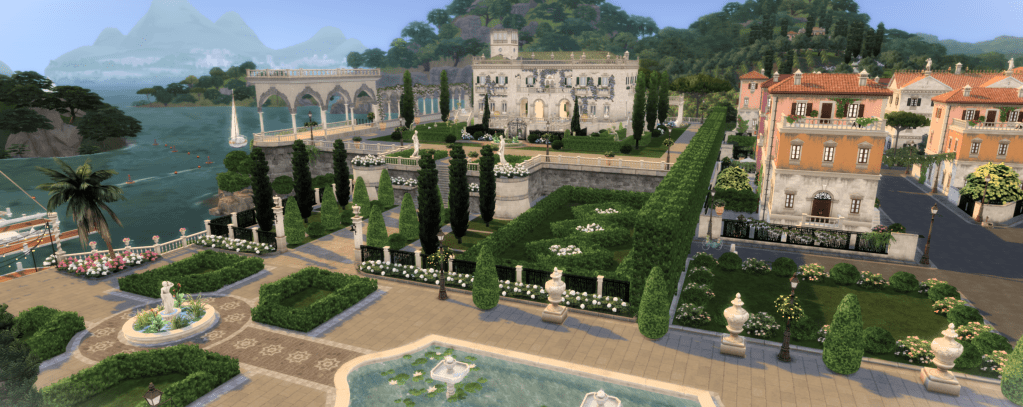
One afternoon, while I was sitting in Eloise’s parlor folding baby clothes with her — her idea of a relaxing activity, my idea of a punishment — I asked the question that had been simmering in my mind for days. I had visited her three times now and every time she was alone. Where was her husband all the time? Not like that man had some 9-5 job keeping him.
“Eloise… do you actually love Philippe at all?”
She went still.
Then she blushed — a soft, blooming pink that crept all the way to her ears — and nodded.
“I do,” she whispered. “I really do. The few times he has been mine, paid attention made me feel so incredibly special. He is so handsome and charming. But I am not the type of woman who would interest him. I am too plain, too boring. In society he plays his part. When we are alone he is polite but… distant. I hardly see him. I don’t know how to get him interested in me in that way.”
My jaw dropped. “Girl. You’re gorgeous. And sweet. And elegant. You have a killer body underneath all that dowdy giddyup. What do you mean you don’t know how?!”
She laughed — a tiny, embarrassed sound — and shook her head. “I don’t know how to be… captivating.”
“Oh,” I said, sitting up straighter. “Oh, honey. You came to the right bitch.”
Her eyes widened. “Briony—”
“Nope. Too late. I’m invested. We’re doing this.”
“Doing… what?”
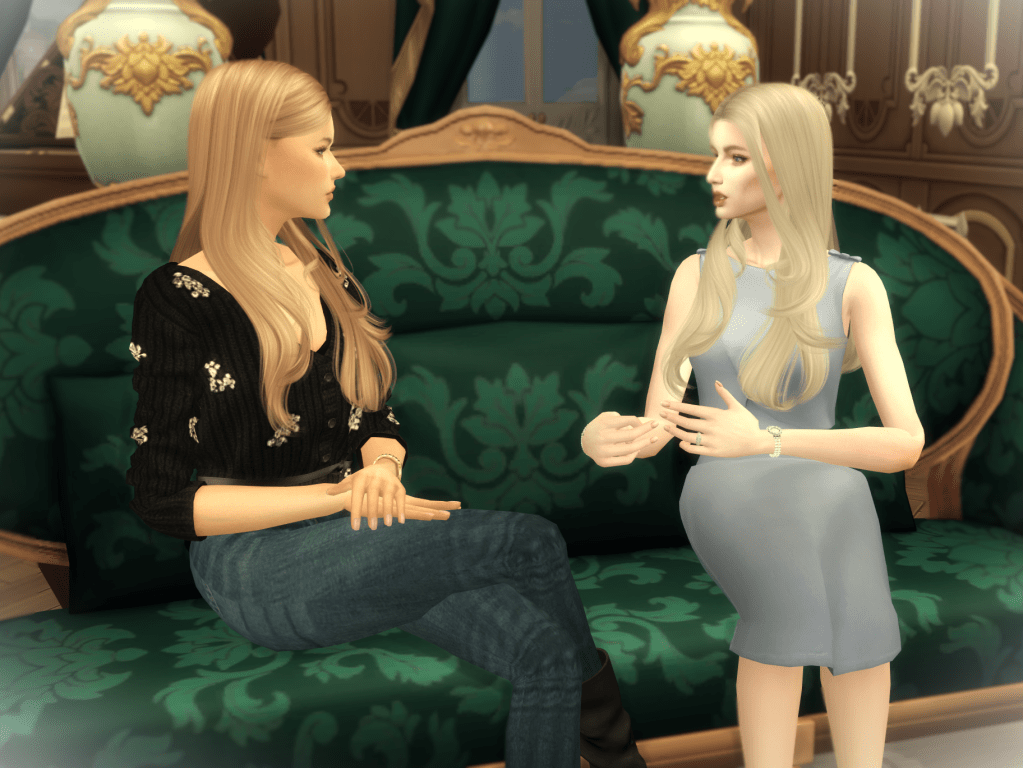
“Operation Make Philippe Drool. I know this would sound better in French but that is still above my paygrade.”
She covered her face with her hands, mortified. “Briony!”
“What? You want him to notice you, right?”
A tiny nod.
“You want him to want you?”
Her blush deepened. Another, more hesitant nod.
“Then buckle up, princess,” I said, grinning. “Because I’m about to change your life. Imma gonna turn you into a seductress. Trust me, my mom knows a thing or two about all that. And I learned from the best. In part, because she is a very sensual person, and so am I, but also because as a performer, she has to be seductive and all that.”
She peeked at me through her fingers, half horrified, half hopeful.
And that was the moment — right there — when I knew:
I wasn’t just going to help Eloise survive this world.
I was going to help her win.
 EchoesOfLegacy