
Studies
I was trying so hard to focus on my studies. French, not my uni classes. Miraculously, I didn’t have any homework for once, I’d passed finals and was officially in my fifth semester now. Or I would be, after a break. A much, MUCH deserved break, as I might add.
Ah. Sigh of relief. Halfway there. Two more years of this. Hopefully my brain had enough storage space left.
Now I had amped up my efforts trying to learn to speak to Luc properly. I had a tutor, but Eloise still helped me a lot too. She came to teach me more applied French almost every other day. Since her mother tongue was Henfordian English, sometimes it was easier for her to explain things to me.
We went through the set of verbs — être, avoir, aller, faire — the ones she said every French scholar had to master early, and then the trickier ones that refused to behave. She corrected my pronunciation, made me repeat nasal vowels until I felt like my face was collapsing, jealous of how elegant she sounded while I echoed back like a congested goose. She also reminded me that half the letters in French were decorative.
I was an advanced beginner, at best. But she never made me feel like one.
And at the end of every lesson — always, without fail — she taught me something else. Something not in any textbook. A sweet sentence. A romantic one. Sometimes a slightly naughty one.
Always something I could whisper to Luc later and watch him react in that way that made my knees go weak. I lived for that moment. And I know Luc really liked it too.
Today, she’d smiled at me with that look — the one that meant she had something planned.
“Ready for your phrase of the day?” she’d asked, smoothing her skirt like she was about to announce a royal engagement.
I nodded, bracing myself.
She leaned in, eyes bright, and said slowly, clearly:
“Je suis tellement excitée… parce que je suis enceinte.”
I blinked. “Okay… again?”
She repeated it, guiding my mouth into the right shapes, tapping my wrist when I swallowed a vowel, nodding when I finally got the rhythm right.
I was halfway through repeating it — “Je suis tellement exci—” — when the door opened.
A footman stepped in first, bowing. “His Serene Highness.”
Luc followed, all warm sunlight and easy elegance, and greeted us with that devastating smile.
“Mesdames.”
Eloise dipped into a perfect curtsy. I lit up instantly. Didn’t think. Didn’t hesitate.
I ran straight to him, threw my arms around his neck, and declared — proudly, loudly, flawlessly:
“Je suis tellement excitée parce que je suis enceinte!”
Behind me, Eloise made a noise like a dying bird.
Luc froze.
Not the usual amused chuckle. Not the fond kiss to my temple. Not the ooh-la-la reaction that made him want to be alone with me right away.
He went rigid. Eyes wide. Breath caught.
“Your Highness—no, no, no, no…” Eloise sputtered, hands flapping. “A misunderstanding. A terrible misunderstanding. Not her. Me. Me.”
I stared between them, completely lost.
Did I mispronounce it that badly? Well, it happened, why was it such an affair. Just correct me.
And then Luc broke.
Absolutely broke.
He laughed so hard he had to sit down on my bed, clutching his stomach, tears forming at the corners of his eyes. Even Eloise, mortified as she was, started laughing too. Both were breaking propriety and didn’t seem to care.
I stood there, hands on my hips, getting increasingly cranky.
“Will someone please tell me what I just said?”
Eloise inhaled to explain, but Luc lifted a hand, still breathless.
“Duchess… please. Allow me.”
He rose, pulled me into his arms, kissed my nose, and with a perfectly serious expression asked:
“So, my love… what shall we name our child? The one you are apparently expecting. At least I thoroughly hope it is mine.”
My face went nuclear.
He laughed again — softer this time — and kissed me until I started laughing too, even though I still had no idea what was happening. Did I mispronounce something so badly? I asked him. He smiled, shaking his head.
Finally, he murmured, “I think congratulations are in order.”
“Luc,” I groaned, swatting his shoulder, “the joke is over. I don’t know what I said wrong, but obviously I am not pregnant or whatever.”
He grinned.
Eloise cleared her throat delicately.
“But I am…”
Finally, the other shoe dropped with me and I squeaked and ran to hug me friend. She was finally knocked up and used the phrase of the day to tell me all about it. Terrible luck that Luc walked in right then — and I just parroted it off the top.
Funny now. Hilarious even.
She was so excited that she didn’t keep up her usual properness around Luc like she normally did. He went over to her and instead of the usual implied handkiss he actually hugged her and kissed her cheek. Eloise blushed so deeply.
Breakfast at Tiffany’s – Lunch at Eloise’s
Le Belvédère always looked like it had been carved out of sunlight and sea breeze. Philippe’s impressive, yet airy coastal residence wasn’t as grand as the palace, but it had that effortless aristocratic charm — the kind that whispered old money, old titles, and old secrets.
We were on the terrace overlooking the water, the table set with coffee, pastries, and the kind of delicate lunch that made me feel like I should sit up straighter. Eloise was already nibbling on a croissant, Geneviève was stirring her tea with that serene elegance she was born with, and Charles was reading the newspaper like a retired sovereign who still knew everything before it hit print.
Luc sat beside me – at the head of the table, the other side reserved for the host, Philippe – warm and steady, one hand brushing mine under the table every so often like he couldn’t help it, the other holding a glass of wine.
Philippe arrived last, of course — breezing in with a linen shirt, sunglasses which he folded into his pocket, and the smug aura of a man who knew he was the most interesting person in any room.
“Mes amis,” he said, kissing Eloise’s cheek, then Geneviève’s, then giving me a wink. “I trust we are all enjoying the view?”
Charles didn’t look up. “We were, until you blocked it.”
Philippe smirked. “Ah, Charles. Always a delight.”
Luc snorted into his wineglass.
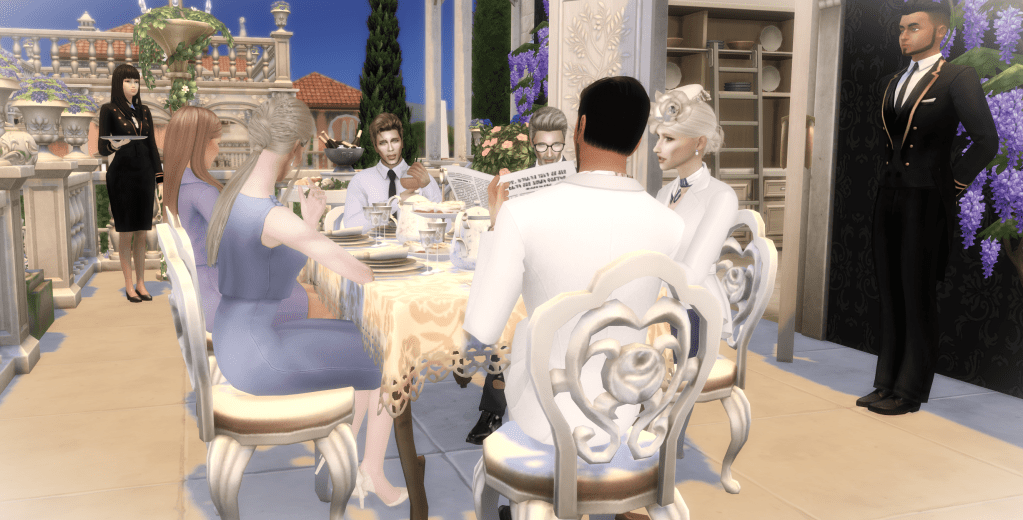
We settled in. It was comfortable, warm, familiar — until Eloise, sweet traitor that she was, turned to me with a gentle smile.
“Briony, darling… I meant to ask. At the Beauvigne ladies’ reception last week — you disappeared so quickly. I didn’t even get to introduce you to the Contessa.”
My stomach tightened. I forced a smile. “Oh. That. I just… needed some air.”
Geneviève’s eyes softened. “Ma chérie, you left so abruptly. Did something happen? Were you unwell?”
I shook my head too quickly. “No. Nothing. I’m fine.”
Luc’s hand found my knee under the table. “Briony.”
Just my name. Quiet. But it cracked something open.
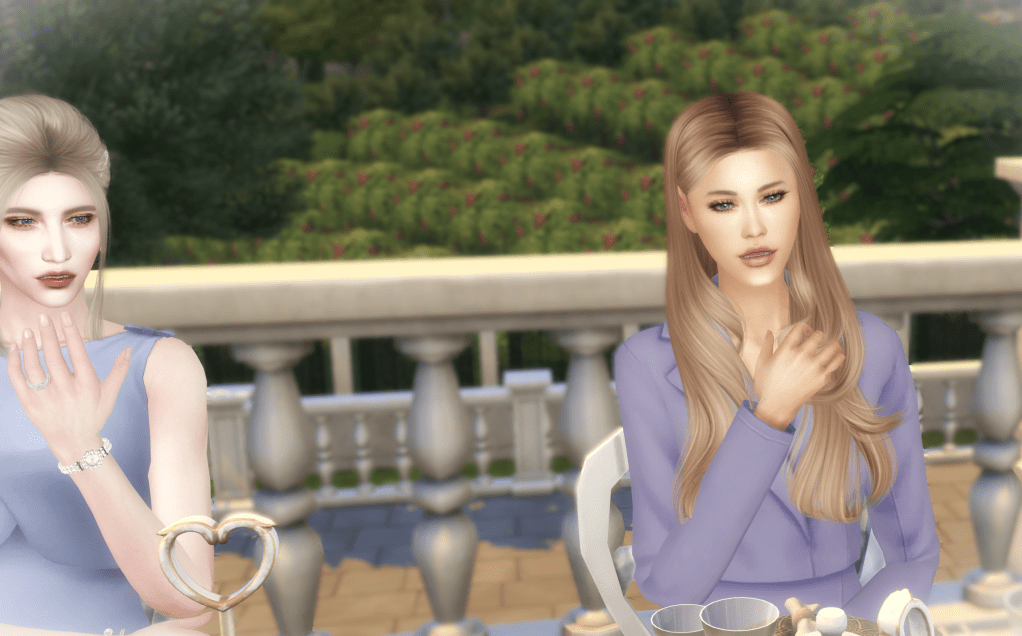
I exhaled. “It’s just… every time I tried to talk to the other noblewomen when none of you are with me, they walk away. Like I wasn’t supposed to be there. Like I was intruding. Like I’d wandered in off the street by accident. When one of you introduces me they play nice, but without you, it’s … different.”
Luc’s head snapped to me. He did not like that one bit — which was exactly why I hadn’t said anything before. No need to stir up trouble unnecessarily. We already had plenty with Clementine and Dominique. The last thing I needed was every noblewoman in Ondarion hating me… especially since Luc tended to plan quiet royal vendettas every time one of them so much as looked at me wrong. As much as I loved his protective side, pissing them all off would just be shooting myself in the foot long-term.
Eloise gasped. “They did not. They would not dare!”
“Oh, they dared,” I said, laughing weakly. “I felt like a stray cat wandering into a purebred dog show.”
Charles lowered his newspaper, eyes sharp over the rim of his glasses. “That is unacceptable.”
Geneviève nodded, elegant and fierce. “They are threatened. That is all. Don’t mind them, Briony. Silly geese.”
Eloise reached over and squeezed my hand. “You carry yourself with more grace than half of them combined.”
Luc’s voice was low, warm, and lethal. “If they walked away, it is because they knew they could not compare.”
My face went hot. “Luc…”
He didn’t look away. “It is the truth. The reaction of inadequacy.”
And then — of course — Philippe chose that moment to sip his coffee with exaggerated delicacy.
“Well,” he said lightly, “I can fix that for you, mon amie.”
Every head turned.
Charles groaned. “Philippe, don’t make such a production, mon garçon. If you have something to add, then do.”
Philippe raised an eyebrow. “Moi? Make a production? Never.”
Luc narrowed his eyes. “What solution are you about to propose, and how much is it going to cost me?”
Philippe leaned back, smirking. “Oh, nothing too extravagant. Perhaps naming your firstborn after me.”
Luc didn’t blink. “Absolutely not.”
“Then,” Philippe said, setting down his cup with a soft clink, “I suppose I will settle for elevating your lady instead.”
Silence.
My heart stopped.
Eloise’s eyes went wide. Geneviève smiled as if she birthed Philippe and was a proud mother to a genius now. Charles folded his newspaper with the air of a man preparing for a show.
Luc stared at Philippe. “Explain.”
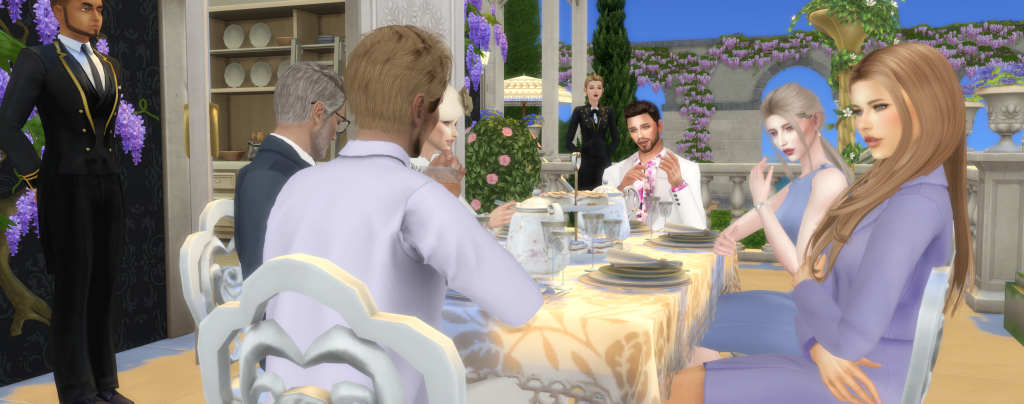
Philippe steepled his fingers. “Well, our lovely Mademoiselle Briony has been thrust into our world with no preparation, no title, and no protection unless one of us is with her. And yet she carries herself with dignity, loyalty, and grace. She deserves recognition. And more importantly — she deserves standing. That will eliminate any excuse any highborn lady would have to wish to exclude her. There would be no excuse for it and it would be considered nothing but rude. And we all know that reputation is everything here in Bellacorde.”
My breath caught. “I am not following. Standing?”
He nodded. “Yes, ma chère. A place. A title. We’ll make you one of them, outrank most of them to ensure no noblewoman will ever dare turn her back on you again. They will be more than civil to you, at least until you marry our esteemed sovereign over there, after that they will kiss their way up from your feet, over your derriere to your cheeks each time they see you anyway, as that is how things go here, n’est‑ce pas?”
Luc’s jaw tightened — not in anger, but in something deeper. Something proud. Something possessive.
“What title do you have in mind?” he asked quietly.
Philippe’s smirk sharpened. “As Duc de Bellacorde, I have several dormant titles at my disposal. Old dignities. Estates absorbed into the crown. Honors unused for generations. I am sure we can dust off something suitable and useful until you can make her officially yours, mon frere.”
Eloise gasped so loudly the gulls startled. “THE BOOK!”
Before anyone could blink, she bolted inside.
Geneviève laughed softly. “A woman on a mission.”
Moments later, Eloise returned carrying a massive leather‑bound tome like it weighed nothing. She dropped it in front of Philippe with a thud that rattled the teacups.
“Open it,” she demanded, breathless.
Philippe chuckled, flipping it open. Eloise hovered over his shoulder — then, with a delighted squeak, Philippe hooked an arm around her waist and pulled her into his lap.
She melted into him like it was the most natural thing in the world.
Everyone else leaned in. Me too, even though I couldn’t read any of it. It was gorgeous penmanship, but French and above my current paygrade. Well, merde.
Philippe flipped through the pages, murmuring. “Dormant, but too low… dormant but male only… absorbed… removed… ah. Here we are.”
He tapped two entries.
Charles whistled low. “Those are not small titles. Generous, my boy.”
Luc leaned forward, eyes sharp. “Generous indeed! Philippe really likes you Briony, these are significant. Old. Prestigious. They carry weight.”
Luc’s eyes met Philippe’s, who winked and smirked his arrogant smirk.
My pulse quickened. “What are they?”
Luc leaned in, his voice low and steady, the way he spoke when he wanted me to understand the gravity of something.
“Both are a Marquise Palatine, which isn’t a decorative title, Briony,” he said. “They’re Palatine dignities. Very old. Very rare. They were created for nobles who governed lands on behalf of the Duc himself — people trusted with authority, judgment, and representation.”
He tapped the open page with two fingers.
“A Palatine title is not like a barony or a courtesy rank. It carries history. Influence. It means you are not simply in the aristocracy — you are anchored in it. Permanently. In your own right.”
My breath caught.
Luc continued, softer now.
“Valfleur and Vignemer were once powerful estates. Valfleur was known for its valley of flowers — lavender, roses, wild blooms that covered the hills. It symbolized beauty, grace, and quiet strength.”
He turned the page.
“Vignemer was coastal. Vineyards carved into cliffs above the sea. It symbolized resilience, endurance, and the ability to thrive in harsh places.”
He looked at me then, eyes warm and intent.
“These titles were held by families who shaped Bellacorde’s history. They were absorbed into the ducal domain generations ago. Dormant. Waiting. They are revived only for people who have earned the Duc’s trust… or the Sovereign’s.”
His voice dropped to a reverent murmur.
“This is not a gesture. It is a statement. One I cannot make myself without inviting accusations of favoritism — everyone knows what you are to me. I have thought of it more times than I should admit, but doing so would have stirred discord in the kingdom.”
“Eh bien, ma chère, which would you choose? Vignemer or Valfleur?” Philippe asked, leaning back with a lazy sweep of his hands, as if the matter were nothing more serious than choosing a pastry. Then, with a small, knowing smirk, he added, “And before you worry — yes, I can do this without issue. I am married, not the sovereign. No one can cry favoritism at me.”
I froze. I hadn’t even processed what was happening, let alone figured out how to choose something like this with five aristocrats staring at me.
“I… I don’t know. Can you help me? I don’t know how to choose something like this.”
Philippe opened his hands wider, palms up, a theatrical little shrug.
“Then we vote.”
Eloise raised her hand immediately. “Valfleur. It suits her.”
Geneviève nodded. “Valfleur. It echoes her middle name. Rose.”
Charles stroked his chin. “Vignemer. It has gravitas.”
Philippe nodded. “I agree. Has my vote too. Same reason.”
Luc looked at me — really looked — and said softly, “Valfleur. It is… you.”
Three to two.
Philippe turned to me. “Marquise, the deciding vote is yours.”
My breath caught.
I stared at the two names on the page, my pulse thudding in my ears. They were both beautiful. Both powerful. Both overwhelming.
“I—” My voice cracked. “I don’t know. They’re both… they’re both so much.”
Luc’s chair scraped softly as he leaned closer, his presence warm at my side.
“Briony,” he murmured, “look at me.”
I did.
“Let me say them for you.”
Philippe’s eyebrows shot up, amused. Eloise clasped her hands under her chin. Geneviève smiled knowingly. Charles muttered something about theatrics, but even he leaned forward.
Luc held my gaze, steady and sure.
He started with the stronger one, his voice formal, resonant:
“Briony Rose Cameron, Marquise Palatine de Vignemer.”
A shiver ran down my spine. It was powerful. Commanding. A title carved into stone somewhere.
Then he softened — just a fraction — and said the second one like it was a vow:
“Briony Rose Cameron… Marquise Palatine de Valfleur.”
My breath hitched.
And then — God help me — he added, barely above a whisper, meant only for me:
“Briony Rose Cameron Beaumont… Marquise Palatine de Valfleur. Future Sovereign Princess of Bellacorde and the Triune of Ondarion.”
My knees went weak even though I was sitting.
Heat rushed up my throat. The world tilted. Something inside me broke open.
A sharp exhale came from the other side of the table.
Charles lowered his newspaper fully, eyebrows climbing toward his hairline.
“Bon sang, mon fils… fais au moins semblant d’attendre les fiançailles. At least pretend you’re waiting until the engagement before you add names that are not yours to give yet.”
Eloise choked on a laugh. Geneviève hid a smile behind her teacup. Philippe looked delighted, like he’d just been handed front‑row tickets to the best show in Bellacorde.
Luc didn’t even blink.
He kept his eyes on me — steady, warm, unashamed — as if Charles hadn’t spoken at all.
His lips curved, slow and knowing.
“Celui‑là… parfait pour toi — that one is perfect for you,” he whispered.
Charles grumbled, “Mon dieu, mon garçon… arrête donc d’influencer la jeune dame. Stop influencing her.”
Luc’s smile deepened. “Jamais, mon père. Never.”
“Je… je n’mind pas. Et il a raison. Celui‑là,” I mumbled, knowing it was partially correct, partially copied from Luc and partially ‘Franglais’ while nodding at Luc before turning to Philippe, who grabbed a pen, opened the book, and wrote my name into Bellacorde history.
I swear I felt like I was having a heart attack.
Making it Official
The salon was warm with afternoon light. Philippe stood before me, solemn now, the Duc rather than the friend.
“Briony Rose Cameron,” he said, voice carrying the weight of centuries, “by the authority vested in me as Duc de Bellacorde, I revive the ancient dignity of Valfleur and bestow it upon you. From this day forward, you are the Marquise Palatine de Valfleur, with all honors, courtesies, and privileges accorded to your rank.”
He bowed his head.
I couldn’t breathe.
And suddenly I wished I’d worn something more formal. I wasn’t dressed improperly — just dressed for an easy afternoon lunch with aristocracy, not for being elevated into the aristocracy.
Behind me, I heard Eloise sniffle. Geneviève exhale softly. Charles murmur, “Très bien.”
And Luc…
Luc stood. Slowly. Like he couldn’t help himself.
His eyes were warm, proud, burning.
Philippe released my hand and stepped back.
Luc approached me, stopping just close enough that only I could hear him.
“Marquise,” he murmured, voice low and reverent, “you have no idea how long I have waited to see you properly recognized. Philippe deserves a medal for this.”
My heart nearly burst.
I bowed my head — not because I had to, but because I wanted to.
“Merci, mon prince.”
Luc’s breath caught — and then, before I could even straighten fully, he turned toward Philippe with a look I’d never seen on him before.
A look of pure, unfiltered gratitude.
And then he moved.
One moment he was beside me, the next he had crossed the space between them and grabbed Philippe by the shoulders.
“Mon frère,” Luc said, voice thick, “you have no idea what you’ve done. I could not ask this of you… but I have never been more grateful for anything.”
Philippe blinked. “Luc, what—”
Luc kissed him.
Not on the mouth — thank God — but a fierce, grateful kiss to each cheek, the kind men gave each other in old portraits when they’d survived wars together.
Philippe froze, then burst into delighted laughter.
“Mon dieu — get a hold of yourself, Your Highness! I am a married man. A… happily… married man.”
Eloise laughed. Mostly at the joke — but there was something else there too. When I first met them, their marriage had been practically nonexistent. Now he was proclaiming it without being prompted.
Charles shook his head, muttering, “Ridiculous boys,” but he was smiling.
Geneviève dabbed her eyes. “It is a good day. We must celebrate. Champagne.”
At Geneviève’s word, two footmen slipped out at once — no orders needed. Champagne would appear within minutes.
And it did.
A pair of footmen returned with a silver tray of crystal flutes, the champagne pale and bubbling in the afternoon light. They offered the glasses around the circle — Charles, Geneviève, Luc, Philippe, and then me.
Eloise lifted a hand to decline, gentle but firm.
Before the footman could retreat, Philippe’s hand flicked in a subtle, practiced gesture — protective, instinctive.
“Un jus pour la Duchesse,” he said quietly.
The footman bowed and slipped away, returning moments later with a chilled glass of sparkling apple juice. Eloise’s eyes softened as she accepted it, her smile small but full — the kind of smile she saved only for Philippe now, the man who had somehow transformed from aloof roommate into a devoted husband and father.
Philippe noticed — and his own expression warmed. They traded a smile.
Luc stepped back, cheeks flushed, eyes bright as he clapped Philippe on the shoulder. “You have given her what I could not. Not yet.”
Philippe’s expression softened — rare, real, then became the devilish smirk. “Something I never thought I’d hear another man admit. A joke, just a joke. You are welcome, mon ami.” He glanced at me. “And she deserves it.”
My throat tightened again.
But Philippe wasn’t done.
He clapped his hands once, sharply. “Now! Before we all dissolve into sentiment — we must discuss the public announcement.”
I blinked. “Public… what?”
Eloise gasped. “Oh! Yes! Philippe, the communiqué!”
Geneviève nodded approvingly. “It must be done properly.”
Charles folded his arms. “The people will want to know. And the nobles will need to be informed before they invent their own version.”
Luc turned to me, his expression softening. “This is not something we hide, Briony. You earned this. You deserve to be recognized.”
Philippe was already pacing, muttering to himself. “A formal communiqué from the Ducal Office… endorsed by the Sovereign Household… yes, yes, that will do nicely …”
At his gesture, a senior secretary appeared in the doorway — tablet in hand, stylus poised, as if the Ducal Office had been waiting for this moment all afternoon. Another staffer hovered behind her with a leather folio of pre‑formatted templates, ready for seals and signatures.
Philippe straightened, slipping effortlessly into the full authority of his station. His voice shifted into crisp, commanding French.
« Très bien. Approchez. Nous devons rédiger ceci immédiatement. » (“Very well. Come forward. We must draft this immediately.”)
The secretary stepped closer, tablet already open to the communiqué template. « Je suis prête, Votre Grâce. » (“I am ready, Your Grace.”)
Philippe nodded once, dictated his lines in rapid French, then switched back to English for my sake — though the cadence remained formal.
“By sunset, all of Bellacorde will know that Mademoiselle Briony Rose Cameron has been elevated to the dignity of Marquise Palatine de Valfleur and is now to be addressed as Her Excellency, Briony Rose Cameron, Marquise Palatine de Valfleur.”
The secretary’s stylus flew across the screen, capturing every word.
I felt buzzing in my head and ears, like I was dreaming this. Luc’s hand found mine again, warm and steady. Not a dream. This was real. Oh. My. God. Wait till Mom and Brad hear this. Excellency? Marquise Cameron. OMG! I had to brace myself to not pull out my phone right now!
“And by tomorrow,” he murmured, “every noblewoman who ever turned her back on you will be practicing their curtsies.”
I swallowed hard.
This was real. This was happening. This was my life now.
And for the first time, I didn’t feel like I was pretending.
I felt like I belonged.
The secretary read back the draft for confirmation, her voice crisp and ceremonial:
« Sa Grâce le Duc de Bellacorde, avec l’appui de la Maison Souveraine, annonce la restauration et l’octroi de l’antique dignité de Valfleur à Mademoiselle Briony Rose Cameron, qui sera désormais titrée Son Excellence, la Marquise Palatine de Valfleur. »
She paused, stylus hovering. « Souhaitez‑vous la version anglaise également, Votre Grâce? » (“Would you like the English version as well, Your Grace?”)
Philippe nodded. “Of course. Bellacorde is multilingual. It must be done properly.”
Her stylus moved again, swift and sure.
“His Grace the Duc de Bellacorde, with the endorsement of the Sovereign Household, announces the revival and bestowal of the ancient dignity of Valfleur upon Briony Rose Cameron, who shall henceforth be styled Her Excellency, the Marquise Palatine de Valfleur.”
News Travels Fast
The communiqué arrived at Domaine d’Aubigny just after dusk, delivered by a palace courier who bowed too deeply for François’s liking.
He broke the seal with a practiced flick of his thumb.
His eyes scanned the page once.
Then again.
Then he exhaled — long, slow, resigned — and let his head fall back against the velvet armchair.
Of course. Of course Luc would do this. Of course Philippe would help him. Of course Briony Cameron — the girl Clementine had dismissed as nothing — would now outrank half the aristocracy.
He closed his eyes for a moment, then stood and crossed the room to where his sister lounged on the chaise, flipping through a fashion magazine with bored disdain.
“Clementine,” he said quietly.
She didn’t look up. “If this is about the gala, I already told you—”
François held out the communiqué.
Her eyes narrowed. “What is that?”
“Read it.”
She snatched it from his hand, irritated. Her gaze skimmed the first line.
Then the second.
Then the title.
Her entire body went rigid.
“No.”
François said nothing.
She read it again, slower this time, as if the words might rearrange themselves into something less offensive.
Her Excellency, the Marquise Palatine de Valfleur.
Her breath hitched.
“No,” she whispered. “No, no, no—this is impossible. She—she cannot—she is nothing. She is no one. She— They can’t do that!”
Her voice cracked.
François watched her carefully. “Of course they can. Philippe is a Duc. It is official. Philippe revived the title. Luc endorsed it. The palace has already released the announcement. It is done.”
Clementine’s hands trembled.
Then the trembling turned to fury.
She crushed the communiqué in her fist, nails digging into the parchment, and hurled it across the room. It hit the marble hearth with a dull slap and rolled into the fireplace.
She stood, shaking, her face blotched with rage.
“She outranks you now,” she whispered, horrified. “She outranks me. She outranks us.”
François didn’t correct her. He didn’t need to.
Clementine’s voice rose, sharp and brittle. “She will walk into court and they will bow. To her. To that— that—”
She couldn’t even finish the sentence.
François sighed. “Clementine—”
“No!” She spun on him, eyes wild. “Do you understand what this means? I cannot compete with this. I cannot—”
Her voice broke entirely.
She turned back to the fireplace, staring at the crumpled communiqué like it had personally betrayed her.
Then, with a sudden, violent motion, she kicked it deeper into the grate.
The parchment caught flame instantly.
Clementine watched it burn, jaw clenched, chest heaving.
When she finally spoke, her voice was low and venomous.
“This is not over. That awful commoner harlet!”
François closed his eyes.
He knew she meant it.
The Gift
My suite was quiet when Luc slipped inside, closing the door behind him with that soft, deliberate click that always made my pulse jump. He didn’t say anything at first — just looked at me with that unreadable expression he wore when he was holding something back.
I was still in the dress I’d worn to the formal dinner with the visiting dignitaries — a soft, elegant gown in a soft muted blush, my hair pinned loosely from the evening. I hadn’t changed yet. I hadn’t expected him.
Then I saw the velvet box in his hand.
My breath caught. “Luc…?”
“Come,” he said softly.
No chamberlain, footman, or herald announced him — because this was the private residential wing of the palace, and I was no longer just a commoner. I was now peerage. In these corridors, among peerage, even the Sovereign Prince entered without ceremony unless he brought staff or official business. Tonight, he brought neither. Only himself.
He offered his hand, and I took it. He led me toward the full‑length mirror near the window — the one framed in carved wood, the one that made me feel like I was standing inside a portrait.
He stopped behind me, close enough that I could feel the warmth of him through my dress.
“Briony,” he murmured, “look at yourself.”
I did.
And then he opened the box.
The tiara inside wasn’t new. It wasn’t modern. It wasn’t flashy. But it was beautiful.
It was old, delicate, unmistakably royal — silver filigree shaped like blooming fleurs‑de‑lys, set with pale lavender stones that caught the light like morning frost.
My voice broke. “Luc… this is—”
“Beaumont,” he finished quietly. “My grandmother’s. Worn only by the women who stood beside the sovereign. It has not been touched since she passed.”
My throat tightened. “Luc, I can’t—”
“You can,” he said, stepping closer. “Now you can. And you will. Not every day — only for the most important occasions. Balls. State evenings. And…” His voice softened. “Your introduction ball. You will wear it then. Let them see you as I do.”
He lifted the tiara from its velvet cradle with reverent hands.
“Turn toward the mirror.”
I did.
He stood behind me, his reflection tall and steady, mine trembling. He brushed a stray curl from my cheek, then lowered the tiara onto my head with a care that made my knees weaken.
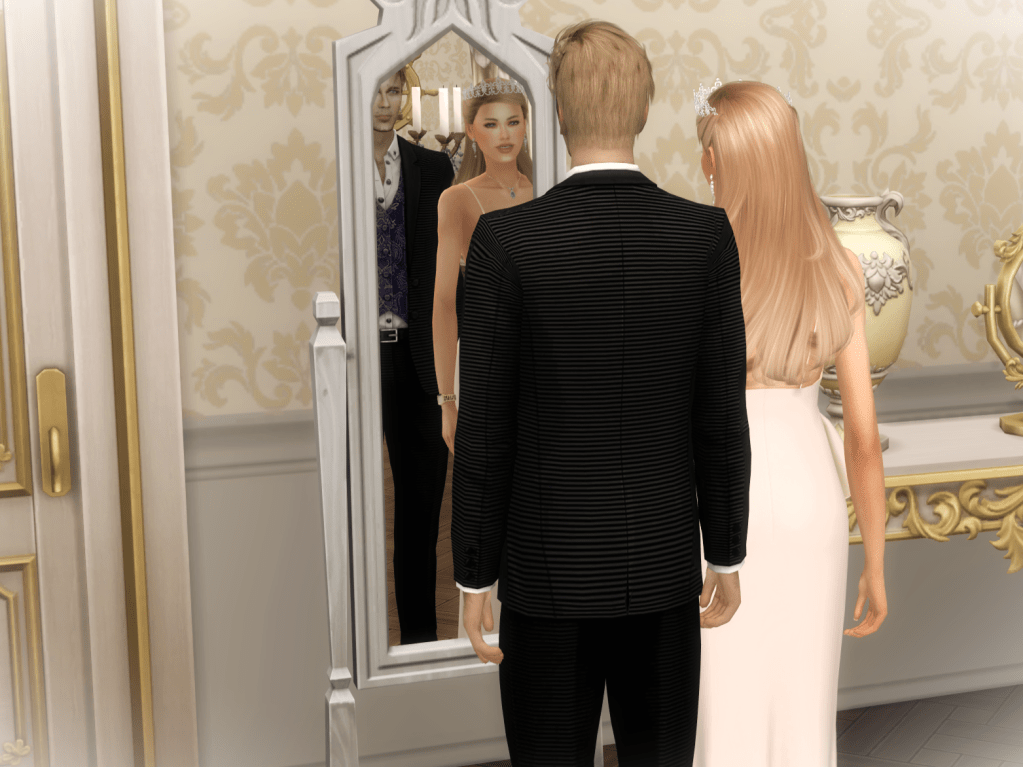
The metal settled against my hair like it had been waiting for me.
Luc’s hands lingered — not on the tiara, but on my shoulders, warm and grounding.
“Look,” he whispered.
I did.
And for the first time, I didn’t see a girl trying to survive a world she didn’t belong in.
I saw a Marquise. I saw Valfleur and Beauvigne. I saw someone who could stand beside a sovereign proudly.
Luc’s voice dropped to a murmur that felt like a vow.
“Voilà,” he breathed. “Now you look as you should.”
My eyes stung. “Luc…”
He leaned down, his lips brushing the shell of my ear.
“This is not a gift,” he said. “It is a promise of things ahead, Ma Marquise.”
Deviance and Defiance
Eloise had spread half the atelier across her sitting room — sketches, fabric swatches, embroidery samples, beadwork, lace, silk, satin, tulle. It looked like a couture hurricane had passed through.
She held up a deep red silk. “Too bold,” she said, dismissing it with a flick. “Red is for duchesses trying to make a point.”
She lifted a royal purple. “Too predictable. And since the ball is at my home, wearing purple would feel… presumptuous.”
A soft blush‑pink. “Too ingénue.”
A gold brocade. “Too … old royalty.”
I snorted. “You say that like it’s a bad thing.”
Eloise grinned. “Oh, it’s not – if you are old royalty. But for this? We need something that says I belong here without saying I’m trying too hard.”
I nodded, but my mind was elsewhere.
Every noblewoman in the Triune was required to attend. Skipping would be seen as contempt toward the Crown.
And I knew that Clementine had been talking shit about me again. Loudly. Confidently. Cruelly. Implying that Philippe had elevated me because I was sleeping with him — because once upon a time, when his arranged marriage to Eloise was barely a marriage at all, he’d cheated often enough that no one would have blinked.
It didn’t matter that he was faithful now, devoted now, a different man entirely. People like Clementine didn’t need the truth. They only needed a crack to shove a rumor through.
I wasn’t going to confront her. Neither would Eloise. I wasn’t going to argue. I wasn’t going to stoop.
I was going to walk in wearing a message. A very clear one. She wanted a war — she would get it. I had tried to let bygones be bygones, but she clearly couldn’t leave well enough alone. Fine.
Time for her to meet the Cameron and Kershaw side of me, noble edition.
A slow, wicked idea unfurled in my chest.
I reached out, snatched the swatch book from Eloise’s hands, flipped through it, and stopped on a single square of fabric.
I held it up to my chin.
Eloise blinked. Then her lips curled into a matching smirk.
“Would this be appropriate?” I asked, feigning innocence.
Eloise leaned back, eyes sparkling. “I don’t see why it wouldn’t be…”
We looked at each other in silent understanding. We both knew. This was it.
We both giggled, our new little secret hanging between us like a shared sin. I’d said it before, and I would prove it again now: I knew fashion like a second language — and I would use it to yell my war cry at Clementine and anyone else who still wanted to trip me up the moment I walked into the ball.
Le Bal de Présentation
Philippe and Eloise’s noble residence, Le Belvédère, had been transformed — chandeliers blazing, marble floors polished to a mirror shine, musicians playing something elegant and old to honor my new title with a Presentation Ball, Le Bal de Présentation.
Nobles clustered in glittering groups, sipping champagne, whispering behind fans and gloved hands.
Every woman wore jewel tones. Every woman wore her finest. Every woman waited to see what the new Marquise Palatine would dare to wear.
Luc stood near the dais with Philippe and Charles, scanning the room with that restless, searching energy he only had when he couldn’t find me.
He didn’t know.
His parents didn’t know.
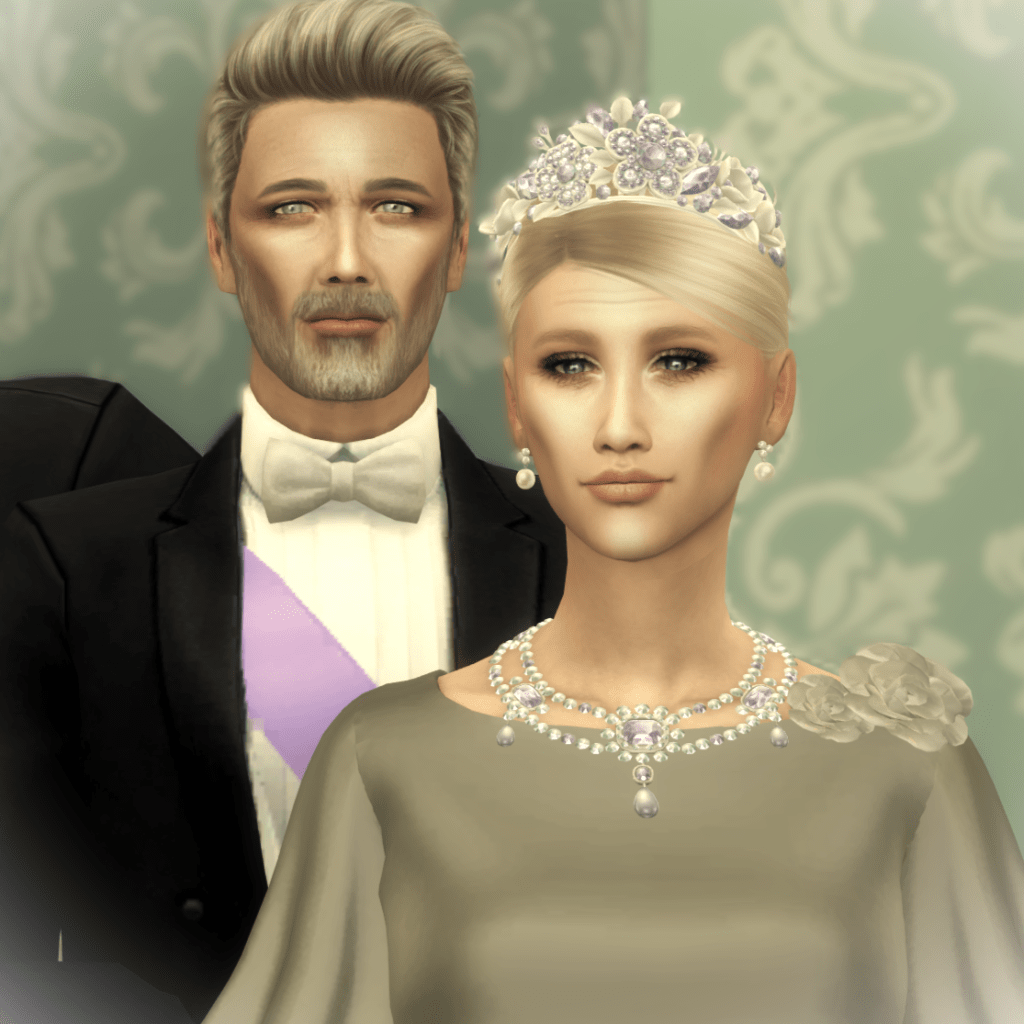
No one did. Only Eloise. But she could keep a secret.
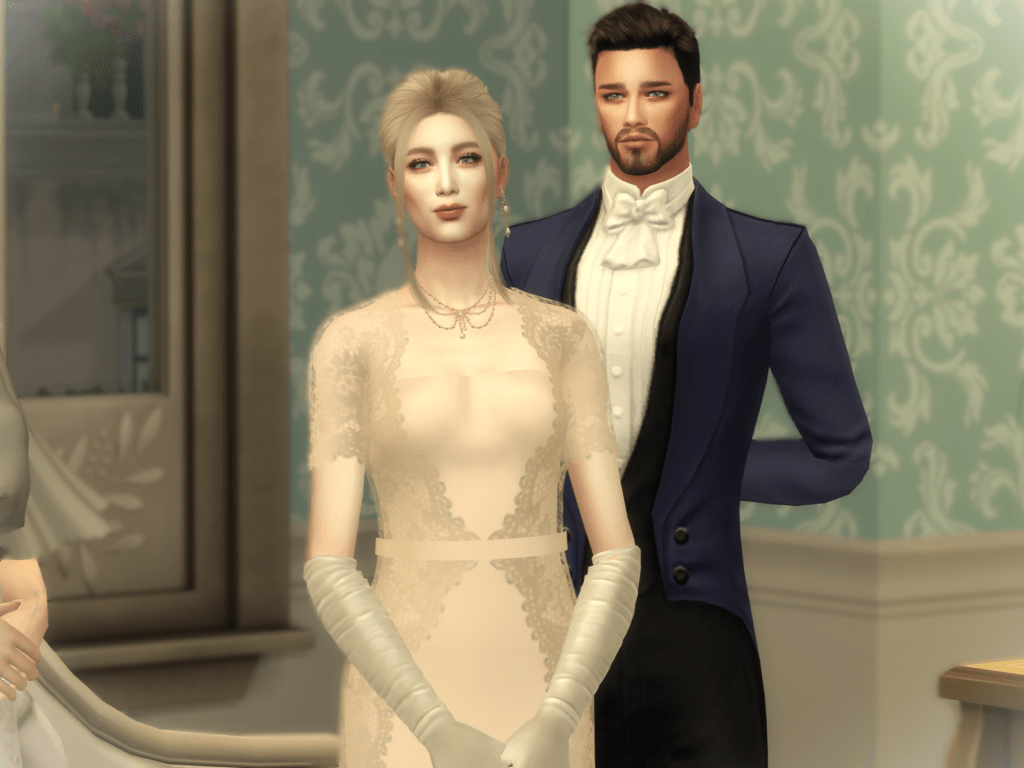
A herald stepped forward, staff striking the marble.
The room fell silent.
“Mesdames et Messieurs,” the herald called, voice ringing through the hall.
“For the first time, let me present Her Excellency, Briony Rose Cameron, Marquise Palatine de Valfleur, esteemed resident of the Royal Court of Beauvigne.”
Luc’s head snapped toward the entrance — and for the first time that night, his searching stopped.
A ripple went through the ballroom — surprise, curiosity, envy — the kind of collective inhale that meant the nobles knew something was about to change.
Heads turned.
Clementine’s smile died on her lips.
And then—
I stepped into the ballroom.
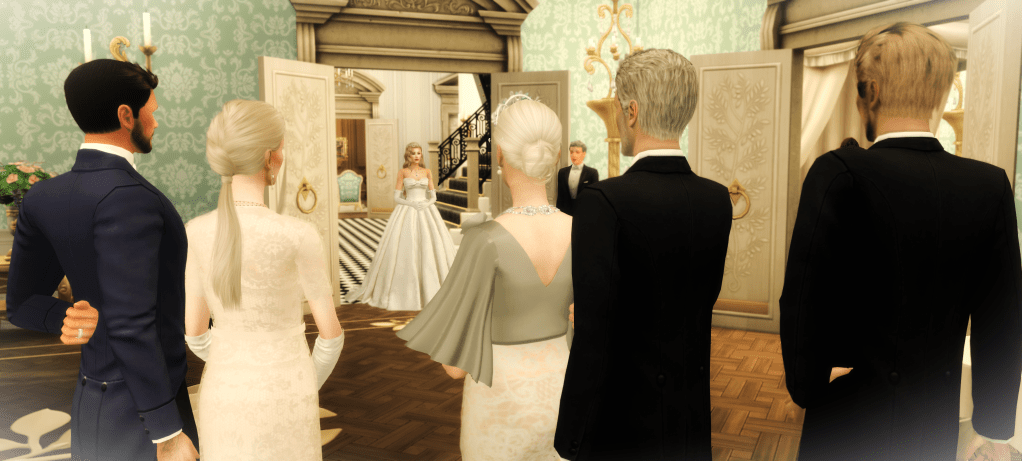
Wearing white.
Not cream. Not ivory. Not champagne.
White.
A gown that flowed like moonlight. A silhouette that whispered debutante and bride and sovereign‑adjacent all at once. And atop my head —
… the Beaumont tiara.
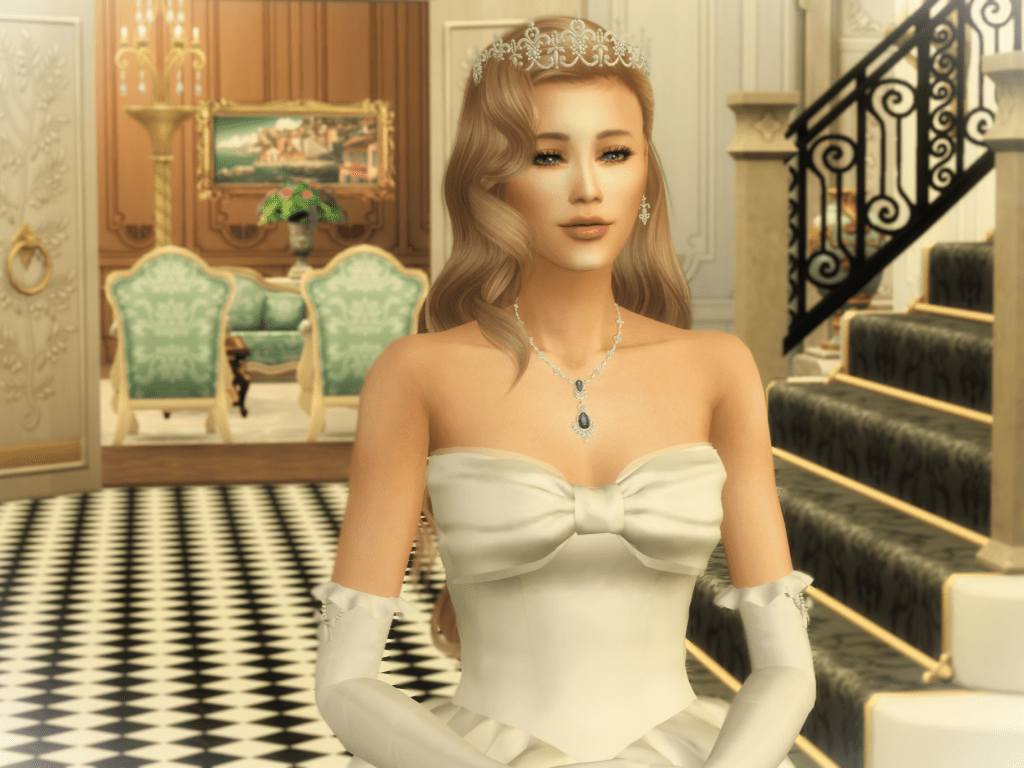
The room inhaled as one.
Every noblewoman in the room died a little inside.
Clementine died twice.
And Luc—
Luc died in a different way.
His breath left him. His eyes widened. His hand tightened on the railing like he needed to hold onto something solid.
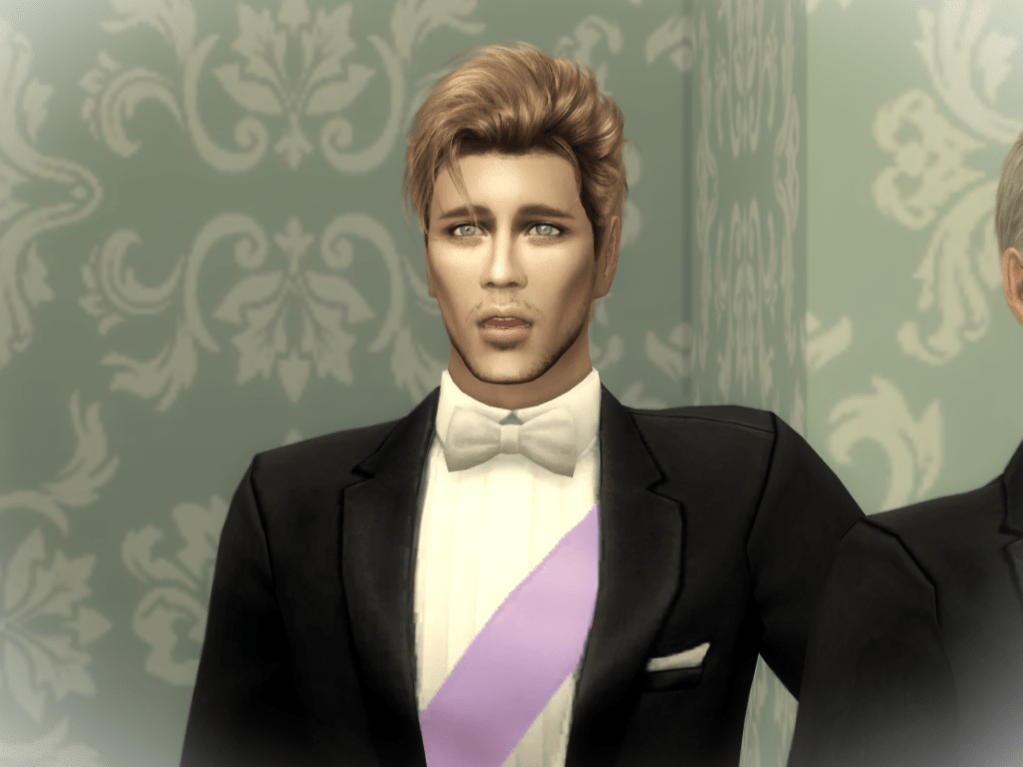
Philippe murmured, “Mon Dieu…”
Charles muttered, nudging Luc, “Good grief, boy, close your mouth.”
But Luc didn’t hear them.
He only saw me.
And in that moment, with every noble in Bellacorde watching, he looked at me like I had just walked down the aisle toward him.
Then he moved.
Not rushed. Not frantic. But with the deliberate, unhurried certainty of a man walking toward the center of his life.
The crowd parted instinctively, nobles stepping aside as if guided by some ancient instinct to clear the path for their sovereign.
Luc walked over to me, graceful enough to not be rushing, eyes never leaving mine.
When he reached me, he stopped just close enough that I could feel the warmth of him, the gravity of him, the way the entire room seemed to tilt toward us.
He extended his hand — not as a prince offering courtesy, but as a man offering something far more dangerous.
“Your Excellency,” he murmured, voice low enough for only me.
I placed my hand in his.
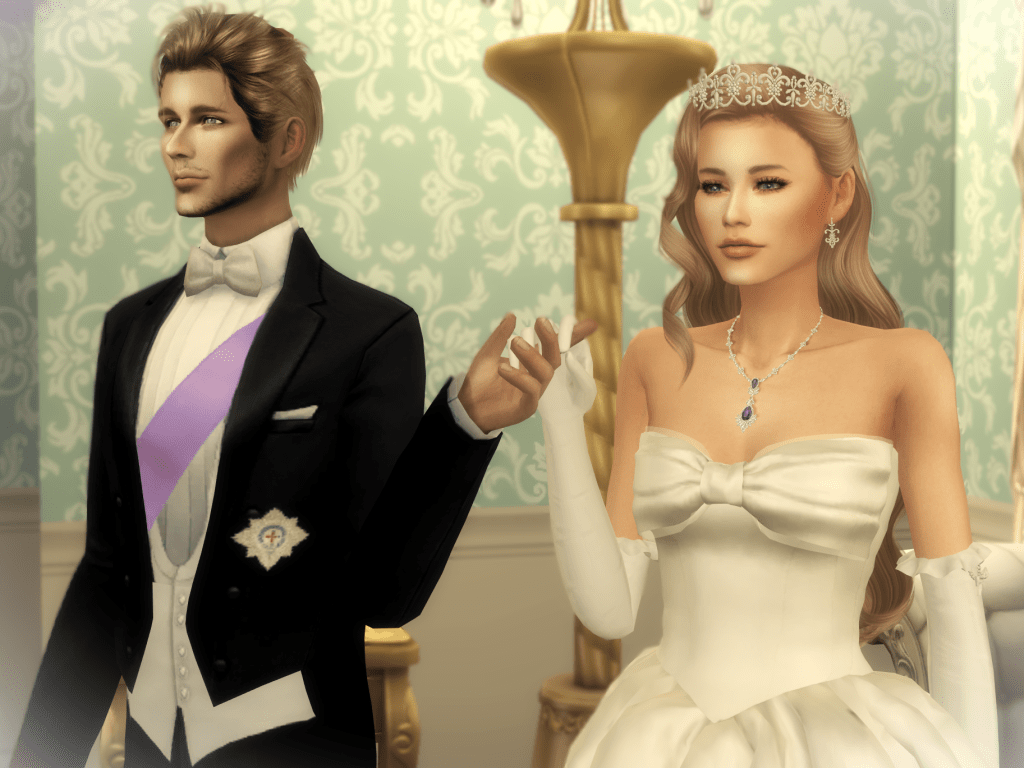
The musicians, sensing the shift — or perhaps guided by Philippe’s subtle nod — eased into a waltz, soft and sweeping.
Luc drew me forward, his hand holding mine as though it were something precious.
Someone — Geneviève, of course it was Geneviève — began to clap.
Once. Twice. A third time.
The room followed.
An ovation rose around us, rolling through the ballroom like a tide, nobles applauding the woman they had underestimated, the title they had doubted, the future they had not seen coming. Or rather, didn’t want to see. Now I had stapled the message to their foreheads. Get used to the white gown on me, you’ll see me in another one again someday. Walking down an aisle towards Luc again.
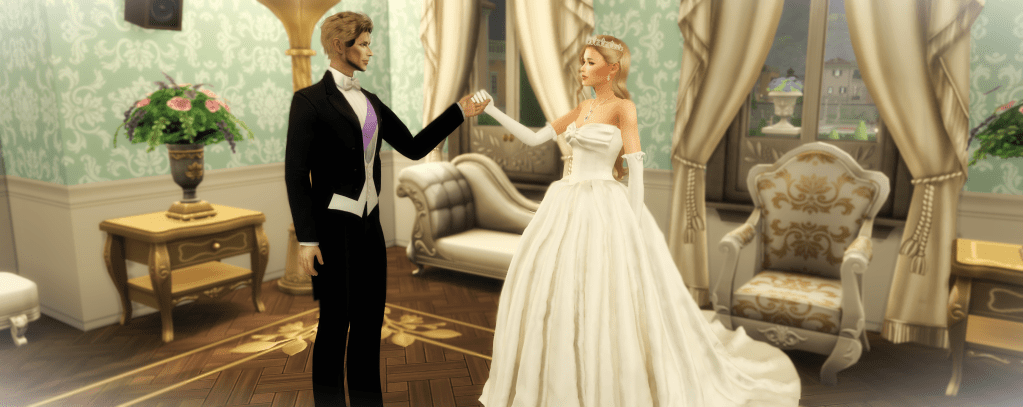
Luc leaned in, his forehead brushing mine as we turned.
“Ma Marquise,” he whispered, “you have just conquered them all. I believe we shall open the dance.”
I nodded and we fell into step. Oh yes, I had practicing with Mom and Brad. Helped being born from a family with music in their blood.
The ovation swelled around us, nobles applauding, whispering, recalibrating their entire understanding of who I was.
And in the center of it all, in Luc’s arms, wearing the tiara Clementine would have killed to touch, I felt something cold and clean settle in my chest.
Matchpoint, me.
Morning Light in Beauvigne
We were sprawled across my bed, limbs tangled, the late morning light spilling across the sheets in warm gold. Luc had been up for hours already — he always was — but after finishing whatever early‑morning princely nonsense he had to do, he’d come back to bed fully dressed to “keep me company,” which really meant cuddling me until I relaxed and then annoying me until I forgot how to breathe. He’d already showered, dressed, and probably solved three diplomatic crises before I even opened my eyes. Then he came back to bed.
It was a few days after my presentation ball; his parents had flown off to Henfordshire to visit his very pregnant sister, which meant the palace was blissfully quiet — no meetings, no advisors, no ceremonial nonsense. Just us, enjoying our time together, a little more legitimate now that I had the title. It really changed a lot for us. Me staying here was a lot less cringe. And Luc and me being seen together had a much more acceptable ring to it.
But right now it was just us.
Luc kissed my cheek, then my jaw, then that spot just below my ear that made my brain short‑circuit like a cheap lamp.
“Luc—” I tried to sound annoyed, but it came out embarrassingly breathless.
“Oui, mon cœur?” he murmured against my skin, voice low and amused, like he already knew he was winning.
My phone buzzed on the nightstand.
I made a noise that could only be described as last‑nerve irritation and tightened my arms around his neck. Whoever it was could wait. I was busy being seduced by a sovereign prince.
The phone buzzed again. And again. And again.
Luc pulled back just enough to look at me, eyebrows raised in that infuriatingly elegant way only royals and cats could manage.
“Marquise de mon cœur,” he said, warm and teasing, “I think someone is trying very hard to reach you.”
“I don’t care,” I muttered, dragging him back down for another kiss.
He laughed against my mouth — that low, soft sound that always made my stomach flip — and then gently cupped my face in both hands, forcing me to look at him.
“Ma chérie… answer it before they assume you’ve died. If it is unimportant, I am certain you can find a charming way to end the call quickly.”
I groaned dramatically, flopped backward across the bed like a Victorian heroine dying of inconvenience, and snatched my phone.
“Ana,” I said, rolling my eyes. “Of course.”
I answered. “WHAT.”
There was a beat of silence — then Ana’s voice exploded through the speaker like a fire alarm.
“BRIONY! Oh my god, you’re alive! When someone like you doesn’t answer, knowing you always have that phone growing out of your hand—okay, listen, don’t freak out, but—”
There was noise behind her. Male noise. A laugh. A deep one.
I sat up so fast Luc’s hand slipped off my waist.
“But!?” I snapped. “Where are you? Who is that? Do you have boys in your room? If your mom calls and hears some party, or rando dudes in the back, you know she will be on your ass about it!”
“Oh! Uh—” she lowered her voice, but not enough. “I’m… with Thiago.”
Luc’s head whipped toward me so fast I heard his neck crack.
I blinked. “You’re WHAT? He’s at your uni?”
“No. I am not at uni. I am WITH THIAGO,” she repeated, louder, as if I were the problem. “He picked me up! At the airport!”
“What airport?!” I hissed. “Ana, are you insane? Your mother will skin both of us alive! She told you to keep your ass at university or she will hand it to you! Now you are going on fun lil vacays with your Loverboy and drag me into it!? Sorry to hear you have a death wish, but I don’t.”
“I am in Bellacorde, just landed half an hour ago,” she said.
I froze. Huh?!
“I am here. In the car with Thiago. Also maybe his lap a little bit but that’s not the point—”
“Ana! Are you trying to kill me?!”
Luc was openly listening now, one eyebrow raised, amusement blooming across his face like sunrise. He looked like he’d just been handed a front‑row seat to a royal scandal and was settling in with popcorn.
Thiago’s voice drifted faintly through the phone — warm, smooth, unmistakably smug, the kind of voice that belonged to a man in his thirties who had never once doubted his own charm.
“Tell her we will arrive in about thirty minutes.”
Arrive? Where? Why would I care where they arrive and when? We’re all about to go to hell if her parents found out. Eighteen or not, I doubted Aunt Iris and Uncle Jas would seriously give two fucks about her age. They’d be raging. I’d be guilty by association, somehow.
Ana squeaked. “He says we’ll be there in thirty minutes!”
“Yeah, I heard. There? Where is there?” I snapped.
“Your palace thing. Oh right, he needs to talk to Luc. Please. Can you get him and ask him to meet with us? Thiago needs to… Oh—crap—we’re going into a tunnel, I might lose—”
The call cut.
I lowered the phone slowly.
Luc was grinning at me.
“Well,” he said, leaning back on his hands, “this should be entertaining. We should get ready, then.”
“You’re meeting with them?”
“Oh absolutely! I have to hear what this is about, and you have some news of your own to share, n’est‑ce pas? Since our good Marquess was out of the country for the announcement, we should inform him that you now outrank him,” he said, rising with that effortless royal grace that made me want to throw a pillow at him. “We will be receiving them together.”
I groaned into my pillow.
He ignored my dramatics, hooked an arm around my waist, and hauled me upright with princely efficiency. Before I could protest, he was already at my closet, flipping through my dresses with the same seriousness he used when reviewing state documents.
After a moment of deliberation, he selected one and handed it to me. “Allez.”
“My feminine independence hates you,” I informed him. “I can dress myself, you know?! Stop going all misogynist on me. It doesn’t suit you and I don’t like it!”
He placed a hand over his heart, wounded. “Oh? Mille pardons, Ma Marquise. Then please — enlighten me. Which would you choose for this occasion? Remember, it is semi‑formal, but without decorum.”
“Right. And what are you going to wear?”
“Exactly what I have on.”
I looked him up and down. Elegant, but casual by his standards: a dark vest, matching slacks, and a lavender‑toned button‑down — Beaumont colors. Effortless. Annoyingly perfect.
I turned back to my closet and pulled out a dress.
His eyebrows shot up. “A sundress? Indoors? For semi‑formal?”
“It’s cute,” I argued.
“It is cotton,” he countered. “Cotton is for errands, brunch, and heatwaves. Not for a semi‑formal event. It collapses at the waist, it doesn’t hold structure, and it looks… tousled.”
I rolled my eyes and pulled out a sweater and trousers.
He didn’t even let me finish holding them up. “Non. That is business casual. Also, the trousers are creased from storage, and the sweater is pilling. And warm knits indoors? You have a cold?”
I stared at the sweater, offended on its behalf.
He continued, patient but merciless. “And the color — orange? I am wearing the royal palette. You will clash with me and with the room. That color would only be appropriate were we visiting the Duchy of Zeehaven.”
I groaned and yanked out a very elegant dress. With lavender in the pattern.
He blinked. “Silk chiffon. At two in the afternoon. For a meeting, not a gala.”
“It has lavender!”
“It has beading,” he corrected. “And a slit up to your hip. Are we attending a spring wedding? Or perhaps the opera?”
I shoved it back, snatched the dress he’d chosen from his hand, and stormed toward my bathroom.
He smacked my rear on the way.
I spun around, finger pointed at him, ready to unleash hell.
He caught my hand, kissed the tip of my finger with infuriating elegance, and whispered:
“Don’t get so angry, mon cœur. It’s bad for the bébé.”
He burst into laughter as I nearly flipped off a sovereign prince. Nearly. Instead, I slammed the bathroom door in his face. I knew he hadn’t forgotten about my little French mishap — the one where I accidentally announced a pregnancy that wasn’t even mine — and he would remind me of it for the next forty years.
He was still grinning annoyingly when I stepped out a while later.
Out of the Frying Pan, Into the Fire
Luc led me downstairs with the kind of calm purpose that made me want to shake him. He wasn’t nervous. He wasn’t even mildly concerned. He was entertained. Which, frankly, was rude, as I was at near‑shitting‑my‑breeches level. Something here wasn’t right. Call it intuition.
We walked through the palace corridors — tall arched windows and portraits of dead ancestors who all looked like they’d been born with sticks up their asses — until we reached one of the smaller salons.
“Why this room now and not the Sitting Room?” I whispered.
“It is informal,” he murmured, “but still appropriate for receiving a nobleman of Verdemar. The Sitting Room is a bit more… intimate.” He shrugged. “Also, the light is better here.”
I stared at him, my expression clearly saying what I didn’t: are you shitting me now?! “The light.”
He nodded, completely serious. “Yes. If Thiago intends to make a formal request, I prefer to see his face clearly.”
I blinked. “You’re… what’s the word?”
He smiled. “Thorough?” he offered, with a smirk.
“That didn’t even make the list. I was more thinking along the lines of common denominators in serial killer profiles.”
We settled on a pair of matching chairs near the fireplace — as evidently a couch or two‑seater would have been too intimate. Luc didn’t adopt his full ceremonial persona, but he straightened, shoulders back, expression composed. The ruler, but approachable. The version of him that made diplomats sweat.
As I smoothed my dress, he added casually, “And since Thiago was absent for your elevation, I will announce it to him formally. He will bow to you and offer his congratulations. It is proper.”
I froze. “Proper,” I echoed weakly.
He nodded, utterly unbothered. “Yes. He should hear it from me, not from gossip or old communiques waiting at his home among other missed messages.”
I tried not to die on the spot.
A few minutes later, a chamberlain knocked — making me jump — then opened the salon doors with ceremonial precision.
His voice rang out, crisp and formal:
“His Lordship, Lord Thiago Manuel Monteiro de Alvarenga, Marquês de Verdemar… and Mademoiselle Anastasia Hargrave.”
to be continued ... soon.
The title comes from Les Fleurs du Mal, Baudelaire’s 1857 collection about beauty born from rot, about flowers that bloom in places they shouldn’t and make people uncomfortable because they’re lovely and dangerous at the same time.
It felt right.
I wasn’t raised in or for this world, but here I was anyway — growing, thriving, ruining expectations.
A flower, yes.
A rose even, like my middle name.
But one with thorns sharp enough to draw blood if anyone reached for me the wrong way.
 EchoesOfLegacy