
I did manage to make it back to Bellacorde for two more weeks that summer — the most beautiful weeks of my entire life.
I felt like Élodie was my person, and somehow I had met her so early in our lives. Some people search decades. We talked about everything — ideas, feelings, hopes, dreams — things I barely told my parents, and we’d always been close enough to share everything. Now I shared everything with Élodie.
Well… not everything. The assumption was that I’d stay at the palace again, but I begged and begged for a vacation rental instead. That way, if the occasion called for it, Élodie could stay over. Mom found one a stone’s throw from the palace — literally, I could look out the window and see it. Not even five minutes away if you walked slow.
All good things come to an end, and while we were both absolutely heartbroken on the last day, I left Bellacorde with a girlfriend. Well, not with her — she had to stay — but I was no longer single.
After that, I had barely two weeks before my family would drop me off at Britchester for college. And then suddenly… we were here, because my parents decided it would be a “family trip,” a chance to help me settle into my new home for the next four years, give or take.
If you’re not familiar, Henfordshire is an island kingdom about a four‑to‑five‑hour flight from San Myshuno. So I was really out there now — way out — and feeling a little trapped, honestly, because I couldn’t just rent a car and drive off if I needed space. Britchester was a town in Henfordshire, and Henford‑on‑Bagley was the capital. To the north lay Innisgreen, technically part of the kingdom but unofficially very much self‑governed. It’s a sore subject for the people there, being lumped in with Henfordshire. They don’t like it. They don’t pretend otherwise.
So yeah. I was far from home, stuck on an island, about to start college, and trying not to think about how everything in my life suddenly felt like it was shifting under my feet.
Obviously, we had to drive to Henford‑on‑Bagley too, because… well, you know. Or maybe you don’t. My mom is cousins with AG — the former Queen Aria‑Grace Cromwell of Henfordshire, now retired or abdicated or whatever the official term is. And on top of that, AG’s husband, the former king, Maximilian, is the brother of Briony’s mother‑in‑law Genevieve, who told them we were coming, and an invite was extended.
I wasn’t feeling it, but you don’t ignore something like that. Even I know that.
It was awkward. We barely knew these people, and it was the same stiff palace business as in Bellacorde — except when the royal’s wife is your sister, things loosen quickly. Here, some staff member was constantly raining instructions on us. They were hosting some sort of party, and of course we had to come. I didn’t want to. I was nervous AF because in less than a week college would start, and I was heartbroken, missing Élodie.
Charlotte
But then my sister Charley shocked everyone when we were invited to high tea at the Earl of Kensington’s home, as guests of the crown.
Charlotte had a boyfriend — had a boyfriend — yet she seemed to hit it off with Eddie, some redhead who started talking to her at the buffet at that royal garden party thing. I was in my bubble of fear and sadness, but Caro nudged me and pointed at our sister giggling with that guy, pushing her hair behind her ear… flirting. WTH?!
I walked over to drop the “hi, I’m the big brother, back off” routine, which didn’t impress the guy one bit. My snarky question to Charley — whether she had heard from her BOYFRIEND today — didn’t deter either of them. When I vibrated about it at Mom, she told me to let it go. When I didn’t like that, Dad told me he was Viscount Edward Kensington, the future Earl of Rosewood Manor.
Dad has always had this thing for aristocracy — it stunned and impressed him in a way nothing else did. Maybe it was one of those “how do you impress a man who has everything?” situations. The Cunningham family — my family — had accumulated so much wealth and reputation over generations that the usual markers didn’t move the needle anymore. Big houses, fancy cars, yachts, bank accounts… he’d seen it all. But a noble title? That still did something for him.
I noticed it years ago, when Briony revealed who and what Luc really was, back when they were still dating. Dad didn’t love her any differently — he loved her because she was Briony — but the moment he learned Luc came with centuries of lineage attached, something in him lit up. He still loves visiting her. He doesn’t kiss anyone’s ass; he just genuinely enjoys the grandeur and old traditions, the history, the pageantry. It’s the one thing left in the world that still feels rare to him.
He loved Mom long before he ever learned about her family’s ties to several noble houses across the kingdoms, but once he did, that whole world absolutely dazzled him. And when Mom — my Mom — ended up connected to high society through her own life and friendships, it lit up that quiet fascination of his. Not because of titles, but because the woman he adored moved so effortlessly in circles he’d only ever admired from afar.
So, knowing all this about our Dad, seeing his daughter making eyes at a member of Henfordshire’s upper aristocracy didn’t bother him one bit. If anything, he looked like someone had just handed him a winning lottery ticket. Dad would absolutely support it. His daughter, a potential future duchess of Henfordshire? Well, even my Dad has dreams, some more reasonable and logical than others.
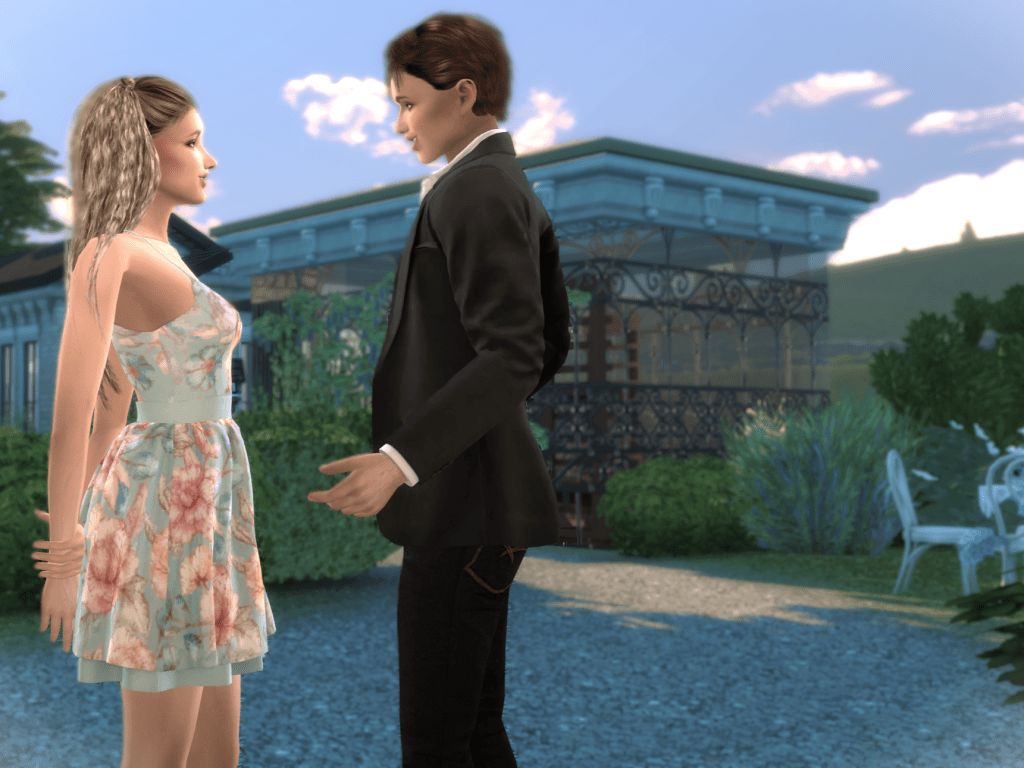
And honestly… it looked promising. Edward and Charley were smiling at each other, he offered his arm, she slipped hers through his, and the two of them strolled off toward the gardens like a ‘Bridgerton’ spin‑off come to life — not two normal teens.
Then again, what was ever normal in my life.
All afternoon, Edward Kensington and my sister were joined at the hip. When I finally got her alone, I laid the big‑brother speech on her — from a male perspective, imagining Élodie out there playing with other boys’ toys because I was so far away. Instead, Charley shut me down with an angry:
“Oh, you mean my boyfriend who recently told me we should enjoy our final year together because afterwards we’ll go to different unis and have to break up since he’s not here for long‑distance stuff? THAT boyfriend?! Aka my ex?! If you want to play the big brother card, then fly back home to Brindleton Bay, find him and kick him where it REALLY hurts! If you won’t do that, keep your nose out of my business, Nate!”
Yikes. Never mind then. Carry on with that Viscount dude.
The hardest part of that new crush was listening to her swoon for hours about everything Edward. “Did you hear how he says my name? Chaaarley. Charlotte. Ooooh, I just get weak in the knees thinking about his voice and that accent.”
“Well, good thing you’re sitting down then,” I told her.
That earned me the full trifecta: Dad’s fatherly reprimand glance in the rear‑view mirror, a hard nudge from Mom, and Caroline’s very helpful attestation — “You are such an un‑romantic klutz!”
Caroline
Speaking of Caro, my other sister was another problem. Or maybe not a problem — I was still trying to work that out in my brain.
Mom threw parties too — like all the Ladies of the Bay, which is basically a rotary club for wealthy wives with deep roots in the Bay’s old‑money lane. Sometimes those events were just gossip fests to flaunt family and designer clothing; other times they were fundraisers. And that’s where my other sister started getting a bit flirty with none other than Chadwick Lockwood.

Chad – aka Chadwick Harrington Lockwood III – was the heir to a major business management firm, after his significantly older brother Pierce was sidelined for… reasons. And by significantly, I mean could‑be‑his‑father significantly — like forty years older. Pierce is one of those things the Bay still whispers about. They were an old, established, respected family of the Bay’s Old Guard, until something severely derailed with Pierce. I’m around the age of his daughter and brother, so obviously most of what I know was told to me, and some you can still read about in old news articles. What remained still read like a crime novel a la John Grisham.
He’d been the classic Brindleton Bay Old Guard CEO in his prime — forties, maybe fifties — when he ended up in a secret affair with my mom’s cousin and Bay bestie, Maeve. Not unusual for him, it had been an open secret that he had extra-marital affairs in his not-so-secret penthouse downtown San Myshuno. Pierce’s marriage to Katherine was arranged and loveless, and childless despite the pressure to produce an heir. His father was already furious about that, but when Pierce knocked up Maeve and she refused the usual “clean up on aisle three” hush‑money solution, things escalated.
Pierce fell for her. Hard. Maeve tried to make it work, but she couldn’t deal with the secrecy and the pressure. Pierce wanted out of the marriage, and in the process of trying to free himself, he discovered some very unsavory things his father was involved in. He threatened to blow the whistle — which would’ve ruined the company and the family name.
So his father placed a hit on him. On his own son.
At the same time, Pierce’s wife was pushed into a surrogacy arrangement to produce a “replacement heir” with her father‑in‑law. Pierce survived the hit, but barely — severely injured, full amnesia. Maeve stayed by his side anyway, even though he didn’t remember her or their daughter, who was born not long before Pierce’s new baby brother — the one meant to replace him.
Years later, most of Pierce’s memory is back, but his body never fully recovered. He can walk, but not far. He has tremors. And while he’s now our mayor, his speeches are hard to watch. He stutters sometimes or loses his train of thought, so Maeve or their daughter Arden always stands nearby to cue him gently. Arden is one of my sisters’ best friends — we all grew up together.
Chad, though, had been away at boarding school for most of it. Pierce and Maeve raised him through childhood — which was awkward when your daughter and her uncle are in the same class — but then, for reasons I’m not privy to, he was sent abroad. Whenever he visited, there never seemed to be hard feelings, so who knows why. I heard Dad guess that it might have been something in his father’s will, something prearranged that had to be honored. Unless your last name is Lockwood, I guess you would never know.
Pierce and Chad’s parents died in prison, but the will had been adjusted before everything went down. The estate and company would go to Chad eventually; Pierce was cut from it, just the executor until the heir was eighteen. Pierce inherited his own legal share, but the plan was always that once his brother and daughter were grown, Pierce and Maeve would leave the Bay and start fresh somewhere nobody knew the terrible story of how they met.
But Chad would stay.
So… THAT guy was who Caro seemed to like. And honestly, it made a weird kind of sense. Chadwick wasn’t the loud, charming type like Eddie — he was the opposite. Closed off. Quiet. A little grumpy in that teenage “leave me alone, I’m fine, don’t talk to me” way. The kind of guy who turned away when people approached, shoulders up, walls higher than the Bay lighthouse. But Caro? She was the yin to that yang — fun, sweet, exuberant, the kind of girl who could get a stone wall to talk back. And somehow, without even trying, she melted that whole “don’t bother me” act right off him.
At first, he’d literally turn and walk away when she bounced over to say hi. Then it became him stopping for a second before walking away. Then stopping and answering. Then actually talking. And then — out of nowhere — he called her one afternoon and asked if she wanted to grab a coffee. Just like that. No explanation. No lead‑in. She went, obviously, and came back smiling like she’d swallowed the sun.
A few days later, I answered the door and nearly died on the spot. It was Chad. Dressed nice. Standing there like he had rehearsed this in the mirror. Asking for Caro. Before I could even pick my jaw up off the ground, she came flying down the stairs in a cute dress, hair and makeup done just right, and ran past me like I didn’t exist. She grabbed his arm, pulled him out the door, and he actually opened the passenger side door for her like some old‑school gentleman.
A few days later they were kissing openly. So… looks like that was happening then.
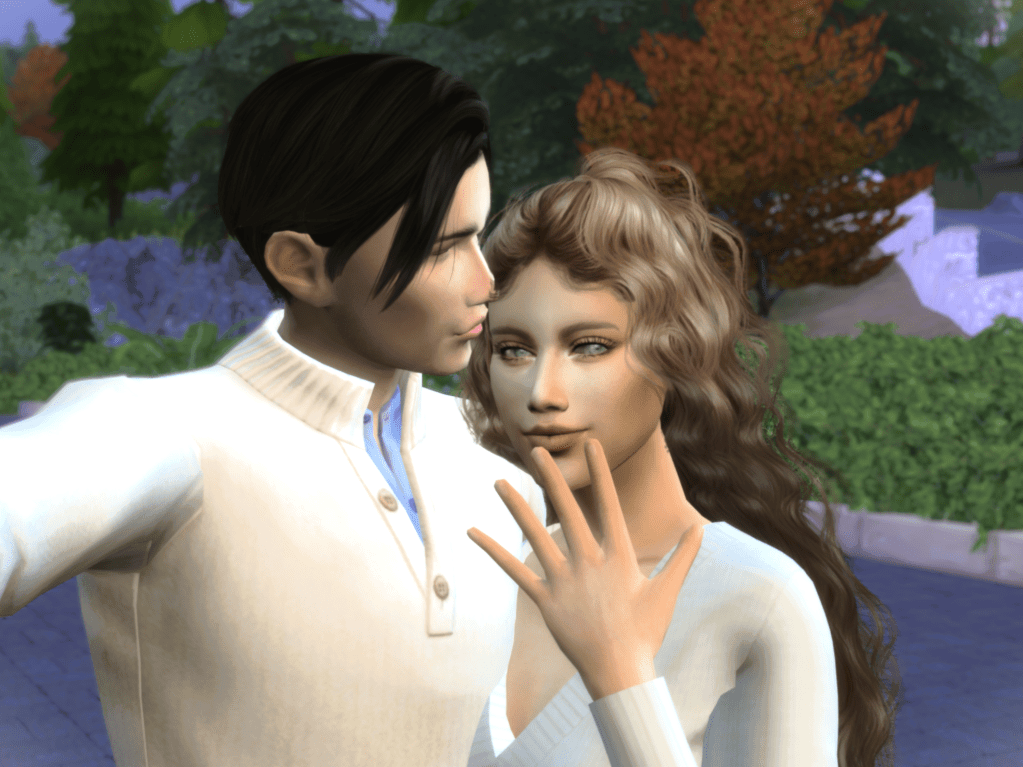
Okaaaay then.
Later that week, Arden came by to hang out with Charley — because of course she did; those two are basically fused at the soul. The second she stepped through the door, I grabbed her by the elbow like some deranged detective.
“Arden. Hi. Question.”
She blinked. “Nate, what—”
“What is going on between Chad and Caro?”
She stared at me like I’d just asked her to explain quantum physics. “You do realize he’s my uncle, not my brother, right? And we’re not super close because… well, it’s all super awkward. So tell me, how the hell would I know? You really think Chad is the type to sit on my bed at night while we pour our hearts out and braid each other’s hair? I know what you know, and that’s it.”
“That doesn’t mean you can’t — I don’t know — ask?” I insisted.
And that’s when she gave me The Look. The one I get from both my sisters. And Mom. The one that silently asks if I’m feeling alright in the head.
“Nate,” she said slowly, “if you wanna know so bad, ask him yourself. Or ask your sister. I am not your press secretary, and you can do shit yourself, oh mighty heir of thee Cunningham clan.”
I opened my mouth. She held up a finger.
“Spoiler alert: you’ll have more luck asking a wall. Chad’s not known to be a talker. Never has been.”
Then she patted my shoulder — pityingly — and went upstairs to find Charley.
I stood there in the hallway, defeated, questioning every life choice that led me to being roasted by a girl who still steals our cereal.
Then again, dating boys who did NOT attend Bay Prep might not be bad for my sisters, as I wasn’t the only one who had gotten in trouble at school. BOTH of them had been caught at various times either slipping notes back and forth in class with their respective previous boyfriends, or doing things that were not allowed on school grounds, or even skipping class together to go to the boba tea shop and make out or something. Kinda hard to do long‑distance. Ask me — I would know.
Thing is, this was how it always went at Bay Prep — long before my generation, long before our parents’ generation even. You dated inside the circle because it was safer. Everyone there came from some sort of vetted, affluent background, to varying degrees. Everyone learned early that a lot of girls were into bank accounts and last names, not the actual guy. And it wasn’t just girls — the boys outside our bubble weren’t any better. Even inside the circle there was a hierarchy, and the Cunninghams sat at the very top. So yeah… gold‑digging wasn’t the exception. It was the rule. Even among peers.
I grabbed Caro and dragged her into Dad’s office to set her straight, and I got the same speech I’d gotten from Charley. Caro was sixteen — two more years till graduation — and her boyfriend was already making plans that didn’t include her. Like Charley, she immediately gave him the pass, telling him Cunninghams are not placeholders.
Reminded me of my prom date with Steph. I let that go too. Date away.
And then I was at Britchester, and all of them were gone.
I had never felt so alone in my life. I couldn’t remember a single day where I couldn’t walk out a door and find at least one of my parents or some other family member.
Strangers everywhere. Always laughter and stares — feeling aimed at me. My roommate was about as approachable as a porcupine.
But I had a legacy to carry, and I loved my parents. I knew how important this was to Dad, so I wanted to make him proud.
Well… it’s the thought that counts, right.
So, here I was, the new, determined med student at the University of Brichester.
Doors
I knew exactly why we were here.
Mom didn’t. Dad didn’t. They walked into the dean’s office looking confused but calm, like they thought this was some routine check‑in for promising students.
I sat next to them, hands clasped so tightly my knuckles ached, wishing I could dissolve into the leather chair.
The dean cleared his throat. “Thank you both for coming on such short notice.”
Dad nodded politely. “Of course. Though I admit, we weren’t told what this was about.”
I swallowed hard. Because I knew. I’d known since last week.
The dean folded his hands. “This concerns Nathaniel’s performance and well‑being during his first semester.”
Mom’s head snapped toward me. “Sweetheart? What’s going on?”
I stared at the floor.
The dean opened a folder — thick, too thick — and my stomach dropped. A rap sheet. My rap sheet.
He began gently, but there was no softening what came next.
“Let’s start at the beginning. Week two. Instrument Handling Lab.”
Dad smiled faintly. “Ah, yes. The basics.”
The dean didn’t smile back.
“One of Nathaniel’s classmates suffered a laceration from a scalpel. A fairly deep one. It bled significantly.”
I remembered it too well — the gush, the panic, the professor stitching the guy up while lecturing about safety. I remembered the ringing in my ears. The floor tilting. The TA catching me before I hit the ground.
The dean continued, “Nathaniel fainted. That’s not uncommon. We noted it and moved on.”
Dad’s brows knit. “He didn’t mention that.”
Mom reached across Dad to squeeze my arm. “Are you okay?”
I nodded weakly. “It was nothing.”
It wasn’t nothing.
The dean turned a page. “Week four. Anatomy Wing Orientation.”
Dad’s face changed. He knew what that meant.
“The moment the door opened, Nathaniel reacted strongly to the formaldehyde fumes. He collapsed in the hallway.”
Mom gasped. “Collapsed?”
“I’m fine,” I muttered.
“You were unconscious,” the dean corrected gently.
Dad stared at me, stunned. “Nate… why didn’t you tell us?”
Because you were proud. Because I didn’t want to ruin that. Because I thought I could fix myself.
The dean continued, “Week six. Simulation Lab B.”
My pulse spiked.
This was the one.
“Nathaniel accidentally entered the cadaver lab instead of the simulation room.”
Dad inhaled sharply. “Oh God.”
The dean nodded. “The thoracic cavity was open for a teaching demonstration. Nathaniel vomited, then fainted.”
Mom covered her mouth. “Oh, sweetheart…”
I wanted to disappear.
But the dean wasn’t done.
He flipped another page.
“And then there are the non‑fainting incidents.”
Dad blinked. “There are more?”
The dean read them calmly, clinically:
“Repeated difficulty handling needles during injection practice.”
“Inability to complete wound‑care simulations.”
“Leaving the room during trauma case videos.”
“Panic response during emergency‑care drills.”
“Avoidance of any hands‑on medical tasks.”
Each line felt like a blow.
Dad’s mouth slowly fell open. Mom’s eyes filled with tears. And I sat there, burning with shame, wishing I could rewind the entire semester and be someone else.
Finally, the dean closed the folder.
“Dr. Cunningham,” he said softly, “with all due respect… your son is not suited for medicine.”
Dad stared at him, stunned. “So… what exactly are you saying?”
“I am strongly recommending that Nathaniel switch fields of study. Something non‑medical. Something that aligns with his strengths rather than his physiological limits.”
Physiological limits. God.
Mom rubbed my back. “Nate… why didn’t you tell us you were struggling?”
I swallowed hard. “I didn’t want to disappoint you.”
Dad exhaled — long, slow, and full of something that wasn’t anger.
He put a hand on the back of my neck, grounding me.
“I’m surprised,” he said honestly. “But I’m not mad. And I’m not disappointed. We’ll figure this out. If you want help switching programs… we’ll sit down and talk through it. Together.”
My eyes stung.
The dean didn’t end the meeting with the rap sheet. He ended it with something worse.
Hope.
Or whatever the polite academic version of hope was.
He slid a paper across the desk toward me. “Nathaniel, despite your difficulties in the medical track, your professors have noted several strengths.”
Strengths. God. I didn’t feel like I had any left.
He continued, “You’re articulate. Exceptionally so. Your written assignments are among the strongest in your cohort. You have a gift for narrative clarity and emotional insight.”
Dad blinked at me like he’d never heard those words applied to a Cunningham before.
The dean went on, “You also excel in interpersonal coursework. Communication labs, ethics discussions, patient‑interaction simulations — your instructors consistently describe you as empathetic, intuitive, and attentive.”
Mom squeezed my hand.
“And finally,” the dean said, “you have a strong analytical mind. Not in the procedural, hands‑on sense required for medicine, but in conceptual reasoning, pattern recognition, and big‑picture thinking.”
The dean tapped the paper again, sliding it a little closer to me.
“These are the fields your instructors believe align with your strengths, Nathaniel. This list reflects not only your academic performance, but also your interpersonal skills, leadership tendencies, and the way you naturally operate in group settings.”
He read them aloud, one by one.
- Business Management — “You have strong organizational instincts, a calm presence under pressure, and a natural ability to mediate conflict. Several faculty noted that you take charge in group discussions without dominating them. That’s a leadership trait.”
- Business Administration — “Your analytical assignments show strategic thinking. You see patterns, anticipate problems, and propose solutions that are both practical and empathetic. That combination is rare.”
- Communications — “You’re articulate, persuasive, and clear. Your written work is exceptional. You’d excel in any field requiring public speaking, negotiation, or storytelling.”
- Psychology — “Your emotional intelligence is unusually high. You read people well. You listen. You respond thoughtfully. These are foundational traits for psychology, counseling, or human‑centered professions.”
- Public Policy — “You have a strong sense of ethics and a talent for big‑picture reasoning. You’re good at understanding systems — how people, institutions, and decisions interact.”
- Creative Writing — “Your narrative assignments are among the strongest in your cohort. You have a voice. A real one.”
- Journalism — “You’re observant. You notice details others miss. You ask the right questions.”
He folded his hands again.
“Any of these fields would allow you to thrive. And if you choose business, Nathaniel… you could very well follow in your father’s footsteps — just not in the operating room.”
Dad blinked, stunned. Mom smiled softly. I stared at the list like it was a lifeline.
“And if you’re open to it,” he added, “your professors believe you’d thrive in any field that requires emotional intelligence, storytelling, or human connection. This compilation is only meant to assist you, not limit you. You are an excellent student, Nathaniel. I heard nothing but praise from the faculty — just not suited for the medical field.”
Dad exhaled slowly. Mom smiled softly. I stared at the list like it was written in another language.
The dean folded his hands. “Nathaniel, I would like to stress that you are not failing. You are misaligned. And that is fixable.”
I didn’t trust myself to speak. What was there to say anyway? Sorry all, I am a loser? Yeah, I think that goes without saying at this point.
We left the office in silence.
Dad held the paper. Mom held my arm. I held the crushing weight of humiliation.
“Let’s get lunch,” Dad said finally. “Somewhere quiet.”
We walked across the quad — students laughing, backpacks slung over shoulders, everyone looking like they belonged here.
I didn’t.
And maybe that was the real problem.
When I first got here, I thought I could fake it.
I arrived with two monogrammed suitcases, a garment bag, and a duffel that cost more than my roommate’s entire wardrobe. People stared. Not in a good way.
I was used to:
- my own room
- my own bathroom
- my own space
- silence
There was none of that to be had here.
Instead, I got Kevin.
Kevin, who had:
- a gaming PC the size of a small refrigerator
- a girlfriend who practically lived in our room
- friends who came over at 2 a.m.
- no concept of headphones
- no shame about… activities. With his girlfriend. In our dorm room. While I was in there trying to sleep.
I’d kissed girls. I’d dated. But I’d never— gone there.
Still.
Clearly my roommate had. I could attest to it.
It didn’t matter. It still felt like salt in a wound.
I tried to make friends.
I really did.
I went to the welcome mixer. I introduced myself to people in my cohort. I walked up to tables in the dining hall and asked if I could join.
Most people were polite. Some were indifferent. A few looked at my last name and froze like I’d just announced I was royalty.
One girl said, “Oh… Cunningham. Like the medical center?”
I nodded.
She said, “Wow. Must be nice,” and walked away.
I didn’t know what to say to that.
I still don’t.
There were other moments too:
I spilled coffee on my white coat during orientation. I got lost three times in the same building. I called a professor “Dad” by accident. I tripped on the stairs in front of half my cohort. I dropped a tray in the dining hall and everyone clapped.
Little things. Stupid things. But they added up.
By the time the scalpel incident happened, I was already fraying.
By the time the formaldehyde hit me, I was unraveling.
By the time I walked into the cadaver lab, I knew I was done.
We reached a small café off campus. Dad held the door for us. Mom guided me inside like I was made of glass.
We sat. Menus untouched.
Dad finally spoke.
“Nate… first of all, I can see it in your face, so let me stress that you did not disappoint us. Surprised, maybe, especially since on the phone and in the chats you never mentioned any struggles, so we walked into this blindly.”
I swallowed hard. “I don’t know who I am.”
Mom reached across the table. “Then we’ll figure it out. Together. You heard the dean — he was very complimentary of your skills, just not for a particular field. So we’ll find another. Or you will. Daddy and I can help, if you want us to.”
I looked down at the dean’s list.
Psychology. Communications. Writing. Human things. Soft things.
Things that felt like me but not… cool.
Not like a Cunningham heir.
Cunningham heirs are doctors.
Surgeons.
Prodigies.
Damn it.
I hated all of this — the shame, the failure, the stupid list — but I’ll admit one thing:
For the first time since arriving at Britchester…
…I didn’t feel like I was drowning.
We finally ordered, and over sandwiches and coffee, we brainstormed. Dad scribbled notes on a napkin like he was planning a board meeting. Mom kept circling back to the dean’s compliments, reminding me I wasn’t broken, just misaligned.
By the time Dad paid for lunch, we were ready to walk into the Administration Building to request a major change.
Changing a major, apparently, wasn’t complicated. You filled out a form. You met with an advisor. You picked a new track.
Simple.
Except it wasn’t simple at all.
Because it meant admitting I’d failed at the one thing everyone assumed I’d be brilliant at.
We walked across campus — Dad on one side, Mom on the other — and I tried not to think about the last two months.
We reached the Administration Building. Dad held the door. Mom squeezed my shoulder.
“Let’s go talk to an advisor,” she said softly. “See what fits.”
I nodded, clutching the dean’s list.
Business Management. Business Administration. Communications. Writing.
Dad pointed to the first two. “These would put you on a CEO track. If you ever wanted to run Cunningham Medical someday — not as a surgeon, but as a leader — this is the path.”
Something in my chest loosened.
A Cunningham heir… still useful and valuable, just not the kind everyone expected.
“And writing?” Mom asked gently. “You could minor in it. Or take electives. Or just… write. For yourself. I am not surprised at all — you are from a creative family on my side.”
I swallowed.
I liked that idea more than I wanted to admit. Writing. Entering new worlds at the tap of a keyboard, being the unsung hero of a fantastic story.
Yeah.
Maybe someday I’d write a book. Maybe under a pen name. Something dramatic and cool and nobody would ever guess it was me. Cameron something. Cameron anything. Something that sounded like it belonged on a hardcover in an airport bookstore.
I was halfway through accepting an imaginary Pulitzer when Dad nudged me back into reality.
“Ready?”
I blinked, the fantasy dissolving like mist. “Yeah. Sorry. Zoned out.”
Mom smiled like she knew exactly where my mind had gone. “You can do both, you know. Business for your future, writing for your soul.”
Dad nodded. “Plenty of CEOs write books. Some occasionally even write good ones.”
I snorted. “Thanks for the vote of confidence.”
He squeezed my shoulder. “You know what I mean.”
Fate’s my Bro
Well, changing a major is one thing — but it sometimes comes at a price.
Britchester was famous for a lot of things. Its medical program. Its arts. Its pretentious architecture. Its ivy‑covered walls that looked like they’d been designed by someone who hated fun.
But Business Management? Business Administration? Not so much.
Dad did his due diligence. He always does. He researched programs, rankings, alumni networks, internship pipelines — all the things I pretended to understand while nodding along.
And the conclusion was obvious:
Foxbury Institute of Technology and Sciences in San Sequoia.
Also famous. Also respected. Just… a very different vibe.
If Britchester was a stuffy old‑school dandy in a tweed suit, Foxbury was a barefoot genius in a vintage band tee.
Celebrities’ kids went there. Influencers. People who wore sunglasses indoors unironically. People who said things like “my aura is off today.”
It was close to Del Sol Valley, so of course it had that energy.
Britchester was… well, Britchester. I still didn’t like my roommate, and I was glad to leave for a new chance at a better one. Knowing my luck, though, I didn’t have much hope.
Mom and Dad, of course, made it a whole production.
They picked me up after the semester ended and took me home for a few days. I wanted to go to Bellacorde — obviously — so we did, but only for two days. Then it was on to San Sequoia to hang with my grandparents and Uncle Connor and his family for a moment, and then straight out to campus, since there wasn’t much of a break available.
Mom and Dad were up to something. I could tell. They are about as subtle as a cat with a mouthful of canary.
After checking me in at Administration, they took me to my new dorm. Well, wasn’t a dorm at all. It was a house, at the edge of campus.
I walked in. Nobody was home, so we walked upstairs. The first door lead into a bedroom, clearly lived‑in — clothes everywhere, a backpack half‑unzipped, a hoodie draped over the chair. So I set up the other bedroom, unpacking while Mom talked about curtains and Dad talked about course loads.
I made some comment about hoping my new roommate wasn’t a re‑run of the one from Britchester when I heard a voice behind me:
“I heard that dude is a total dick.”
I looked up.
And in walked my cousin Tate.
Tate Hargrave. My childhood best friend. My other half in every family photo from ages three to ten. The kid everyone joked about — Nate & Tate — like we were a brand.
We’d drifted, because life does that when you grow up on opposite sides of the country. He was Del Sol Valley — red carpets, premieres, celebrity parents. I was Brindleton Bay — old money, quiet beaches, yacht clubs.
But there he was.
“Tate! What are YOU doing here?” I blurted out.
“Checking out my new roommate,” he said. “Heard they stuck me with some uppity kid from the East Coast. Some Old Guard hedge‑fund type. Probably a total douche.”
I stared at him. Then at my parents, who looked like they were about to explode from holding in the surprise.
“Wait,” I said slowly. “Are you saying… YOU are my roomie?!”
“I’m saying if you snore and leave dirty socks everywhere, I will smother you in your sleep.”
I laughed — really laughed — for the first time in weeks.
“Nate, you curly‑haired little trustfund baby!” Tate yelled as he barreled into me, yanking me into a bro‑hug that felt more like a tackle.
I shoved him off, laughing. “Bro, shut up — look at you. The family’s budget‑Chris‑Hemsworth. What are you doing here?”
He flicked my curls. “What does it look like? I already told you, I am checking you out, dumbass. They told me my roommate was some East Coast trust‑fund rich boy with a head of curls what arrive half an hour before he does. Should’ve known it was you and your deep conditioned East Coast ‘fro.”
I snorted. “Seriously? Dude, you literally grew up in Del Sol Valley. Your dad’s face is on billboards. You walk around like God’s gift to lighting crews.”
“Yeah, well,” he shrugged, grinning, “I am God’s gift to every eyeball. And at least I don’t look like I lost a fight with a blow‑dryer. Ever considered chopping down the overgrown thicket on your head? You look like one of those Old English Sheepdogs. No wait, like a poodle overdue for the groomer’s.”
“Say that again and I’m unplugging your PC.”
“You touch my PC and I’ll shave your head in your sleep.”
We stared at each other for a beat — then cracked up like we were ten again.
Turns out, while Tate was already dabbling in acting and originally wanted to study it, his parents nixed it. Well, his mom mostly. My Aunt Iris is… assertive. Has to be, as a celebrity attorney. Uncle Jasper studied arts, so Iris decided it was nonsense. He could learn acting from his dad — but he needed something solid to fall back on if acting tanked.
So here he was. And suddenly, everything felt lighter.
We hung out. Instant besties again. We grew close fast — parties, foosball, late‑night ramen, stupid jokes, the whole thing. We even had classes together. It was such a relief and college was actually starting to feel as fun as most had you believe it was.
Semester break came. He went home and came back engaged. I came back heartbroken, missing Élodie so much it physically hurt.
His fiancée, Tatiana, visited a few times. She texted him every night — which is what I did with Élodie — but she also called him randomly to give him a boost before important tests.
I only got that from my parents.
I was doing well in school, but not emotionally. Having Tate there was great, but the times he met up with Tati – yeah, we went from Nate and Tate to now also Tate and Tati – and I was alone were rougher than ever.
I wanted a more involved girlfriend. So I did what most boys in my situation would do — I offered to fly her here.
She refused.
I offered to pay her phone bill if she would just call me sometimes.
She refused.
I hated it.
It was fixable — but she was too stubborn.
So I got upset. First at the situation, then at her.
I get it, she didn’t want to ‘use me’, nice notion, but I explained to her that I offered it and therefore it wouldn’t be using me.
She insisted she couldn’t accept it.
I insisted she was being unreasonable.
And it festered.
There were nights that were rougher than others, and I wanted to talk longer on the phone with her, but she had to go because of an early job.
I hated that so much. And it made me… I don’t know. Pouty, maybe.
So, I sometimes purposely ignored her texts and went to parties instead.
Sometimes without Tate.
And that was dangerous.
I am not proud of it, so I will spare us all the gory details.
I would drink too much.
Get sick.
Make bad choices.
One time, I was found drunk and collapsed in the Quad, yelling for Élodie and screaming that love is cruel.
Another time, I puked all over the university’s patron statue.
Another time, I sat in a lecture with the world’s worst hangover and the professor called on me to answer a hypothetical.
I told him I didn’t know.
When he pressed, I snapped at him.
And then there was the night I woke up hungover in my car in someone’s front yard.
I was suspended.
Just for the semester — but still suspended.
Dad came to pick me up. Mom had performances and interviews scheduled, so he came alone.
He was livid.
The entire flight home was one long, endless lecture. About how he and Mom can’t hardly recognize me anymore. How I was always such a good kid and now can barely get through a day without causing something.
Until my ignorant ass asked him if we could go to Bellacorde.
I have never seen my dad so mad.
“Enough of that. Nate, look at me. I know what young love feels like. I know what losing it feels like. How it feels to miss the one you love while everyone around you seems happy in love. Your mother and I went through all of that ourselves, which is why we’ve been as supportive as we possibly can. We also know young people make mistakes. And we let you, helped you get back up and guided you. But you don’t seem to see the concessions we’ve already made for you. You keep spiraling, and at this point, we’re done giving without anything coming back.
And yes — your mother agrees with me. You and Élodie are a fling. You barely know each other, and clearly this can’t function the way you think it can. And do you know how we reached that conclusion? Because for all your claims that she’s “the one,” you know very little about her, and she knows even less about you. You’ve had more than enough time to tell her the truth, and the last time we spoke, you still hadn’t.
And let me remind you of something — the last time you went to Bellacorde. You went alone. And instead of staying at the palace like we always do, you booked yourself into a rental so she wouldn’t accidentally find out the truth. Think about that. A rare honor, being directly related to a royal house, something most people would be proud of, had to be hidden like a stain on a white vest. Buried. Pretended away. All so your relationship wouldn’t crack under the weight of something as simple as where your family sleeps.
How is that real love, Nate? How can it be, if it can’t even survive a truth that small?
And since you clearly don’t trust her with who you are, and you clearly can’t focus on school, I’m going to make sure you focus on something. When you come home, I’m putting you to work at Cunningham Medical Headquarters. Administrative. Operations. Logistics. Every department from the bottom up. You’ll learn the business from the pike up — the real work, not the glamorous parts. You’ll be too busy to sit around pining and too occupied to spiral.
If you can’t trust her with the truth, then you need to redirect your energy to your future. So I’ll be the bad guy. I’m cutting you off. It’s for the best. You need to stop letting this distract you and start building the life you’re actually going to live.”
“Dad, come on now! I know I messed up and I’m sorry, but there are millions of people who don’t have college degrees.”
“You won’t be one of them. You are not anyone, Nathaniel. You are a Cunningham and the heir. You already chose the road less traveled by not doing medicine, but you are getting your degree and that is final.”
I sighed and pulled out my phone to text Élodie — and Dad snatched it out of my hands.
“Dad!”
“No more of that either. Hate me if you must, I will take it, because I know one day you will look back at this and understand that I did it from a place of love, and to help you, not hurt you.”
We argued. Of course we did. I had absolute tunnel vision, I didn’t hear him, couldn’t hear him and I couldn’t think clearly.
All I knew was that he didn’t want to let me see Elodie, which was all I wanted, and now he took my phone from me, my one lifeline to her. But he paid for my phone — it was on his contract — so I was screwed.
I had my own money, could get a new one, sure, but it wouldn’t have her number, which my dumb ass never wrote down anywhere. And since I had no money of my own, and I was eighteen, they weren’t required to pay for me.
I was without options.
Mom later explained it all again, and while I was angry and hated it, I knew they weren’t all wrong. I should have told Elodie the full truth, watch how she reacted and then decide if she was the one or not. Not hide and only feed her tiny pieces of the truth I felt palatable. It wasn’t fair to her, to me or to my legacy.
Grandpa Chase always used to tell me:
“Everything comes at a price.”
And this was the price I paid for all the luxury and privilege.
The Reluctant Intern
Day one of my mandatory internship at Cunningham Medical started with the world’s most uncomfortable breakfast.
I came downstairs dressed in a suit — and yes, I told you, I have a lot of them and I need every single one. Mom fussed over me like I was dressed for my wedding. My sisters stared at me over their cereal bowls, whispering like I was a zoo exhibit. Even the housekeeper gave me an encouraging smile, which somehow made it worse.
I wasn’t hungry. I hunched over my coffee — already on cup two — when Dad told me to sit up straight because “bad posture ruins more than just someone’s back.”
To avoid a full medical lecture at 7 a.m., I straightened. A buttered toast landed on my plate. Then eggs. Then bacon.
I looked up at Mom, who said, “You’re not going to work without brain food.”
Dad pointed at her, nodding like she’d just solved world hunger. “Listen to your mother.”
So I ate without appetite, then followed Dad to the car. His driver gave me a sympathetic smile — the kind you give someone walking into a firing squad.
In the backseat, Dad was already on the phone, flipping through reports and handing each one to me like I was supposed to understand them. I stared at letters and numbers that looked like ancient runes. I had no idea what I was looking at.
I’d been to his office a million times since I was a toddler, but never like this. Never as an employee. Never for a full workday. Which, my dad straddling being a good husband and father and a workaholic, could mean anything from a couple hours to fourteen or more hours. And something told me I wasn’t getting out of here under eight hours a day minimum. Oof.
We walked in together, and I swear I could read every employee’s mind:
Ah, there’s the entitled junior who’ll be our boss someday. Better pretend we don’t hate his guts so he won’t fire us in ten years.
Yeah. Fun.
You’d think Dad would let me sit in his office, hold a pen, look important, and pretend to understand spreadsheets.
Nope.
Dad made me learn from the bottom up.
My day one started in the mailroom.
So awkward.
The mailroom was on the ground floor, tucked behind HR like a shameful secret. It smelled like toner, cardboard, and the faint despair of people who’d been sorting envelopes since the Clinton administration.
A guy named Ralph ran it. Ralph was about sixty, wore suspenders, and looked at me like I was a malfunctioning Roomba someone dumped on his doorstep.
“You the Cunningham kid?” he grunted.
I nodded.
He sighed like I’d ruined his morning. “Great. Grab a cart.”
The cart was older than me. One wheel squeaked. One wobbled. One didn’t turn at all. It was like pushing a shopping cart possessed by a demon.
Ralph handed me a stack of envelopes the size of a toddler. “Sort these. Alphabetical.”
I stared at the pile. “Alphabetical by…?”
He blinked. “Son, how many ways do you think the alphabet goes?”
Fair.
I started sorting. I dropped things. I mixed up departments. I put “Corporate Counsel” under “C” instead of “Legal,” and Ralph gave me the kind of look usually reserved for people who microwave fish in the office.
Then came deliveries.
I pushed the demon cart through hallways full of people who absolutely knew who I was. Admin assistants smiled politely. Managers nodded stiffly. Interns stared like I was a zoo animal.
One whispered, “Is that the Cunningham kid?”
Another whispered back, “Why is he delivering mail?”
A third said, “Maybe it’s a leadership exercise.”
Then the final blow. “I think he’s spying on us.”
I wanted to crawl into the cart and roll myself into traffic.
Then I had my first mishap.
I turned a corner too fast and the cart hit a bump. A mountain of envelopes flew into the air like confetti at a very sad parade.
A VP walked by, stepped over the mess, and said, “Rough first day, kid?”
I muttered, “You have no idea.”
By lunch, I’d:
- jammed the postage machine
- spilled coffee on a stack of interdepartmental memos
- gotten lost twice
- accidentally delivered a package to the IT server room
- and been yelled at by Ralph for “walking too loud”. How? Not like I was wearing Mom’s stilettos or something? I legit didn’t know how to walk quieter.
Dad checked in once.
He poked his head into the mailroom, saw me covered in paper dust, two fingers on each hand covered in Band-Aids from paper cuts and said, “Good. Carry on.”
Then he left.
Week 2–4: Records & Filing
After a week in the mailroom, Ralph practically shoved me out the door with a “Good luck, kid,” which I’m 90% sure meant please never come back.
The weekend was bliss. I was so exhausted I slept till noon both days and slept more at the pool the rest of the time. Mom had to wake me up many times so I didn’t burn in the sun, eventually gave up and just covered my comatose ass in sunscreen. I barely woke up long enough to register it.
Dad didn’t even give me a day to breathe at work.
“Records,” he said Monday morning, handing me a visitor badge like a sentencing document.
Records was on the 4th floor — a maze of filing cabinets, cubicles, and people who typed so fast it sounded like rain.
The department head, Linda, was a woman in her fifties with glasses on a chain and the energy of someone who had seen every possible office disaster and was prepared for more.
“You must be Nathaniel,” she said, not smiling.
“Nate is fine,” I offered.
She didn’t acknowledge that. “We’ll start you with digital filing. Don’t delete anything.”
I nodded, terrified.
Within an hour, I:
- mislabeled a folder
- created a duplicate directory
- accidentally dragged a file into the wrong quarter
- and somehow changed the font size of the entire system interface
Linda appeared behind me like a ghost.
“What did you do?”
“I… don’t know?”
She sighed the sigh of a woman who had raised three teenagers and survived. “Undo it.”
“I don’t know how.”
She pinched the bridge of her nose. “Control‑Z, Nathaniel.”
“Oh.”
By the end of the week, I’d learned:
- how to file
- how to search
- how to not panic when the screen froze
- how to drink coffee without spilling it on confidential documents
- and that Linda could smell fear
But I also learned something else:
I wasn’t terrible at it.
I wasn’t great, but I wasn’t a walking disaster anymore.
Small victories.
Week 5-7: Reception & Call Center
If Records was purgatory, Reception was hell.
Phones. So many phones.
The receptionist, Maya, was a goddess of multitasking. She could answer three calls, greet a visitor, and type an email without breaking eye contact.
“Sit,” she said, pointing to the second chair. “Smile. Don’t transfer anyone to the CEO unless they specifically ask for him by name.”
I nodded.
I lasted eight minutes before messing up.
A caller asked for “Mr. Cunningham.” I panicked. I transferred them to Dad’s private line.
Dad answered. Dad was… not thrilled.
Then came the call center rotation.
People yelled. People cried. People asked questions I absolutely could not answer.
“Sir, I don’t know why your insurance denied that claim—” “No, ma’am, I am not a doctor—” “No, I cannot personally fire your nurse—” “No, I cannot give you my father’s cell number—”
By the end of the week, I had:
- transferred a call to the cafeteria
- accidentally put someone on hold for 12 minutes
- hung up on myself
- and learned how to say “I understand your frustration” in 14 different tones
But Maya said, “You’re not bad at this. You’re good with people.”
And that meant something.
Week 8-10: Community Outreach / Patient Relations (Office Edition)
This was the first department where I didn’t feel like a complete idiot.
Outreach handled:
- charity events
- fundraising
- community partnerships
- volunteer programs
- public relations
Basically, the “make the company look good” department.
My supervisor, Janelle, was warm, sharp, and terrifyingly competent.
“You’re Brad’s kid,” she said. “So you’re either going to be great at this or cry in the bathroom. We’ll see.”
Fair.
She put me on:
- drafting emails
- organizing event materials
- escorting visitors
- helping with donation drives
- prepping talking points for community meetings
And for the first time, I felt… useful.
I could talk to people. I could calm them down. I could make them laugh. I could explain things without sounding like a robot.
One day, a little girl visiting with her mom grabbed my hand and wouldn’t let go until I walked her to the elevator.
Janelle saw it.
“You’re good with people,” she said. “Not everyone is.”
I swallowed. “Thanks.”
She shrugged. “Don’t thank me. Just don’t screw it up.”
Week 11-14: Administrative Shadowing
This was the first time Dad let me into the “real” side of the company.
Meetings. Budgets. Staffing. Logistics. Strategy.
I sat in the corner with a notebook, trying to look like I understood anything.
Dad would occasionally hand me a document and say, “Summarize this.”
I would panic. He would raise an eyebrow. I would summarize it anyway.
And slowly… I got better.
I learned:
- how decisions were made
- how departments worked together
- how much pressure Dad carried
- how much he hid from us
- how much he expected of himself
One afternoon, after a particularly brutal meeting, Dad said quietly, “You handled that well.”
It wasn’t much. But from Brad Cunningham?
It was a standing ovation.
Week 15-21: Executive Office Rotation (Final Boss)
This was it.
The top floor. The glass walls. The view. The pressure.
Dad didn’t treat me like a kid anymore.
He treated me like someone who needed to learn.
He gave me:
- reports to analyze
- emails to draft
- presentations to help build
- problems to solve
- decisions to weigh
And I did it.
Not perfectly. Not without mistakes. But I did it.
By the end of the semester time-out, I wasn’t the same boy who got suspended.
I was steadier. More grounded. More confident. More aware of how hard people worked. More aware of how much Dad carried. More aware of who I was — and who I wasn’t.
And Dad?
Dad saw it.
He didn’t say it outright — he’s Dad — but he saw it.
It was in the hug he gave me that last night in the office, as we left to meet Mom and my sisters for a celebratory dinner, before my semester timeout was over.
But first a concession my father allowed me as a reward for me trying so hard to please him.
So first — first I would take a little trip.
To Bellacorde.
I had someone to see.
Some things to set right.
 Echoes Of Legacy
“The heaviest baggage you can carry is the weight of expectations. Especially those we place on ourselves to live up to a legacy.”
Nathaniel, you’ve got this. Don’t give up.
LikeLiked by 1 person
So true.
Nate is trying. He is still so young but because of his heritage, now fully weighing on him after Graham’s untimely loss (which threw me too, BTW, I had everything planned so differently until that happened) he has to grow up faster than most.
And he knows what he wants. And whom.
LikeLiked by 1 person
That really was a blow, losing Graham.
I look forward to seeing where Nate lands.
LikeLike