
Home at Rosebriar Haven
A soft, familiar scent drifted through the foyer — warm cedar polished into old floors, a hint of bergamot from the diffusers, and the faintest trace of fresh linen. It was the kind of fragrance that belonged only to this house, subtle and steady, and the moment I stepped inside, tension I hadn’t even realized I was carrying slipped off me like a weighted blanket finally lifted.
My gaze caught on the old family portrait hanging in the hall — the one taken before any of us knew what growing up would cost. I smiled without meaning to, just as Mrs. Marwood appeared, our housekeeper, as constant as the house itself.
“Nathaniel,” she said warmly. “How are you? How is college? So good to have you home.”
“All going well, thanks, Mrs. Marwood. How’s everything here been?”
“Oh, same as always.” She gave that familiar little nod, then turned to help Whitaker with my luggage.
“Thank you, Whitaker.” I shifted my bag off my shoulder. “Mrs. Marwood, where is everyone?”
“You’re early. We didn’t expect you until this afternoon.” She thought for a moment. “Mrs. Cunningham is at the country club with Miss Charlotte and Miss Caroline. Your father is in his office. Would you like me to check if he’s still on his call?”
“No, thanks. I’ll go.”
The formality of it struck me — not cold, just… adult. A reminder that time doesn’t pause for anyone, and every year I inch closer to becoming my father’s heir. His successor. His shadow, eventually his replacement.
It used to scare me. I can’t even remember why anymore. Something shifted over the years — quietly, steadily — and whatever fear I once had dissolved into something calmer. Maybe it was everything I’d had to work through. The part I still never talk about. Mom once suggested therapy; I refused until she stopped asking. I needed to feel it all, to let it burn through me, to rebuild myself without shortcuts. It took forever. Or at least it felt that way.
Even now, if Mom or one of my sisters turns on those celebrity gossip channels, I leave the room. I don’t need updates about aristocracy. Briony tells me what I need to know. Nothing more.
I reached Dad’s office and knocked.
“Come in!” His voice still carried that clipped business tone, not the softer one he used at home.
I pushed the door open. The surprise on his face melted instantly into a wide smile. He stood so quickly his chair rolled back, and we met halfway, his arms around me like it had been years instead of months — which, admittedly, was longer than usual for us.
“Oh, my boy, you’re already here!” he said, laughing. “Mrs. Marwood, can you believe it? Why didn’t you come get me right away?”
“I just arrived,” I said. “Thought you wouldn’t mind me being early.”
“Coffee? Maybe some refreshments?” Mrs. Marwood asked, her smile soft and proud — the kind someone gives a child they helped raise. She’d worked for Dad longer than I’d been alive. Even when Mom and Dad had their rough years, even when Mom left, this house had always been home.
“Yes, we’ll take coffee,” Dad said. “Hold off on food unless you’re starving, Nate. Your mother and sisters will want to celebrate at the Haute. Goodness, that place has been our favorite forever. I was just telling your mother earlier that we cannot believe you’re about to turn twenty‑one. Time does fly when you’re having fun. How’s college?”
“Busy. I can tell the last few semesters are coming.”
“Oh, I can’t wait for you to graduate and finally come home.” His eyes lit up with that familiar dreaminess. “I already fantasize about us going to work together. It will be amazing.”
I just smiled, letting him drift into his usual future‑planning haze — the one he’s had since I was old enough to understand what legacy meant.
The Haute Tradition
Dad steered his shiny gunmetal Aston Martin DBX into a free spot with that effortless ease he’s always had — casual, unhurried, somehow graceful. I’d tried to mimic it for years, but I always felt lanky and awkward behind the wheel, while he looked like he’d been born knowing how to do everything smoothly. People spent his entire life underestimating him for the blonde curls he refused to cut short, for the baby‑faced softness that never quite left him, for the gentle voice that could turn clipped and professional when needed. He took every comment with grace and never changed a thing.
And without meaning to, he taught all five of us more than he ever could have with words. We grew up immune to trends, immune to pressure, immune to the frantic need to perform that swallowed so many of our peers. None of us bent ourselves into shapes we didn’t fit. None of us were bullied. None of us spiraled.
It wasn’t until we were older — until we’d grown into ourselves — that we understood what a gift that was. Lauren had said it for years, but back then she was married, living far away, already a mother. I chalked it up to her being older, wiser, settled. I didn’t understand it until now.
We walked toward the restaurant, Dad waiting for me to catch up before casually wrapping his arm around my shoulders — a brief, proud gesture that still felt like childhood.
Mom and my sisters were already inside, waving us over while the hostess greeted Dad with the familiarity reserved for someone who’d been coming here for decades. He and Mom loved this place, the Harbor Haute Cuisine. Every Valentine’s Day, every anniversary, they made elaborate plans and always ended up here instead.
Dad leaned down to kiss Mom, and she jumped up to hug me like I’d been lost in the jungle for ten years, kissing my cheek as if I were eleven, not almost twenty‑one. My sisters were calmer — we were close, but we were siblings. That’s just how it was.
The usual questions came, updates traded between ordering and eating. And, inevitably, the careful probing about my relationship status. They still tread lightly, even after all these years. Was I over it? No. They knew that. They respected it. But they also clearly thought I should be dating again.
I agreed, in theory. My sisters had had boyfriends. Lauren was happily married to Blaine — a chaos gremlin who somehow made her glow. Graham’s twins were nearly school‑aged now, their mother finally steadying herself. Whitney still wasn’t dating. Losing Graham had knocked her off her axis; she’d never recovered. She still lived in her childhood bedroom, walls covered in photos of the two of them. It was crazy, sad, and strangely beautiful — to be loved like that.
A far cry from me being replaced within weeks. And by a duke, no less. Engagement ring ready. Maybe therapy wouldn’t have been the worst idea. I doubted I’d ever fully recover.
It had all happened just before my nineteenth birthday. I was about to turn twenty‑one and hadn’t had a single relationship since. I’d dated, sure — but campus dating was its own ecosystem. Most girls were regular girls from regular families, middle‑class, white‑collar backgrounds. Nothing wrong with that. Honestly, I’d love to date someone like that. Spoil her. Introduce her to my world. Be that guy who makes her feel like she stepped into a fairytale.
But every time I tried, something small would give me pause — a comment, a question, a glance — and suddenly I couldn’t breathe. My subconscious would whisper that she was another Elodie. Another trap. Another heartbreak waiting to happen. And once that whisper started, it didn’t stop. I’d pull away, break things off, hurt someone who probably didn’t deserve it.
Which left me here: at a crossroads. Either date exclusively within my own circles — girls who were rare, often already taken — or be alone forever.
Or, if I got desperate, become the kind of guy who leaned into being wanted for the credit card and the access it provided.
Not ideal. But loneliness gets old quickly.
Salt Air & Serendipity
Downstairs was a war zone — florists everywhere, caterers weaving between crates, decorators arguing over centerpieces, and my sisters guarding suspiciously closed doors like they were protecting state secrets. I didn’t even bother asking what they were hiding. I’d learned long ago that Cunningham women in “project mode” were best left alone.
I escaped upstairs, changed quickly into running shorts, a tee, sneakers, and my worn FIS baseball cap — Foxbury Institute of Science and Business. Somehow that hat always made me feel like I was still just a college guy and not the heir to half of Brindleton Bay’s social calendar and all of Dad’s legacy.
I jogged down the hill toward the beach, grateful for the quiet. The salt air always cleared my head. The party could survive without me for an hour.
I rounded a bend in the path—
And collided with someone.
A full, ungraceful, both‑of‑us‑stumbling to not fall down collision.
“Ow—sorry—sorry—oh my god—” the girl gasped, wiping her face with the back of her hand. She was crying so hard she hadn’t even seen me coming.
I steadied her by the elbows. “Hey, hey, it’s okay. Are you hurt?”
“No,” she sniffed, “just humiliated. And dumped. And late. And—ugh—this day is the worst.”
“Dumped?” I asked.
She nodded, tears spilling again. “He called. While I was walking to work. Who does that? And now I’m crying like an idiot, and I’m going to be late, and I can’t afford to be late because textbooks cost more than my rent and—” She hiccuped. “I don’t even know who you are. I just put mascara marks on a perfect stranger. I’m sorry. I’m a disaster.”
I almost laughed — not at her, but at how sincere she was. “It’s okay. Really. Just workout gear. Gets washed when I get home anyway.”
“Good,” she said, wiping her nose with her sleeve. “Because if any more drama happens tonight I’d probably cry all over you.”
“You already cried all over me.”
“Oh god.” She covered her face. “I’m so sorry. So embarrassing.”
“It’s fine,” I said gently. “Breakups suck.”
She peeked at me through her fingers. “Have you ever been dumped?”
I hesitated. “In a roundabout way. Outcome was the same.”
“Did it feel like your entire chest was collapsing? I seriously feel like I am having a heart attack or something.”
“Something like that. But yeah, it hurts.”
She nodded miserably. “Then you get it.”
I did. More than she could ever know.
We sat on a driftwood log for a few minutes while she talked — about her boyfriend, about how blindsided she felt, how he’d been using her for months, about how she’d thought he was “the one,” about how she didn’t know how she’d face her shift with puffy eyes and her mind everywhere but here.
I listened. Encouraged. Said all the right things. And silently called myself a hypocrite, because I hadn’t followed any of my own advice since I was nineteen. When she seemed calmer I threw in a few jokes for good measure.
Eventually she sniffed, wiped her cheeks, and managed a small laugh at something I said.
“There,” I said. “That’s better.”
“I should go,” she said reluctantly. “I’m already late.”
“Good luck.”
“Thanks. And sorry again about your shirt. At least my mascara is not waterproof – obviously.” She gave me a tiny wave and hurried up the hill toward town.
I finished my run, showered, changed, and returned to the house just as the party began. Guests poured in — Brindleton Bay’s Old Guard, polished and perfumed, the kind of crowd that made me wonder how this was supposedly my birthday party. It felt more like a gala than anything resembling the keg‑stand chaos my Foxbury friends called a celebration.
Then came the cake.
Dad gave a speech. Mom said something sentimental. My sisters teased me. I leaned forward to blow out the candles—
And froze.
She was there. The girl from the beach. Wearing a catering uniform now, carrying a tray of hors d’oeuvres, eyes wide as saucers.
She froze too.
Oh no, I thought.
Oh no, her expression echoed.
And just like that, the collision wasn’t over. It had only begun.
The déjà vu hit hard — too much like Elodie, too much like the way that story started. And she had been in service too.
I blew out the candles automatically, barely hearing the applause. My chest tightened — not with attraction, but with concern. She looked like she was about to cry again, slammed the tray onto a table, and took off.
I excused myself the moment I could, slipping through clusters of guests until I found a quiet hallway. No sign of her. I checked the kitchen — too busy. The pantry — empty. The back corridor — nothing.
Finally, from an upstairs window, I saw her walking down the long driveway, shoulders hunched, wiping her face with her sleeve. It was already getting dark.
Convertible Confessionals
I didn’t think. I ran.
Down the stairs, out the side door, across the gravel. I grabbed my car — the white BMW M8 Competition Cabriolet — and pulled out fast enough to make the security guard blink.
At the end of the driveway, I hesitated. I didn’t see her, because the road bend in both direction.
Left or right?
I chose left. Drove a minute. Nothing.
I turned around, heart thudding, and took the opposite path — and there she was, walking briskly, head down, trying not to cry.
I slowed beside her. “Hey—wait!”
She stiffened, refusing to look at me.
“Get in,” I said gently.
“No.”
“It’s dark. And you’re upset.”
“I said no.”
I exhaled. “Please. I’m not trying anything. I just… don’t want you walking alone like this.”
“Why do you care?!”
“Because I’m human. You can’t walk home. No matter where you live there is nothing much down that road, except the Banks’ estate and I know you don’t live there.”
“Bus stop!”
“Listen, there’s construction all night on the main bridge. The buses can’t take the alternate route so they canceled service till 9 am, was on the radio earlier.”
She stopped, dug out her phone, gave me a glare, then started tapping as she walked. Her reaction told me I was right.
She hesitated — just long enough for me to see the conflict in her expression — then finally opened the passenger door and climbed in, sitting stiffly, hands folded in her lap.
She looked around the car, eyes widening. “You drive this?”
“Yeah.”
“Looks like it cost more than a house.”
She touched nothing, as if afraid she’d break it.
“Where are you going?” I asked.
“To hell in a handbasket. I was going to the bus stop, obviously. Kinda out of plans at the moment.”
“Bus to where?”
“Home.”
Our eyes met. I had to bite my lip not to say no shit. Instead I said:
“And where is home?”
“Why would I tell you?”
“So I can drive you.”
“Why? It’s your party in there. Happy birthday, by the way. And I’ll just call an Uber or a cab or something from the bus stop.” She gestured in the completely wrong direction — nowhere near Rosebriar Haven. Clearly not familiar with the area.
“Well,” I said lightly, “since you’re probably going to get fired, and textbooks apparently cost more than rent at whatever college you go to, why not save the money?”
“You think it’s gonna be expensive? I don’t have much cash on me, just the season pass.”
“Do you live near here?”
She gave me a look. “Not even close. I live in San Myshuno.”
I blinked. “There are buses from San Myshuno to the Bay?”
She stared at me like I’d asked whether the moon was made of cheese. “No, they just send one out here and back just for me, that’s how special I am. Obviously there is bus service. How else do you think your staff gets to your house?”
“How do you know we have staff?”
She gave me another ‘you serious bro’ look and said “Lucky guess, when your housekeeper gave me the rundown of where I could and couldn’t go.”
“Right. But I like to think we pay her and our butler and the daily maid enough to have cars. I have seen them drive up.”
“Did you just say butler? Oh, good grief. Listen, why would you ever need that information? Clearly you haven’t needed a single bus until now. But yes, there is bus service.”
Fair.
She swallowed. “Why didn’t you tell me who you were? Before I poured out my entire life story? Do you even realize how embarrassed I am now? Your family hired the company I work for, and I sit there and air my dirtiest laundry to the guest of honor. I can’t even argue with them firing me. I deserve it.”
“Sorry you feel bad about it, I didn’t know you were part of the catering crew. And how would I have told you?” I asked. “While you were clearly hurting, should I have said, ‘Sorry you’re going through that — by the way, I’m Nate Cunningham and it’s my birthday today. Yay.’?”
Her expression almost made me laugh. She looked away, embarrassed.
“Ok, fine, I admit you have a point,” she muttered. “Why aren’t you at your birthday party?”
“I don’t know,” I said honestly. “Something better to do.”
She stared at me. “Are you flirting with me?”
“No.”
“You better not. I do not date wealthy hedge‑fund boys.”
“How presumptuous,” I said, amused. “You just assume I want to date you? Maybe I have a girlfriend.”
“Even worse,” she said, voice cracking. “That’s how it starts. Take some chick home, and before your poor girlfriend knows it, we’re — we’ll you know. Men are the worst!”
She broke into sobs again. Hard ones. The kind that made people at the stoplight turn and stare, assuming I’d done something awful. Like I was her cheating boyfriend who dumped her on her way to work.
I pulled over into a quiet turnout near the dunes.
She stiffened instantly. “What are you doing? Why are we stopping? Oh my god—”
She frantically tried to figure out how to open the door — and failed.
“Hey,” I said quickly, hands raised. “No. Nothing like that. I swear. That’s a public beach down there — don’t you see the people still out? And we’re in a convertible. Give me a little credit here. If you’re going to make me into a villain, at least give me a brain. I just didn’t want you crying while I’m driving. People are looking at me like I am Eppstein Jr.”
She stared at me, breathing fast, panic rising.
I softened my voice. “I’m not going to hurt you. I promise.”
Something in my tone — steady, calm, sincere — broke through her fear. Her shoulders sagged, and she covered her face with her hands.
I hesitated, then gently placed a hand on her back. She leaned into me, sobbing into my shoulder, and I awkwardly wrapped my arms around her.
It felt strange. Foreign. Comforting. Human.
I hadn’t held anyone like this since I was nineteen. Since the night I overheard the girl I loved planning to trap me into marriage. Since the night I walked away and changed my number before the tears could catch up.
I wondered, briefly, painfully, whether she had cried for me too.
But I didn’t linger on the thought. Not now.
Eventually her sobs quieted. She pulled back, wiping her cheeks.
“I’m sorry,” she whispered. “I put mascara stains on that shirt now too.”
“It’s okay.”
“I don’t usually cry on strangers.”
“I don’t usually chase strangers down in my car.”
She laughed — a small, shaky sound — but it was a laugh.
I started the engine again. “Let me take you home. And I’m not really a stranger — you know my name, where I live.”
She hesitated. Then nodded.
Take Me Home
And as I pulled back onto the road, neither of us said anything — but the silence wasn’t uncomfortable.
It was something small. Something fragile. Something … nice.
Traffic was much lighter than usual and it barely took forty-five minutes to get beyond the bridge into downtown.
I found parking and thought about what my Dad would say now, instead I knew what he would do. So I got out and walked her to her door, in an area that wasn’t really the kind to instill you with safe thoughts.
After unlocking the door she asked me up.
I was tempted, but remembered Dad would decline.
So did I.
Told her I had to get back to my party, I wished her a good night, she wished me a happy birthday, thanked me, she turned to enter the apartment hall, I turned to walk back to my car, when she turned fast and before I knew it I felt a kiss on my cheek, my head snapped around, shocked and surprised to see her blushing deeply.
“Thanks again, for driving me, for being so cool about all this and for … being you. Bye!” she disappeared behind the closing door like a mirage.
I couldn’t help but smile.
Somehow, this left me feeling ten feet tall.
I felt like my Dad, like I achieved greatness and became someone’s hero for the night.
Nice.
I drove back home grinning like the Cheshire cat.
The rest of my birthday party bloomed into something far better once the sensible people went home. What remained were the loyal degenerates — plastered, loud, and suddenly ten times more entertaining than they’d been all evening. Blaine, especially, was in rare form. Half drunk, fully himself, he’d slipped into that unpredictable cocktail of charm and shock value he’s famous for.
Lauren had been trying to wrangle him for an hour, but once she finally got a grip on his wrist and started towing him toward the poolhouse — their temporary nest with their brood — he transformed. All huggy, all kissy, all hands and affection, like a man who’d just discovered he was in love for the first time. She kept swatting him away, laughing, but he clung to her like she was the last life raft on the Titanic.
Honestly, I’ll be surprised if we don’t get a call in a few weeks announcing another baby. The way he was nuzzling her neck? The way she was giggling and dragging him through the grass? That wasn’t “going to bed.” That was “we’re about to make a decision that will cost us sleep for the next eighteen years.”
And the rest of us — tipsy, warm, leaning into the night — just watched them disappear into the poolhouse shadows like the final act of a comedy we’d all seen before but never got tired of.
By the time it ended, when dawn was starting to break through, I fell into bed with a smile on my face.
Beamer Boy and Catering Girl
Weeks later.
My class load was finally light — a side effect of the breakup, when I’d used studying like a sedative and bulldozed through half my degree. I’d graduate a semester early, at least.
So I came home more. To see my family. To shadow Dad — Chairman & CEO of Cunningham Holdings — to the point that I was already functioning as Executive Vice President of Strategy & Investments while still attending college. I might be a mature twenty‑one‑year‑old, but it was a lot.
I needed coffee. And a change of scenery.
I walked into a café of a very famous chain, ready to order my usual Grande Latte. The barista turned around. We froze — in that “wait… I know you” way.
“Oh. Hedgefund hero with the Beamer.”
“…Catering girl. But I am no hero.”
“You were to me that night. Thanks again for talking, and for driving me home. And they say chivalry is dead. Told my mom about you and she was in Seventh Heaven. She lives on Rom‑Coms.”
“We’re a Rom‑Com now? We met once.” I chuckled at her unbridled honesty.
“Okay, listen to this: girl gets heartbroken, loses faith in men, sobs in A‑minor so hard she loses her job, and in comes hero to save her and take her safely home. If that isn’t already on Lifetime, we will be rich selling that script. Well, rich‑er in your case. My mom would watch it.”
We laughed — because it was ridiculous and perfect.
“What can I get you?” she asked.
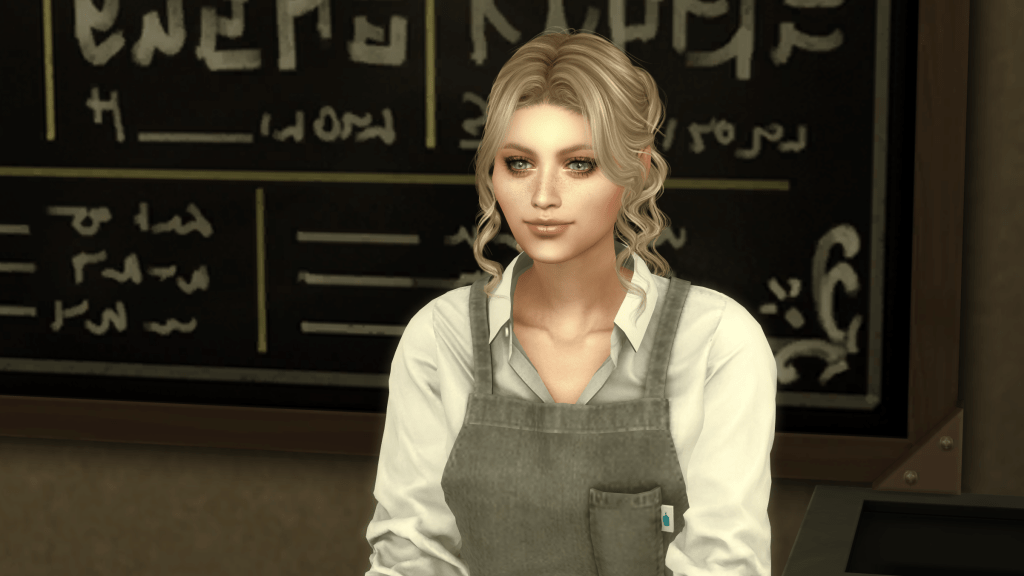
“Grande Latte.”
“The classic. It tracks. Hey, if you like, I can take my break and join you.”
“Sure.” I couldn’t resist the callback. “Just… please don’t pour coffee in my crotch.”
She blinked, confused. “What? Why would I—”
I gestured at her apron. “Gem from my… ex. Long story. She worked at a café.”
She giggled. “Ah. Okay, gotta ask… why?”
“Well, believe it or not, because she found out who I really am. Rich hedge‑fund Beamer guy and all.”
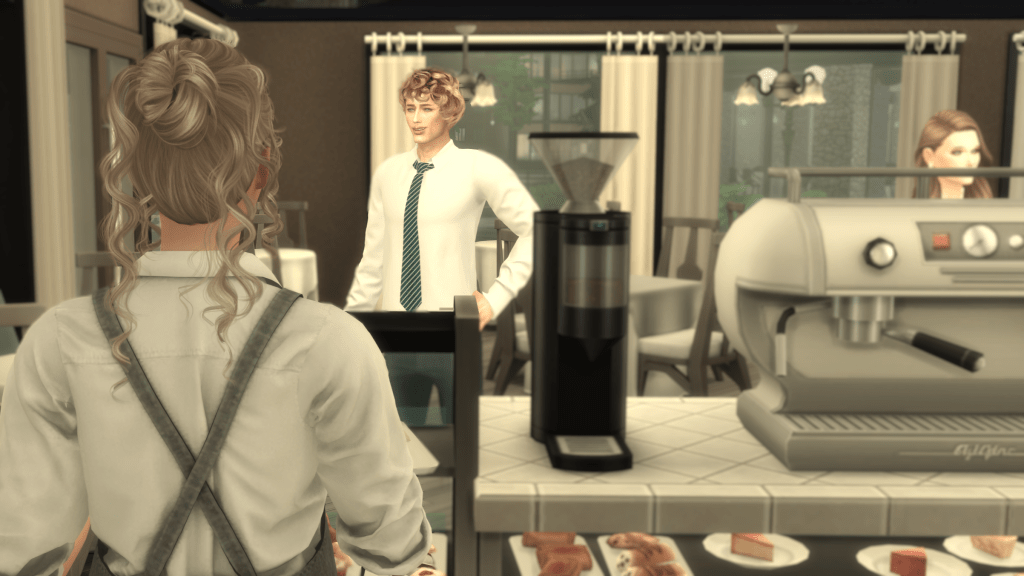
“Why would that anger her? Who gets angry at money? Wouldn’t most girls do cartwheels realizing they aren’t dating Mr. Always Broke And Too Lazy To Do Anything About It? That’s who I was with — and ironically, he cheated on me and dumped me. One for the highlight reel. So, if I ever date again, which is currently under review, it would NOT be ANYONE without a job and at least some money in the account. Did I mention he usually made me pay when we went out? Or that he would just take money out of my wallet without asking? Yeah, run that by your ex and ask her if she wants to be a sugar momma when she can barely make rent. I loved that for me.” she told me, grimacing.
“Spoiler alert: she did alright for herself in the follow up act department. It was more the principle for her. The part where I hid the truth. Ranked like a lie with her. I did lie about my name, though, so that’s on me. That was before we became anything serious. When it looked like it might I came clean.” I sighed.
“Okay, listen Beamer Boy, if you were a girl, this wouldn’t be so cringeworthy. Most of us give fake names until we know he’s worth the truth. Too many creeps out there who have something wrong in their brain and start online stalking you and all that. I mean, as long as you came clean on your own when you realized she wasn’t a psycho before she found out first, I don’t see a big deal here. Not like you were married and she found out then. But why would you have to disclose how much is in your bank account if it shouldn’t matter? Who cares if you are rich or not? I mean, unless she was admitting she was looking for a pot of gold. I mean, I get there are girls who only care about that, and guys who don’t care if they do as long as they are arm candy, but I like to think most girls just want a genuinely nice guy. I’d be one of those and literally don’t even think about how much he has, unless he flags like a mooch like my ex. I will definitely not be doing that again. So, if I were you, I’d run if someone required a full financial striptease before they date me or give me shit for not bringing my tax returns to the second date or something.” she told me, while preparing my Latte.
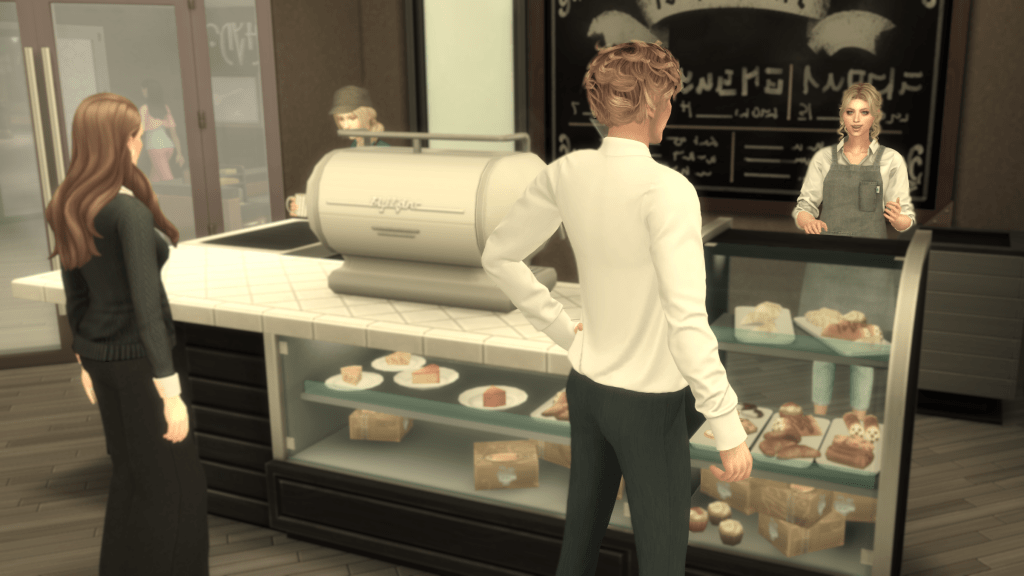
“We agree there. And I have. That’s how we ended.”
“Sorry, I didn’t mean to pry. But… good for you.” She laughed, soft and startled. “I promise I will not pour coffee on you.”
“Thank you. I can’t put into words how relieved I am. I love drinking coffee, not wearing it.”
“I can see that. Hot Latte isn’t your best color.” she giggled, I smiled, then pulled out my wallet, but she shook her head.
“It’s on me.”
“No, come on—”
“Put your money away, it’s no good here, Beamer boy. Look, I owe you at least a free coffee for taking me home on your birthday, and we get a number of free ones each month. I gotchu, dude.”
“Thanks. Don’t think a girl I wasn’t related to ever bought me a coffee. Kinda nice. Then again, you didn’t buy it. You get it free.” I rambled unnecessarily. Yikes.
“No, I said I get an allowance. Once that’s up, I have to pay. And you’re welcome. Now don’t get greedy or I’ll have to dump you because you’re just after my free coffee.”
I chuckled at the deadpan.
“I am found out. Please don’t dump me. We’ve been together forever — a whole two seconds.”
“Five! Men and anniversaries.” we found a table by the window and sat down.
“I’ll do better for the next five seconds.”
“Promises, promises.”
We laughed, then clinked paper cups.
“How are things with the ex?” I asked.
“Still the ex. He tried come crawling back. Guess the slut he found didn’t work out like he hoped. But… no thanks. As my mom always says, ‘If someone shows you their true colors, believe them.’ No rerun needed for me to know he isn’t Mr. Right Mom’s very relieved, she hated him, but I always thought that was because of his tats not all the reason she listed. Maybe that’s why I ignored the red flags. I love my mom but sometimes a girl’s gotta rebel. But I think the next guy will have to be approved by her. Clearly, she is better at judging character.”
“Don’t bother. My ex was parent-approved and fully un-flagged, but ended the same.”
We talked. We laughed. It was nice.
When we parted ways, there were no strings, no expectations, no numbers exchanged. No promises.
Just a nice chat with someone who – for a change – didn’t want anything from me. Someone who even gave me something without asking for anything in return.
Very refreshing.
Twenty‑One Going on Eighty
Mom told me I was twenty‑one going on eighty.
She said it while poking around on the knot in my shoulder with perfectly manicured fingernails that stabbed more than helped. Motherly acupuncture. “Sweetheart, you’re stiff as a board. Go see my girl at the yacht club. She’s a miracle worker.”
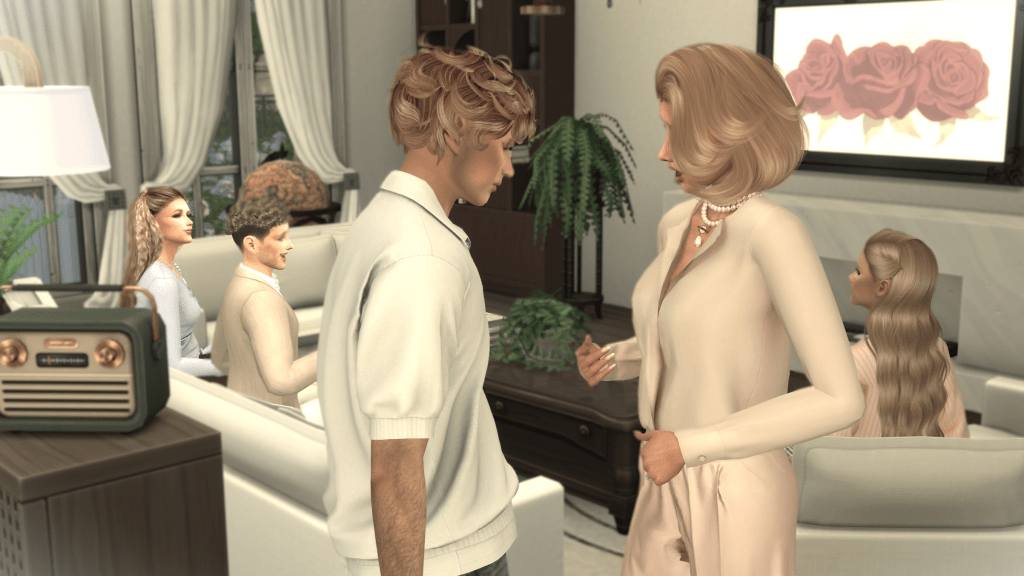
I love my mother, but the idea of going to the same spa lady who does her full body massages and probably knows every detail of her life? No. Absolutely not.
Also, I was already downtown San Myshuno. If I drove all the way back to the Bay, I’d go home — not come back to work.
So I made a decision. Right then. Right there.
I walked into the nearest reputable spa, asked for first available, and tried not to look like someone whose entire shoulder and neck region was filing for early retirement.
They led me to a dim room with soft music and warm lighting, handed me a robe, told me to change.
“Your specialist will be right in,” the attendant said.
I nodded, not really caring who it was. I just wanted my head to stop pounding. I sat on the edge of the massage table, rubbing my temples, wondering how I’d aged sixty years in twelve months.
A knock on the door, it cracked open.
“Are you decent?”
“Yeah.”
And she walked in.
The girl from the coffee shop. And my party. Are you kidding?
She froze. I froze.
Her hair was in a loose bun, her uniform soft grey, her expression a mix of surprise and resignation — like she couldn’t believe we were doing this again.
“Oh,” she said quietly. “Hedgefund guy with the Beamer again. You are everywhere.”
I huffed out a laugh. “Catering girl. And coffee shop girl. You are also everywhere these days. Starting to feel like stalking.”
She stepped inside and closed the door behind her.
“Question being, who’s stalking whom?”
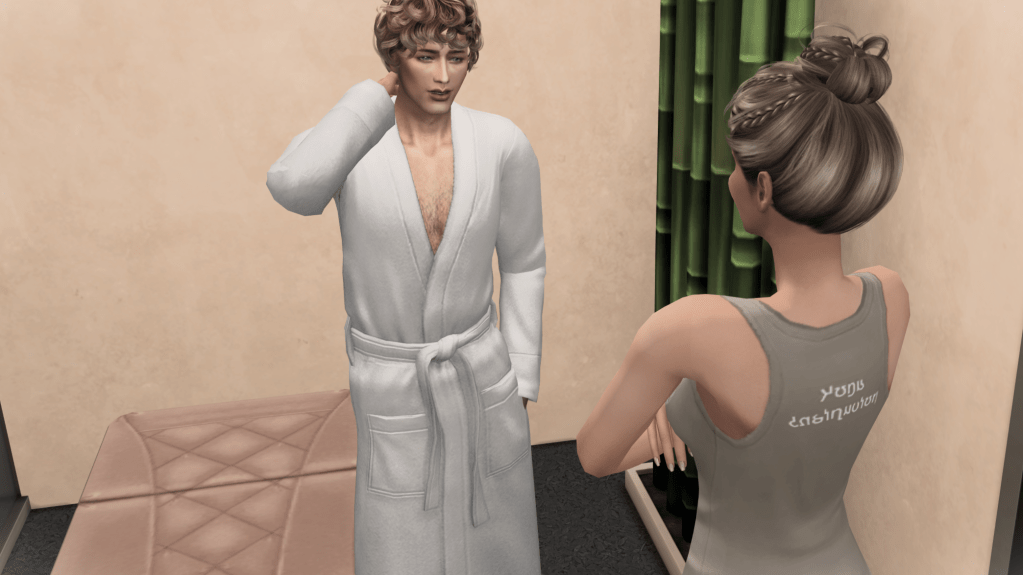
We both chuckled.
I couldn’t help asking, “Are there any jobs in this town you don’t do?”
“Yes,” she deadpanned. “Yours. At least not yet. Watch your back, I am coming for that next.”
I laughed — actually laughed — for the first time in days. Something in her shoulders softened.
“I thought you worked at the coffee shop,” I said.
“I did.” She sighed. “Until they fired me.”
“What? Why?”
She gave me a look. “Evidently, I ‘flirted’ with the son of a wealthy businessman and that was inappropriate.”
“Oh no.” I rubbed my face. “I didn’t mean to cost you your job. I didn’t know they would fire you for that.”
“Neither did I,” she said, shrugging. “Or I wouldn’t have offered to sit with you. This wasn’t on you. Evidently, they knew who you were. Guess everyone does.”
I winced. “I’m sorry.”
She waved it off gently. “It’s fine. I like this better anyway. Less hectic. Calm is more my vibe. Now—” she gestured toward the table, suddenly professional. “Lay down, face first under the blanket please. Any areas that need special attention?”
She busied herself with the oils, back to me so I could take my robe off and slip under the sheet.
“My shoulders,” I admitted. “And… my head. I get tension headaches. I feel like I turned eighty, not twenty‑one.”
She nodded. “Okay. I can help with that. Any known allergies?”
“Not that I know of.”
I lay down. She asked me a few things about scents and my aches and started.
It felt strange at first — too quiet, too familiar, too intimate in a way that wasn’t romantic, just… human. I had gotten massages in the past, but usually they were by someone older than me, not a girl my own age, that just made it kinda … iffy. But I got over it. Her hands were steady, gentle, practiced. She worked slowly, carefully, and I felt myself unwind in increments.
After a few minutes she paused.
“Nate… you’re extremely tense. Your muscles are locking up. Let me work on your front first. Flip over, I’ll see if I can’t loosen up the headache so you can relax.”
“Sure,” I said into the pillow, then clumsily flipped over onto my back. “As long as you don’t pour coffee in my crotch.”
She laughed — soft, startled, warm.
“The only hot things I have are stones for the hot‑stone massage,” she said. “And that would be a whole different vibe of punishment.”
I laughed too, my shoulders loosening under her hands.
And for the first time, it didn’t feel like chaos. It felt like inevitability — like we kept meeting because we were supposed to.
“Hey, I feel we should know each other’s names.”
“I already know your name.”
“Exactly. Unfair advantage. Can I get yours?”
She pointed at her nametag, and I probably blushed staring at her chest to read it in the still dim room.
“Evie. Short for Evangeline Hollis. Named after a grandma I never met. Some friends call me Eve or Eva, or Vanna or Evan. I answer to almost anything.” she giggled.
“Hi Evie. I am Nathaniel Cunningham, Nate, never Nathan. Officially.” I pulled my hand from under the blanket and held it up weirdly from laying on my back.
“I have lavender oil all over my hands.”
“I have lavender oil all over my back and shoulders. And face.”
“Don’t be silly — on the face I used Japanese Mint.”
“Of course. Idiot me.”
We chuckled as she awkwardly shook my hand with the tips of her fingers at a weird angle.
She finished working the tension out of my temples, then stepped back, wiping her hands on a warm towel. I felt… lighter. Not fixed, not perfect, but human again.
“Okay,” she said softly. “You’re done. I’ll step out so you can change. Pay at the reception.”
She turned toward the door.
Catering Coffee ShopSpa Girl
“Evie?”
She paused, hand on the handle.
I sat up, still half‑wrapped in the sheet, my curly hair probably sticking up in ten directions. Very dignified for an EVP — freshly hatched edition. People already didn’t really take me seriously.
“Would you…” I cleared my throat. “Maybe want to get lunch? Not today. I mean — unless you want today. But sometime. Soon.”
Her eyebrows lifted, surprised. Then her mouth softened into something small and warm.
“Are you trying to get me fired again?”
“You have to have a lunch break,” I said. “We can go somewhere secretive. Like takeout and eat it behind some dumpsters.”
She laughed. “Tempting. Are you serious? You really want to go to lunch with me?”
“Yes.” I shrugged. “We keep meeting. Might as well do it on purpose.”
She laughed under her breath, looking down at her shoes like she needed a second to absorb it.
“I—” She tucked a strand of hair behind her ear. “Yeah. Okay. Lunch sounds good. Sometime.”
I smiled. She smiled back.
“Good,” I said. “I’ll… figure out how to contact you without showing up at another one of your jobs. Unless you would give me your number.”
She snorted. “Aww, and I wanted to see your face when I turn out to be the waitress at the restaurant you want to take me to.”
“Do you really work as a waitress too?” I asked, shocked, feeling more Élodie déjà vu.
She laughed, shaking her head. “No. At least not yet. Let’s see if I still have this job after you leave. Remember I still go to college as well. Even my days only have twenty‑four hours. This is my job.”
“Right.” I smiled at her. She smiled back.
She slipped out of the room, closing the door gently behind her.
I got dressed, then went to the check‑in counter to settle up. Evie was there, busy with some sort of paperwork, but she glanced up and smiled at me a few times.
The receptionist smiled while running my card. “How was your massage?”
“Best I ever had. Headache’s almost gone. She’s good.”
“Oh, we have satisfaction surveys. Would you fill one out?”
“Absolutely.”
While I did that, Evie placed a business card near my left hand.
“In case you would like to book me again. Bye, Mr. Cunningham.”
“Bye. And thanks again.”
She walked off. I handed back the survey, grabbed the card, and as I walked out the door I flipped it over.
A handwritten number was on the back.
Strangers Who Lunch
I didn’t text her the same day. I didn’t want to look overeager. Or creepy. Or like the kind of guy who thinks a business card with a handwritten number is an invitation to sprint — straight into a girl’s pants.
So I waited two days.
Then I sent something simple:
“Hey, it’s Nate from the catering job. And the coffee shop. And the spa. Lunch sometime? Still interested?”
She replied ten minutes later.
“Yes. I have a break tomorrow at 1. Evie, from the catering job, the coffee shop and the spa.” Followed by a grinning emoji that made me grin just as big.
“Just wanted to make sure you knew who I was.”
“You are the only Nate I know. And you will forever be Beamer Boy to me.”
“Got it, Catering Girl.”
“I am no longer that. I am Spa Girl now.”
“Impossible to keep up. What kinda food you like?”
“Not picky. Gentleman’s choice. Just please nothing fancy. I don’t go to work in cocktail dresses.”
So I picked a place near her spa. — a tiny bánh mì shop tucked between a florist and a dry cleaner. Quiet. Cheap. Normal. No risk of her boss seeing me and assuming she was seducing the heir to Cunningham Holdings.
I got there early. Of course I did.
She arrived exactly at one, hair in a loose braid, wearing jeans and a soft grey sweater that made her look like she’d stepped out of a clothing line ad for what to wear on a balmy foggy morning. She spotted me and smiled — small, shy, but real.
“Hi,” she said.
“Hi.” I stood too fast. “You look… not like you’re about to fix my tense shoulders.” I almost said beautiful but that would have been seriously out of context, so I corrected. Badly.
She laughed. “I left my oils at work. If this is an emergency, I can try to make their cooking oils work. I’d just stay out of direct sunlight for a while.”
“I’m good for now.”
We smiled at each other. The tension broke.
We ordered — two bánh mì, two teas — and sat at a tiny metal table outside. The weather was warm, the kind of warm that makes the city smell like bread and pavement and summer.
For a minute, neither of us spoke.
Then she said, “So. Lunch. You actually meant it.”
“I did.” I shrugged. “I wanted to see you again.”
She looked down at her sandwich, cheeks warming. “Why?”
I didn’t have a smooth answer. I didn’t want one.
“Because you’re… easy to talk to,” I said. “And I keep running into you. Or you keep running into me. Or both.”
She smiled at that. “Feels like both.”
We ate quietly for a moment. She took tiny bites — the careful, polite kind people default to when eating with someone new. I took bigger ones, because I hadn’t eaten since breakfast and my job was slowly killing me.
She glanced at me. “You still get headaches?”
“Yeah. Stress. Work. School. Expectations. Being twenty‑one and pretending I’m thirty‑five.”
She nodded like she understood more than she should. “You carry everything in your shoulders. And your jaw. And your temples. You clench your teeth when you think.”
I blinked. “You noticed that?”
“I notice everything,” she said softly. “It’s my job.”
I didn’t know what to say to that. It felt… intimate. Not romantic. Just human.
We finished eating. She wiped her hands on a napkin, then folded it into a perfect square.
“So,” she said, “are you going to tell me what you actually do? Besides drive a Beamer and ruin my employment record?”
I laughed. “I usually study at Foxbury over in San Sequoia, but after the breakup I took on a mind‑numbing class load and can take it easier now. So my dad recruited me to work with him more so I get the hang of things — for my future role as Executive Vice President of Strategy & Investments at Cunningham Holdings.”
“Oof. Sounds… intense.”
“Can be. Hence the tension.” I tilted my head. “What do you study? Here in the city?”
She hesitated — not embarrassed, just deciding how much to tell me.
“Technically? I’m a kinesiology major,” she said. “Massage therapy certification on the side. Anatomy, physiology, movement science. All the stuff that helps me not break people while I’m fixing them.”
“That fits,” I said. “You’re good at it.”
She smiled, but it didn’t reach her eyes. Not in a sad way — in a past‑tense way.
“I wasn’t supposed to do this,” she said quietly. “I started out in dance. Ballet. Modern. All the performance classes. I wanted to be a dancer. Since I was four.”
I stared at her — really stared — because suddenly I could see it. Her posture. Her hands. The way she moved like she was always listening to music no one else could hear.
“My younger sister did ballet,” I said. “She quit when she was fifteen, just lost interest. But you… I can actually picture it.”
Evie laughed softly. “Yeah. I lived in studios. I lived on pointe shoes. I lived on blister pads.”
“What happened?”
She folded her napkin again, slower this time.
“My dad died,” she said. “Suddenly. And dance is expensive. Costumes, classes, travel, shoes… everything. It felt frivolous when we were trying to keep the lights on. So I switched majors. Picked something practical. Something that could get me working fast.”
I didn’t say I’m sorry. She didn’t need that. And I couldn’t help feeling another Elodie callback. Maybe this was more common than I knew.
I said, “That must’ve been hard.”
She nodded once. “It was. Still is. Mom’s been working two jobs, three sometimes, since he died. Money problems really help you get through grief faster. No time for it. Sorry, didn’t mean to sound so… gloomy.”
We sat there quietly, but it wasn’t uncomfortable. It was honest.
She checked her phone. “I should get back. My break’s almost over.”
“Right.” I stood. “Thanks for lunch.”
“Thanks for asking.”
We walked together toward the corner. She stopped at the crosswalk, turning to me with that soft, shy smile.
“Hey,” she said. “If you ever need another massage… or another lunch… you can text me.”
“I will,” I said.
She crossed the street. I watched her go.
Dinner Invites
We didn’t see each other for a few days after that. I didn’t want to hover, and she didn’t seem like the type who needed someone hovering. But on Thursday, around four‑thirty, my phone buzzed while I was in my office at Cunningham Holdings, staring out at the San Myshuno skyline and pretending I wasn’t drowning in spreadsheets.
A text lit up the screen.
“Hey. You still in town? – Spa Girl.”
I smiled before I could stop myself.
“Yeah. Looking at the San Myshuno skyline right now. What’s up?”
A moment passed. Then:
“I get off at 6. Dinner? My treat. Don’t argue.”
Dinner. Her treat.
I leaned back in my chair, surprised and… honestly? A little touched. She didn’t owe me anything. She didn’t need to impress me. She didn’t need to pretend she wasn’t juggling school and work and life.
But she wanted to see me again.
I typed back:
“No way you’re paying. I insist. As long as you bring good company.”
She replied instantly.
“I’ll see who I know like that who’s available. Won’t be me as I specifically asked not to argue about it being my treat.”
I laughed out loud — too loud — and Dad, who was in the same office reviewing a contract, looked up at me like I’d lost my mind.
“You good?” he asked.
“Yeah,” I said, still grinning. “Just… text message.”
He raised an eyebrow but didn’t push. He never pushes unless it’s business.
I typed again:
“Okay, you win. But it has to be you. If you send a replacement Beamer Boy gets in his Beamer and beams himself home.”
Evie texted again:
“Okay, okay. I’ll come. But only if you promise not to get me fired from this job too.”
“I’ll do my best.”
“Meet you outside the spa at 6? Oh and pick the place, I don’t know what you can handle with your upper class palate.”
“Nice jab. I’ll be there with a location.”
And just like that, dinner was happening.
Not because I asked. Because she did.
And I liked that more than I expected.
Beamer Boy and Spa Girl Go to Dinner
I got there early. Of course I did.
She stepped out of the spa right at six, hair down now, soft waves brushing her shoulders. She wore a simple black top and jeans, nothing fancy, but she looked… warm. Real. Like someone who didn’t need to try.
“Hi,” she said.
“Hi.” I shoved my hands in my pockets. “Ready?”
She laughed. “Starving. Oh, and just so you know, I left the hot stones and the coffee inside. You’re safe.”
I had to laugh. “I am relieved.”
We walked a few blocks to a tiny Korean place tucked between a bookstore and a laundromat. The kind of place with metal chopsticks and handwritten menus taped to the wall. She knew it — said she liked the kimchi stew.
Inside, the lighting was soft and golden. We sat in a booth near the window.
“Hey, Evie,” I said, she looked at me over the menu. “You really aren’t going to let me pay? Look, after you told me about your dad. And switching majors. And your mom working three jobs. We both know my situation is different. Dinner’s on me, ok?”
“Nope,” she said, smiling.
We ordered — bulgogi for me, kimchi jjigae for her — and when the food came, she blew on her spoon like she’d done it a thousand times. Comfortable. Familiar. Like she wasn’t trying to impress me.
“So,” she said, stirring her stew, “what’s it like? Working with your dad. Being the future EVP. The whole… Cunningham thing.”
I shrugged. “It’s a lot. Expectations. Pressure. Meetings where everyone pretends they’re not terrified of messing up. I’m learning. Trying not to drown.”
She nodded. “You seem like you’re doing okay.”
“Do I?”
“Yeah.” She took a bite. “You’re… steady. Even when you’re stressed. Not frazzled and hyper.”
I didn’t know what to say to that. It felt strangely intimate — like she saw something I didn’t show most people.
“What about you?” I asked. “Kinesiology. Massage therapy. Ballet before that. Do you miss it?”
She paused, spoon halfway to her mouth.
“Sometimes,” she said. “Not the performances. Not the pressure. Not the ruined toes. But the movement. The music. The feeling of… being weightless. There’s just something about it. I still sometimes dance. Reminds me of happier times. Mom and Dad would sometimes watch me.”
I pictured her — not in the spa uniform, not in jeans — but in a studio, hair pulled back, arms lifted, moving like she was made of air.
“You’d be good,” I said quietly. “I can see it. I have two left feet if it comes to dancing. Mom and Charlotte tried and tried. I am hopeless. Even Dad tried once. You haven’t lived unless you’ve danced waltz with your father as a teen boy.”
She laughed — genuinely.
“I’m sure you can learn with the right instructions.”
“I’m sure you’re wrong. I can see the way you still move — you have that… grace. I’m about as graceful as a platypus.”
She laughed. “Platypus? That is… wildly specific. I don’t think I’ve ever seen one dance.”
“Yeah,” I deadpanned. “For good reason.”
We ate. We talked. We laughed. She told me about her classes, her professors, her mom who inhales romance novels and gets angry when they don’t have happy endings. I told her about Foxbury, about my insane course load, about the time I tried to be the real Cunningham heir but gloriously failed out of med school in my first semester.
She snorted. “You? The Beamer guy? Son of Dr. Bradford Cunningham failing at anything — but especially med school? Get out of here!”
“Tragic, I know.”
Dinner lasted two hours. She absolutely paid, and even when I tried to leave the tip on the table she stuffed it back in the pocket of my suit jacket. Walking back lasted another hour because we kept stopping and took the scenic route. Talking outside the spa lasted another thirty minutes.
She finally said, “I should go home. Early classes tomorrow.”
“Why don’t I take you home? Already done it once.”
“Your Beamer nearby?”
I pointed at a parking garage.
She nodded toward it, and we walked there. I wanted to open the car door for her so badly — like Dad does for Mom, always, without fail — but it felt too… romantic. Too much. I didn’t want this to turn into anything weird.
The drive was quiet in a comfortable way. She gave me directions until I stopped at the bottom of the brownstone building she lived in.
The moment dragged, like neither of us was ready to say goodbye.
“I should… go in.” She pointed at the door, but her eyes stayed on me.
“Right.” I nodded. “Thanks for dinner.”
“Thanks for coming,” she said. “And for… being easy to talk to.”
“You too.”
She reached for the door handle — and struggled with it again. The car model has one of those hidden release buttons tucked under the chrome trim. I leaned over and pressed it for her.
For a second, we were close — too close — her hair brushing my shoulder, her breath catching, both of us freezing like we’d stepped into the wrong moment.
We snapped back at the same time, both blushing.
“Text me,” she said softly.
“I will.”
She slipped inside. I sat there for a moment, looking at the door she’d disappeared behind.
Life (Or Something Like It)
Some weeks later, I had since returned to Foxbury and was now back for another break in studying, shadowing Dad again.
I was already worn out by the time Dad wrapped the last meeting. The kind of exhaustion that settles behind your eyes and makes every fluorescent light feel like a personal attack. He didn’t notice. Or maybe he did and pretended not to. He was still talking, still flipping through charts, still pacing like the room was a surgical theater instead of a conference space.
I sat there in his lab coat — the one he’d tossed at me on the way in with a distracted, “Here, put this on, you’ll look more official.” It smelled like antiseptic and the cologne he’s worn since I was a kid. I didn’t argue. I never do.
When the meeting finally ended, he clapped my shoulder.
“One more thing. Quick second opinion. Won’t take long.”
He always says that. It’s never true.
But I followed him out anyway, because this is going to be my life soon — the administrative HQ, the endless meetings, the travel between medical centers, the legacy I didn’t choose but somehow inherited. I’m studying Business Management and Administration, but the truth is, I’ve been shadowing him since I was old enough to walk these halls.
We drove to the San Myshuno Medical Center in silence. He was already on the phone with one of his surgeons before we pulled into the garage. I didn’t bother asking how long he’d be gone. I knew better.
He parked me at the café with a distracted smile. “Eat something. I’ll be back in a jiff.”
A jiff. Right.
I ordered a sandwich I didn’t taste and a coffee I didn’t need. The café was warm, humming with quiet conversations and the soft clatter of dishes. I’d spent half my childhood in this place — waiting for Dad, waiting for news, waiting for anything that felt normal.
When the coffee was gone and the sandwich was half‑eaten, I couldn’t sit anymore. The walls felt too close. The air too warm. I needed space.
So I stepped outside into the hospital park — a small green space tucked between wings of the building, meant to make patients feel less trapped. The air was cooler there, the breeze carrying the faint smell of cut grass and city exhaust.
I walked without thinking, hands in my pockets, lab coat flapping lightly behind me. I was halfway down the path when I heard it — a sound that didn’t belong in the quiet.
Sobbing. Hard, panicked, broken sobbing.
I turned just as someone slammed into me.
It wasn’t a stumble. It wasn’t a bump. It was full‑force, blind impact — the kind that knocks the breath out of both people.
I caught her automatically, hands gripping her arms to steady her before she hit the ground.
She looked up.
Evie.
Her face was streaked with tears and mascara, her eyes unfocused, her breath coming in sharp, painful bursts. She didn’t even register who I was at first — she was too far gone, too overwhelmed, too shattered.
Her hands clutched the front of my lab coat like she was drowning and I was the only thing keeping her upright. Mascara smeared across the white fabric in dark, trembling lines.
She blinked hard, trying to make sense of me through the blur.
“Wait…” Her voice cracked. “Wait, now you’re a doctor too?”
I shook my head quickly. “Me? No. No, this is—long story.” I softened my voice. “Evie… are you okay?”
She let out a sound that wasn’t a word. It was grief. Raw and unfiltered.
“No,” she sobbed. “No, I’m not okay.”
Her knees buckled. I guided her to the bench beside us, her fingers still tangled in my sleeve like she was afraid I’d disappear.
She tried to speak, but the words came out in fragments.
“My mom… she kept getting sick. She wouldn’t go to the doctor. She said she was fine. And then this morning she woke up and she was grey. Grey, Nate. I’ve never seen someone look like that.”
Her voice broke again.
“I took her here. They rushed her into ICU. They said… they said it was sepsis. From something in her colon. Something burst. I don’t know. I don’t understand any of it. But Mom is all kinds of weird, keeps seeing legs coming out of the wall and can’t recognize me. She’s my rock and I don’t know what to do.”
She shoved a crumpled piece of paper into my hands — the printout from the ICU team. Her fingers shook so badly she nearly dropped it.
I unfolded it.
Medical jargon. Lab values. Diagnosis codes. Words that would terrify anyone who didn’t grow up around them.
I could make out some of it, and none of it was good. A lot of the terms I recognized meant death was certain and imminent. The kind of language doctors use when they’re preparing a family for the worst.
Before I could explain, footsteps approached.
Dad.
He stopped short when he saw us — me holding a crying girl, her face buried in my shoulder, mascara staining his lab coat. His eyes flicked from her to me, assessing the situation in a heartbeat.
He didn’t ask who she was.
I told him anyway, my voice low. “Dad, this is Evie … Evangeline Hollis. We’re … acquainted. Her mom was just admitted to the ICU. Sepsis. Sounds like the meds are making her loopy pretty bad.”
He held out his hand for the paper.
I gave it to him.
He scanned it quickly, his expression shifting — not surprised but softened. He crouched slightly, keeping his voice low and steady.
“Evangeline, your mother is in septic shock. It looks like a tumor in the colon burst and perforated. It’s very advanced. The infection is overwhelming her system.”
She sobbed harder, pressing her face into my shoulder.
“She doesn’t know who I am. I don’t have anyone else. She has to remember me. I need my Mom.”
Dad continued, careful, slow, deliberate. He never sugarcoats. But he never crushes.
“They’re giving her antibiotics and fluids, but… this is very serious. She’s in a lot of pain. The hallucinations are from the infection and the medications. She’s not aware of what she’s saying. I assure you she remembers you.”
Her whole body shook.
Dad looked at me. I mouthed, helplessly, what do I do?
He mouthed back, you’re already doing it.
Then, quietly, “Stay with her. I’ll go get more details. I’ll find you. And I might get something mild to help her calm down.”
He squeezed my shoulder once — the closest thing he has to affection in moments like this — then walked back toward the ICU wing.
I sat there with Evie, her sobs shaking both of us, her fingers still tangled in my sleeve like she was afraid I’d disappear.
I wasn’t medically trained, aside from one semester of med school before I failed out and a lifetime of being a Cunningham in a family of doctors. But I knew how to stay. I knew how to listen. I knew how to be steady.
And I knew — with a clarity that startled me — that I wasn’t leaving her alone in this.
Not today. Not when her world was falling apart. Not when she needed someone to hold the pieces with her.
Not when she’d already slammed into me twice now. Not after coffee together. Lunch. Dinner. I should have texted again but was too busy. Lot of papers have come due at college and then Dad kept me on my toes, my sisters each had birthdays. Now I felt guilty.
I stayed exactly where I was.
Minutes passed — or maybe longer. Time felt strange. The park was quiet except for her sobs and the distant hum of the ac unit somewhere behind us.
When Dad returned, his face told me everything before he spoke.
He didn’t say it out there in the open. He gestured for us to follow him, guiding us into a small consultation room — one of those quiet spaces meant for bad news. It was one of those small rooms dressed in cozy colors, a box of tissues, chairs that looked too soft for a hospital.
He closed the door behind us.
Dad nodded toward the small bathroom.
“You can wash your face if you’d like,” he said gently. “Might make you feel better.”
She nodded, almost mechanically, and disappeared behind the door.
The moment it clicked shut, Dad turned to me.
“It’s bad,” he said. “Very bad.”
I swallowed. “How long?”
“A few days,” he said. “If that long. Her organs are failing. The infection is overwhelming everything. We’ve adjusted her medications — she’ll have moments of lucidity, but they’ll be brief. I can’t do more or she’d be in pain. We are at the level where it’s comfort care. You know what that means?”
I felt something cold settle in my chest. Nodded. Meant the end was near.
“There’s nothing else you can do?” I asked. “Her dad already died years ago, no siblings.”
He shook his head. “No. At this point, comfort is all that’s left. We don’t even have time for hospice. She won’t leave her room again.”
He looked at me then — really looked — and I felt the weight of what he was about to ask.
“Nathaniel,” he said quietly, “she trusts you. She ran to you. She’s holding onto you. She needs someone she recognizes. Someone steady. I want you to tell her,” he said. “She’ll hear it better from you.”
My stomach tightened. “Dad… I don’t know if I can—”
“You can,” he said firmly. “This is part of it, son. You will have to fire people. Make hard decisions. Deliver hard truths. You will have to sit with people in their worst moments. And you will have to do it with compassion. Same as a doctor. I am a perfect stranger to her. You clearly are not. It’s kinder coming from you.”
I felt my pulse in my throat.
I panicked — quietly, internally — but I nodded. Because he was right. Because she needed someone who wasn’t wearing scrubs or a badge. Because she needed someone who wasn’t a stranger.
The bathroom door opened.
Evie stepped out, her face washed, eyes still red but clearer. She looked smaller somehow, like grief had taken up space inside her and pushed everything else out.
Dad gave me a subtle nod.
I pointed at a chair, she sat down and I sat beside her.
“Evie,” I said softly. “Your mom… she’s very sick. The infection is… it’s too much. The doctors are doing everything they can to keep her comfortable, but… she doesn’t have long. There is nothing else we can do. It’s too far advanced.”
Her breath hitched. Her eyes filled instantly.
“How long?” she whispered.
“A few days,” I said. “Maybe.”
She folded in on herself, hands covering her mouth, a sound escaping her that didn’t sound human. I put my arm around her, and she leaned into me like she was collapsing.
Dad stepped back, giving us space. Nodding at me. I had done well in his eyes. Silent praise.
After a long moment, he said, “She’s lucid right now. If you want to see her.”
Evie nodded, wiping her face again.
“Nate .. can you go with me?”
A Cunningham Promise
We walked together to the ICU. The hallway felt colder than the rest of the hospital — that sterile chill meant to keep machines comfortable, not people. The lights hummed faintly. Nurses moved quietly, like they were afraid to disturb the air.
Inside her mother’s room, the machines beeped in slow, steady intervals. Not frantic. Not hopeful. Just… marking time.
Her mother lay still, pale, her skin almost translucent under the fluorescent glow. Her eyes were half‑open, unfocused at first — then sharpening when she saw her daughter.
Evie rushed to her side. “Mom,” she whispered, voice already breaking. “I’m here.”
Her mother smiled faintly — a small, fragile thing that looked like it cost her strength she didn’t have. “My sweet girl.”
For a moment, she was herself. She lifted a trembling hand to touch Evie’s cheek. She hugged her daughter with the last of her energy. She breathed her in like she was trying to memorize her.
I could tell she already knew she was on borrowed time. She wasn’t fighting anymore. She was preparing.
Then her gaze drifted past Evie, landing on me.
“Oh… that’s Nathaniel,” Evie said quickly. “He’s a… fellow student. We’re… friends.” A half‑lie. A protective one. I understood immediately.
Her mother studied me with surprising clarity. “Nathaniel. What a nice name. You don’t hear that one much.” Her voice softened. “You look different from the other boys too. Especially Jason.”
“Mom!”
“What? It’s true.” She smiled conspiratorially at me. “He barely had an inch of skin not scribbled on at nineteen, so he started with all those piercings. No mother wants that for her precious girl. If he’d at least had a good heart… but not even that.” She looked at me again. “Her miserable ex. Have you ever met him?”
“No, I haven’t,” I said.
“I never liked him. But I like you. Very nice young man.”
“Mom! Nate is a… friend. Just a friend. Not… that. I am done with dating. I told you that.”
“And I told you that isn’t healthy.” Her mother’s voice thinned, but her conviction didn’t. “I didn’t say you were dating. I said what I said. And I’ll say it again. Nate, you are a very nice young man. And a doctor too.”
I nodded. “Thank you, Mrs. Hollis. But I am not a doctor. My Dad is this is his coat.”
“Oh, you must be Dr. Callingham’s son, you look like him. Those curls.”
“It’s Cunningham, Mom. And yeah, Nate’s his son.”
“What a nice man. Far cry from that Jason and his white trash family.”
“Mooooom! I am begging you!”
She looked at me, then at her daughter — and something shifted in her expression. A decision. A last act of motherhood.
“Oh, honey,” she said gently, “would you get me some soda? I don’t care much for water and had to drink half an ocean. The meds give me terrible cotton mouth.”
I almost offered to go, but I realized — instantly — she wanted to speak to me alone. Evie knew it too. She didn’t want to leave, but she obeyed. Some daughters argue with their mothers about everything. Evie wasn’t one of them. I was the same way. All my friends often fought with their parents. I never did. If they asked me to do something, I did it.
The moment Evie left, her mother reached out a trembling hand.
I stepped closer.
Her voice dropped to a whisper. “We both know I am… well… you know.” Her breath hitched. Her eyes glistened. She swallowed hard, fighting the fear.
“Take care of her,” she whispered. “She has nobody else. My husband died years ago, and we never had more children. She’s a good girl. A sweet girl. Too soft for this world. Look Nate, I know you’re not dating, or I would have met you already, but you clearly care enough to be here. And she likes you enough to let you be here.”
Her voice wavered. Her fingers tightened weakly around mine.
“My husband and I were only children, so there are no aunts and uncles, and our parents are long gone. Her friends are wind eggs, every last one of them. The fair-weather kind, you know. She won’t get much help from any of them. It’s the area we live in — used to be nice, but it’s taken a dive over the past decade. Now everyone’s egocentric or just downright trash.”
She looked at me with a clarity that cut straight through the machines and the sterile air.
“You’re not trash. And she needs someone who can get her out of there, you know, keep her motivated to try hard to do something more with her life. Not let her resign, which she will try, only to slide deeper into it like that Jason. She is a dreamer. Too loyal for her own good.”
Her voice broke. Tears slid down her temples — slow, helpless, heartbreaking.
“I’m sorry,” she whispered. “I’m so sorry to leave her. She isn’t ready to be alone yet. Too sweet. Head in the clouds, heart on the sleeve. She isn’t hard like me… because I had to be.”
She talked herself into agitation, her breathing quickening, the monitors spiking. This wasn’t just fear. This was grief. This was a mother mourning the future she wouldn’t get to see.
I understood.
I squeezed her hand gently. “I’ll look out for her,” I said. “I promise.”
Her eyes closed. Relief softened her features — the kind of relief that only comes when a mother believes her child might be safe.
Evie returned a moment later, holding a soda, forcing a smile that didn’t reach her eyes. Trying to be brave. Trying not to break.
Her mother smiled back — the kind of smile meant to protect a child from the truth.
They spoke. They laughed about memories. They hugged and cried and held each other like time was slipping through their fingers.
I stood quietly beside them, understanding everything.
And that was the moment — the exact moment — I knew I wasn’t going anywhere.
Not today. Not tomorrow. Not when I went back to campus across the country. Not when things got quiet. Not when grief settled into her bones.
I would check in. I would call. I would visit when I was home. I would be steady.
Not romantic. Not complicated. Just present.
Because she needed someone. And her mother asked me to be that someone.
And I wasn’t going to fail her. Cunninghams never made promises lightly.
The Quietest Hour
Mrs. Kayla Hollis died two days later. It broke my heart.
I got the text from Evie at the same time Dad got the alert he’d asked the attending staff to send. He cancelled a conference call we were preparing for and we went straight over.
He handled the paperwork — and the financial part — while I took care of Evie, who fell apart so completely she had to be medicated. I didn’t feel right taking her home and leaving her alone, I had never been to her place, and this didn’t feel like the right time, so we brought her to our house and put her up for the night. We had the room to give her space without her ever being alone. Just for tonight. Or maybe a couple nights. We’d see.
I didn’t sleep much. I couldn’t stop imagining what it had to be like to lose your parents. I was so close to mine, and now I knew two girls who were orphaned too young. Another parallel of many that gave me throwbacks to Elodie.
I couldn’t imagine functioning without Mom and Dad. My grandparents had died recently, and Mom had only just recovered enough to be herself again. This made my heart break all over for her — she’d been close to them. I never met my paternal grandfather; he hadn’t been very nice. Dad barely shed a tear when he died. All that man ever did was make Dad want to be the best father — the kind he always wanted but never had.
Dad once told me he lived vicariously through Mom’s parents, back when they were dating as teens, who back then were still in the band and loved to throw crazy, elaborate parties. Always supportive. Always loud. Always full of humor. All that had shaped him into the man he is today.
I wondered what kind of father I’d be one day. Definitely like Dad — but maybe a little Grandpa Chase sprinkled in and with Mom’s warmth and feisty protectiveness.
A noise broke through my thoughts — footsteps in the hall, some odd clank.
I jumped up and stumbled out of my room to find Evie in the hallway, hands raised at a shelf like she was trying to calm it down. I almost laughed.
“Evie?”
She jerked around. “Sorry, did I wake you? I couldn’t see the shelf until I ran into it.”
“No, I was awake anyway. What are you doing? The bathroom is in your room. Ensuite.”
“No.” She pointed out the window toward the lighthouse, which shone across the property. “I’ve never seen one in real life. I wanted to go down and see it from there.”
“Ah. Come on.”
We went down together. I passed through the living room and grabbed blankets, and we ended up on the beach, wrapped in them, listening to the waves.
“I still can’t believe she’s gone,” she whispered. “And I’m all alone now. Never bothered me not to have relatives, but now… I think it would be nice.”
“Yeah,” I said softly. “Big family gets overwhelming, but when my older brother died in an accident some years ago, we were all glad to have each other.”
“Thanks… for this. All of it.” She looked up at the house. “By the way, nice place. Last time I was here I didn’t pay much attention. I was late and it was just a blur.”
“You were here before?”
“Yeah. Catering for your party. The day we met.”
“Right. Sorry. I’ll give you the tour when it gets light.”
She nodded. “Is all of this yours?” She gestured up at the property.
“Yeah. Including this. Private beach. Belongs to the house.”
“I didn’t even know you could own a beach. Did I see stables?”
“Yeah. Do you ride?”
“No. But as a kid I was obsessed with horses. Always wanted one. But we lived in a tiny apartment downtown. Hard to keep a horse in a parking garage or on a balcony.”
“If you want, I can give you a lesson. My sister Caroline is a great rider. She competes. Showjumping. Getting into Dressage.”
“I don’t even know what that is,” she said, laughing softly. “But nice. You and your family have already been so nice to me. I don’t want to look like I’m taking advantage.”
“No big deal. Anything we can do to help. I get this is rough.”
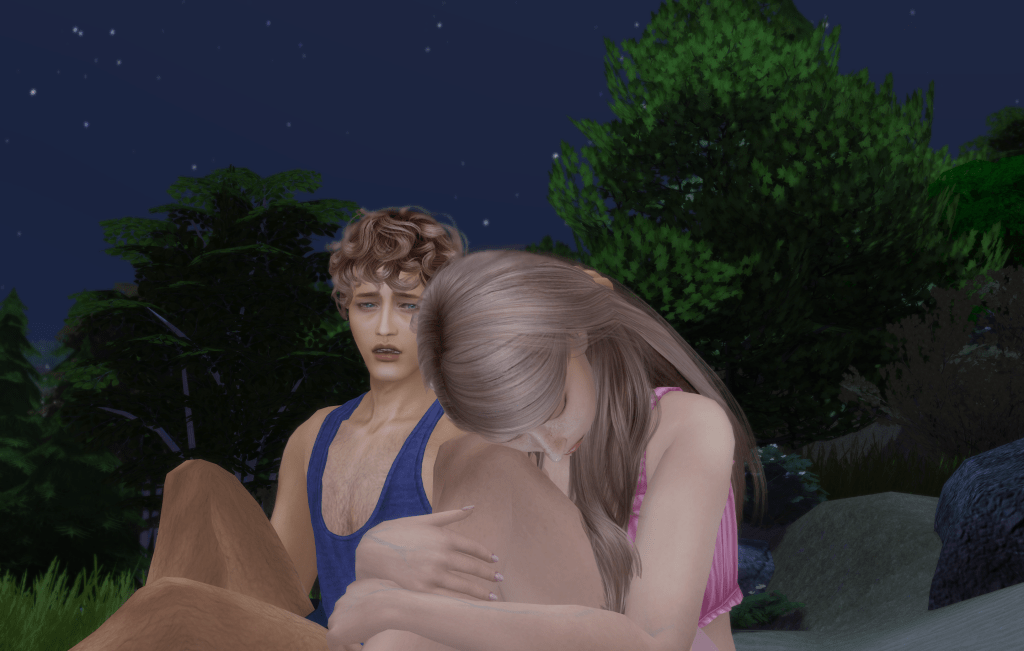
She hesitated. “Can I ask one more big favor? And you can say no. I understand.”
“Shoot.”
“Would you go with me to the funeral home? To do… whatever I need to do?”
“You got it.”
“Thanks.”
I helped her plan a simple funeral, but not as simple as she thought it had to be, as I just took care of the costs. Nothing crazy, just not the total basics, a little bit more.
And then I went to another funeral. My entire family did. Mom, Dad, Charley and Caroline came, and I cannot tell you how much I appreciated it. I didn’t ask — they offered. We all figured it would be empty. Only three neighbors showed up.
I also appreciated that nobody asked the questions everyone, including me, was wondering right about now. Was this going to be friendship or more?
For now, all it was was a Cunningham promise made to a dying woman I barely knew. Beyond that…
I didn’t know.
I didn’t want to think about it.
I wasn’t that naive. Clearly there was some magnetism between Evie and me, and I won’t lie — I wasn’t blind. Of course, like any healthy twenty‑one‑year‑old man, I could see she was very pretty. And, like any healthy twenty‑one‑year‑old man, my mind jumped fences now and then.
Deep inside me was the fear that this would feel good for a while and then end in a big explosion, like things had before. Like all my attempts at dating since had. Something that would make me run. And I liked spending time with Evie — I didn’t want it to end.
So, for now the answer is no.
 Echoes Of Legacy